 PDRN Care
PDRN for Sagging Skin: Restore Firmness & Fight Skin Laxity
Sagging skin — clinically referred to as skin laxity — is one of the most challenging and visible signs of aging. Unlike fine lines or uneven texture, which can be addressed with topical treatments relatively quickly, sagging reflects a deeper structural loss: the progressive depletion of collagen, elastin, and subcutaneous fat that together provide the skin's internal scaffolding. As the dermis thins, the elastic fiber network degrades, and the facial fat pads descend and deflate, gravity takes hold — pulling the skin downward along the jawline (jowls), nasolabial folds, under-eye area, and neck.
How PDRN Targets Sagging Skin
PDRN targets the biological drivers of skin sagging through multiple mechanisms that work together to rebuild dermal structural integrity. The primary mechanism is adenosine A2A receptor activation on dermal fibroblasts, which triggers the cAMP-PKA-CREB intracellular signaling cascade and upregulates transcription of type I and type III procollagen genes. This directly addresses the collagen deficit that underlies skin laxity — as fibroblasts produce more collagen and the dermal matrix thickens, the skin gains back some of the structural support it has lost. PDRN simultaneously stimulates fibroblast proliferation, increasing the number of active collagen-producing cells in the dermis rather than merely pushing existing cells to work harder. The nucleotide salvage pathway provides fibroblasts with ready-made DNA building blocks, supporting the accelerated DNA replication required for cell division. PDRN also promotes angiogenesis — the formation of new blood vessels — which improves microcirculation in the dermis and enhances delivery of oxygen and nutrients needed for sustained collagen production. The anti-inflammatory properties of PDRN, mediated through suppression of TNF-alpha and IL-6, are particularly relevant for sagging skin because chronic low-grade inflammation (inflammaging) is itself a driver of MMP upregulation and collagen degradation. By reducing this inflammatory load, PDRN helps shift the balance from collagen destruction toward collagen preservation and net production. The cumulative effect over weeks to months of consistent use is a measurably firmer, denser dermis with improved skin quality — not a facelift, but a meaningful improvement in the structural foundation that supports skin firmness.
Recommended Products (5)

5 PDRN Kollagen Intense Vitalizing Serum
COSRX
Multi-PDRN-Formel mit 5 Arten von PDRN aus Lachs, Centella, Reis, Lactobacillus und Meertrauben plus niedermolekularem Kollagen.
€27.60–€36.80

Gim PDRN Hydro Straffende Creme
Isntree
Feuchtigkeitsspendende, straffende Creme mit koreanischem Seetang-PDRN, Hyaluronsäure und Peptiden für verbesserte Hautelastizität.
€20.24–€25.76

PDRN Pink Peptid Serum
Medicube
Virales K-Beauty-Serum mit 99 % Reinheit Lachs-DNA-PDRN und 5 Peptiden für sofortigen Glow und sichtbare Straffung innerhalb einer Woche.
€18.40–€23.00
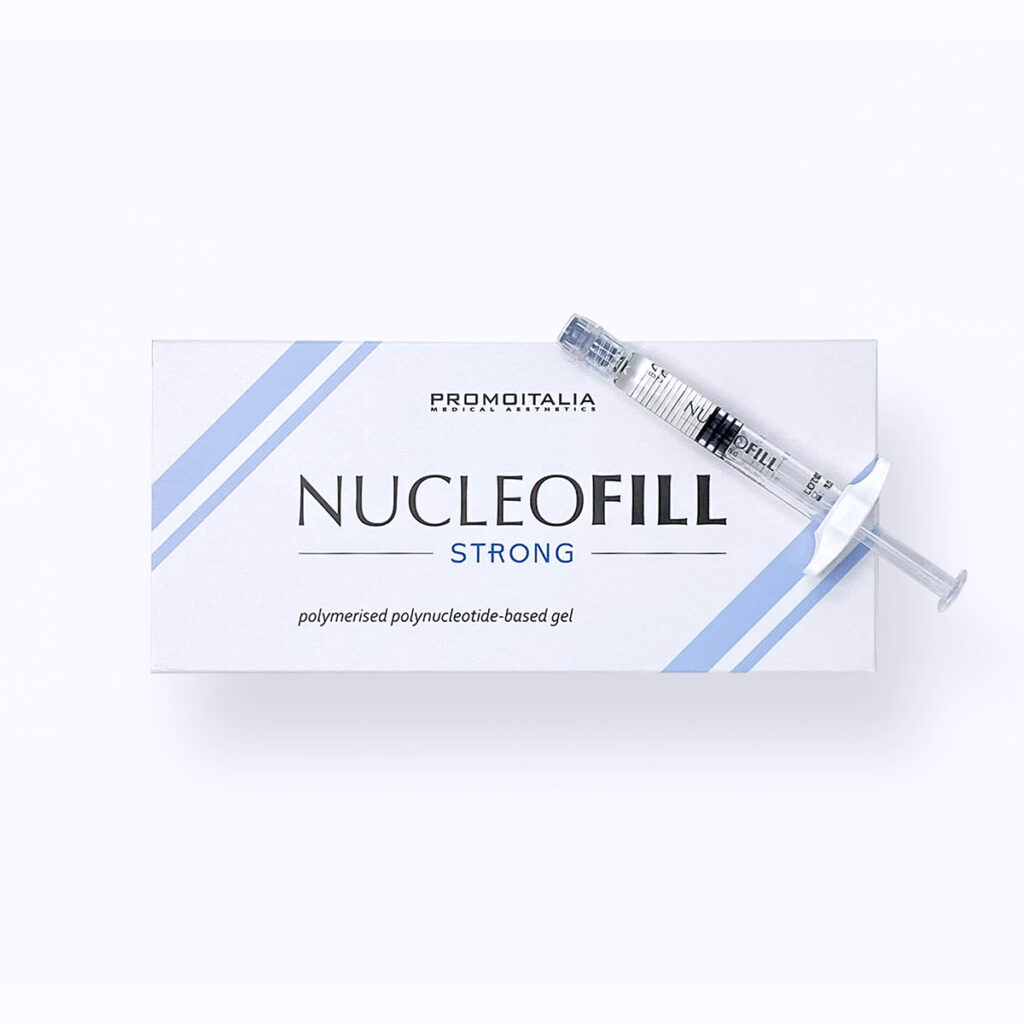
Nucleofill Strong
Promoitalia
Hochkonzentriertes PDRN-Gel für den professionellen Einsatz — 25 mg/ml Polynukleotid-Konzentration für intensive Verjüngung.
€184.00–€414.00 per session

Rejuran Healer
Pharmaresearch Products
Der originale koreanische PDRN-Skinbooster — c-PDRN aus Lachs-DNA zur Hautverjüngung und Barriere-Reparatur.
Sagging skin results from the convergence of multiple biological processes. Intrinsic aging causes fibroblast activity to decline by approximately 1% per year after age 30, reducing the rate of new collagen and glycosaminoglycan production. Photoaging from chronic UV exposure accelerates this decline by upregulating matrix metalloproteinases (MMPs) that actively degrade collagen and cause solar elastosis — the replacement of organized elastic fibers with dysfunctional, amorphous material. Hormonal changes, particularly the estrogen decline during perimenopause and menopause, further accelerate collagen loss, with studies showing up to 30% of dermal collagen is lost in the first five postmenopausal years.
PDRN (polydeoxyribonucleotide) addresses sagging skin at the cellular level by reactivating the fibroblasts responsible for producing the dermal matrix. Through adenosine A2A receptor activation, PDRN stimulates fibroblast proliferation and collagen synthesis, gradually rebuilding the structural density of the dermis from within. While PDRN cannot reverse the loss of elastin (which is nearly irreplaceable in adult skin) or restore displaced facial fat pads, it can meaningfully improve dermal collagen density, skin thickness, and overall firmness — the components most amenable to regenerative therapy.
Both injectable PDRN skin boosters (administered by dermatologists) and topical PDRN serums can contribute to managing sagging skin. Injectable treatments deliver PDRN directly into the dermis at therapeutic concentrations, producing more dramatic improvements in skin quality and firmness. Topical products support daily maintenance and are particularly valuable for sustaining results between professional treatments.
Frequently Asked Questions
Can PDRN actually tighten sagging skin?
How long does it take to see firming results from PDRN?
Is PDRN better than collagen supplements for sagging skin?
At what age should I start using PDRN for sagging prevention?
Sources
- Squadrito F, Bitto A, Irrera N, Pizzino G, Pallio G, Minutoli L, Altavilla D. “Pharmacological Activity and Clinical Use of PDRN.” Current Pharmaceutical Design 23(27): 3948-3957 (2017). doi:10.2174/1381612823666170516153716
- Colangelo MT, Galli C, Gentile P. “Polydeoxyribonucleotide: A Promising Biological Platform for Dermal Regeneration.” Current Pharmaceutical Design 26(17): 2049-2056 (2020). doi:10.2174/1381612826666200113152555
- Kim TH, Kim JY, Bae JH, et al.. “Biostimulatory effects of polydeoxyribonucleotide for facial skin rejuvenation.” Journal of Cosmetic Dermatology 18(6): 1767-1773 (2019). doi:10.1111/jocd.12958
Other PDRN Skin Concerns
PDRN bei aktiver Akne
Aktive Akneausbrueche werden durch einen Kreislauf aus ueberschuessiger Talgproduktion, bakterieller…
PDRN bei Aknenarben
Aknenarben gehören zu den am schwierigsten zu behandelnden dermatologischen Erkrankungen und betreff…
PDRN bei Altersflecken
Altersflecken — medizinisch als Lentigines solares oder Leberflecken bekannt — sind flache, scharf b…
PDRN bei Mundwinkelrhagaden (Cheilitis angularis)
Mundwinkelrhagaden (Cheilitis angularis) sind die Entzündung, Rissbildung und Wundheit, die an einem…
PDRN für Anti-Aging
Die Hautalterung ist ein komplexer biologischer Prozess, der sowohl durch intrinsische Faktoren (Gen…
PDRN bei Aknenarben am Rücken
Aknenarben am Rücken – oft „Bacne“-Narben genannt – sind die bleibenden Male, die zurückbleiben, nac…
PDRN gegen Mitesser
Mitesser (offene Komedonen) gehoren zu den haufigsten und hartnackigsten Hautproblemen und betreffen…
PDRN bei Blaulichtschaeden
Blaues Licht, oder hochenergetisches sichtbares (HEV) Licht im Wellenlaengenbereich von 380–500 nm, …
PDRN bei Körperakne
Körperakne — an Rücken (Bacne), Brust, Schultern und Oberarmen — betrifft etwa 60 % der Patienten mi…
PDRN bei gebrochenen Kapillaren
Gebrochene Kapillaren — medizinisch als Teleangiektasien bekannt — sind dauerhaft erweiterte kleine …
PDRN gegen Bunny Lines
Bunny Lines sind die feinen, diagonalen Fältchen, die sich über den oberen Nasenrücken und in Richtu…
PDRN gegen Cellulite
Cellulite betrifft schaetzungsweise 80-90% der Frauen nach der Pubertaet und zeichnet sich durch die…
PDRN gegen rissige Hände
Rissige Hände sind rau, trocken, spannend, gerötet und manchmal aufgesprungen oder schuppend – Haut,…
PDRN gegen spröde Lippen
Spröde Lippen – trockene, rissige, schuppende, manchmal wunde oder blutende Lippen – sind eine der h…
PDRN bei Brustfalten
Brustfalten — auch als Dekollete-Linien oder Spaltfalten bekannt — sind ein haeufiges und oft belast…
PDRN bei Windpockennarben
Windpockennarben sind die bleibenden Erinnerungen an eine Varizelleninfektion, und sie gehören zu de…
PDRN gegen Kinnfalten
Kinnfalten sind die Fältchen, Dellen und das knittrige Erscheinungsbild, die auf und um das Kinn her…
PDRN bei geschlossenen Komedonen
Geschlossene Komedonen sind die kleinen, hautfarbenen oder leicht weißlichen Erhebungen, die der Hau…
PDRN für Mischhaut
Mischhaut ist der häufigste Hauttyp, gekennzeichnet durch eine ölige T-Zone – Stirn, Nase und Kinn –…
PDRN bei Kontaktdermatitis
Kontaktdermatitis ist der rote, juckende, entzündete Ausschlag, der entsteht, wenn die Haut auf etwa…
PDRN bei Cortisol-Hautschaeden
Cortisol-Hautschaeden sind die kumulative Verschlechterung von Hautstruktur, Barrierefunktion und Er…
PDRN gegen rissige Fersen
Rissige Fersen – trockene, verdickte Haut um die Ferse, die in sichtbare Risse aufspringt – sind ein…
PDRN gegen Crêpe-Arme
Crêpe-Arme sind die dünne, fein gefältelte, locker strukturierte Haut, die sich an den Oberarmen und…
PDRN bei kreppartiger Haut
Kreppartige Haut beschreibt einen charakteristischen Typ der Hautalterung, der durch duennes, fein f…
PDRN bei Krähenfüßen
Krähenfüße — klinisch als laterale Kanthalfalten bekannt — sind die fächerförmigen Falten, die von d…
PDRN bei zystischer Akne
Zystische Akne ist die schwerste und hartnäckigste Form der Akne, gekennzeichnet durch große, tiefe,…
PDRN bei Augenringen
Augenringe gehören zu den häufigsten kosmetischen Beschwerden und betreffen Menschen aller Altersgru…
PDRN gegen dunkle Ellenbogen und Knie
Dunkle, raue Stellen an Ellenbogen und Knien gehören zu den häufigsten und hartnäckigsten Hautthemen…
PDRN bei dunklen Innenschenkeln
Dunkle Innenschenkel sind eine sehr häufige und völlig harmlose Form der Körperhyperpigmentierung — …
PDRN für dunkle Fingerknöchel
Dunkle Fingerknöchel sind Flecken von Hyperpigmentierung, die sich über den Fingergelenken und manch…
PDRN bei dunklen Lippen
Dunkle Lippen – ein düsterer, ungleichmäßiger oder hyperpigmentierter Ton auf der Lippenoberfläche u…
PDRN bei dunklen Achseln
Dunkle Achseln – eine bräunliche oder gräuliche Verfärbung der Achselhaut – sind extrem verbreitet u…
PDRN for Dehydrated Skin
Dehydrated skin is one of the most widely misunderstood skin conditions because it is frequently con…
PDRN gegen digitale Hautalterung
Digitale Hautalterung ist das beschleunigte Hautalterungsmuster, das durch die kombinierten Auswirku…
PDRN gegen ein Doppelkinn
Ein 'Doppelkinn' — die Fülle oder Schlaffheit unter Kiefer und Kinn — ist eines der häufigsten Anlie…
PDRN bei trockener Nagelhaut
Trockene Nagelhaut ist die raue, schuppige, eingerissene oder sich schälende Haut rund um die Basis …
PDRN bei trockener Haut
Trockene Haut, oder Xerosis, ist ein weit verbreiteter Zustand, der durch ein beeinträchtigtes Strat…
PDRN bei fahler Haut
Fahle Haut fehlt es an Leuchtkraft aufgrund von verlangsamtem Zellumsatz, schlechter Durchblutung un…
PDRN bei Ekzem
Ekzem — klinisch als atopische Dermatitis (AD) bekannt — ist eine chronische, rezidivierende entzünd…
PDRN bei vergrößerten Poren
Vergrößerte Poren gehören zu den häufigsten ästhetischen Beschwerden und betreffen Patienten aller A…
PDRN gegen Augenringe und Tränensäcke
Tränensäcke — das geschwollene, aufgedunsene Erscheinungsbild unter den Augen — gehören zu den häufi…
PDRN bei Augenlidalterung
Die Augenlidalterung ist eines der fruehesten und wirkungsvollsten Zeichen der Gesichtsalterung und …
PDRN bei Gesichtsrötungen
Gesichtsrötung ist eine der häufigsten Hautbeschwerden und eine der vielfältigsten in ihren Ursachen…
PDRN bei feinen Linien & Falten
Feine Linien und Falten entstehen, wenn die Dermis ihr strukturelles Gerüst verliert — die Kollagenp…
PDRN für schuppige Haut
Schuppige Haut – das sichtbare Abschilfern kleiner, trockener, mitunter rauer oder sich schälender S…
PDRN gegen Stirnfalten
Stirn-Expressionsfalten sind die dynamischen Falten, die erscheinen, wenn Sie die Augenbrauen heben,…
PDRN bei Stirnfalten
Stirnfalten — klinisch als Frontalis-Linien bezeichnet — sind die horizontalen Falten, die über die …
PDRN gegen Zornesfalten
Zornesfalten — oft auch 'Elfer' oder Glabellafalten genannt — sind die vertikalen Falten, die sich z…
PDRN bei Pilzakne
Pilzakne sind die kleinen, gleichförmigen, oft juckenden Pusteln, die sich an Stirn, Haaransatz, Bru…
PDRN für Haarwachstum
Haarausfall betrifft etwa 50 % der Männer und 25 % der Frauen bis zum 50. Lebensjahr, wobei die andr…
PDRN zur Handverjuengung
Die Haende gehoeren zu den ersten Koerperregionen, die sichtbare Zeichen der Alterung zeigen, werden…
PDRN gegen Hitzepickel
Hitzepickel – auch Hitzeausschlag oder Miliaria genannt – sind die juckende, stechende, knotige Reiz…
PDRN für Schlupflider
Schlupflider entstehen, wenn eine Falte der Oberlidhaut über die Lidfalte herabhängt, teilweise die …
PDRN bei hormoneller Akne
Hormonelle Akne ist eine hartnaeckige, oft frustrierende Form der Akne, die hauptsaechlich durch Sch…
PDRN bei Hyperpigmentierung
Hyperpigmentierung ist eines der häufigsten dermatologischen Anliegen weltweit und betrifft schätzun…
PDRN gegen eingewachsene Haare
Eingewachsene Haare entstehen, wenn ein Haar sich zurückkrümmt oder seitlich in die Haut wächst, sta…
PDRN bei Kieferlinien-Erschlaffung
Kieferlinien-Erschlaffung — klinisch als Laxität des unteren Gesichts oder Bajonettebildung bezeichn…
PDRN bei Wangenerschlaffung
Wangenerschlaffung beschreibt das Absinken von Haut und Weichgewebe entlang der unteren Kieferlinie,…
PDRN bei Keloidnarben
Keloidnarben sind eine pathologische Form der Wundheilung, die durch ueberschuessige, ungeordnete Ko…
PDRN bei Keratosis Pilaris
Keratosis pilaris (KP), auch als Reibeisenhaut bekannt, ist eine der haeufigsten Hauterkrankungen un…
PDRN gegen Kniefalten
Kniefalten sind die Falten, die crêpeartige Textur und die sanft absackende Haut, die sich auf und ü…
PDRN gegen Lippenfalten
Lippenfalten – klinisch als periorale Falten oder periorale Rhytiden bezeichnet – sind feine vertika…
PDRN bei Lippenvolumenverlust
Lippenvolumenverlust ist eines der fruehesten und auffaelligsten Zeichen der Gesichtsalterung, das b…
PDRN bei Gesichtsvolumenverlust
Gesichtsvolumenverlust ist eines der bedeutendsten und sichtbarsten Zeichen der Hautalterung und ver…
PDRN bei Marionettenfalten
Marionettenfalten sind vertikale Falten, die von den Mundwinkeln nach unten zum Kinn verlaufen und e…
PDRN bei Maskne
Maskne — ein Kofferwort aus Maske und Akne — ist die Ansammlung von Unreinheiten, Reizungen und Rötu…
PDRN bei Melasma
Melasma ist eine chronische Hyperpigmentierungsstörung, die sich durch unregelmäßige braune oder gra…
PDRN für Haut in den Wechseljahren
Hautveränderungen in den Wechseljahren gehören zu den schnellsten und auffälligsten Umbrüchen, die v…
PDRN bei Milien
Milien (Grießkörner) sind kleine, feste, weiße bis gelbliche Zysten, die sich knapp unter der Hautob…
PDRN bei morgendlich geschwollenem Gesicht
Ein morgendlich geschwollenes Gesicht ist das aufgedunsene, schwere, leicht gedunsene Erscheinungsbi…
PDRN bei Nasolabialfalten
Nasolabialfalten — umgangssprachlich als Lachfalten, Lächelfalten oder Klammerfalten bezeichnet — si…
PDRN gegen Halshautalterung
Der Hals ist einer der ersten Bereiche des Körpers, an dem sichtbare Alterungszeichen auftreten, und…
PDRN bei Halsfalten
Halsfalten — die horizontalen Furchen, die sich wie Halsketten um den Hals legen, und die vertikalen…
PDRN bei fettiger Kopfhaut
Eine fettige Kopfhaut ist der vertraute Kreislauf aus Haar, das schon einen Tag nach dem Waschen pla…
PDRN fuer oelige Haut
Oelige Haut ist einer der haeufigsten Hauttypen, gekennzeichnet durch uebermäßige Talgproduktion ueb…
PDRN für über-exfolierte Haut
Über-exfolierte Haut entsteht, wenn Säuren, Peelings, Retinoide oder exfolierende Werkzeuge zu häufi…
PDRN bei Ozempic-Gesicht
"Ozempic-Gesicht" ist die populäre Bezeichnung für das ausgezehrte, eingefallene, vorzeitig gealtert…
PDRN bei perioraler Dermatitis
Die periorale Dermatitis ist ein chronischer, in Schüben verlaufender entzündlicher Ausschlag, der a…
PDRN gegen periorale Hyperpigmentierung
Periorale Hyperpigmentierung ist eine Verdunkelung der Haut um den Mund – eine schattige, bräunliche…
PDRN bei perioralen Falten
Periorale Falten, allgemein als Raucherfalten oder Lippenfalten bekannt, sind feine vertikale Fältch…
PDRN bei lichtgealterter Haut
Lichtalterung bezeichnet die vorzeitige Hautalterung durch kumulative Exposition gegenüber ultraviol…
PDRN bei Post-Akne-Flecken
Post-Akne-Flecken sind die flachen, verfärbten Stellen, die nach der Abheilung einer Akne-Läsion auf…
PDRN gegen Akne-bedingte Hautrötungen (PIE)
Postinflammatorisches Erythem (PIE) ist die anhaltende rote oder rosa Verfärbung, die nach dem Abhei…
PDRN bei postinflammatorischem Erythem (PIE)
Postinflammatorisches Erythem (PIE) bezeichnet die flachen, rosa- bis rotfarbenen Male, die nach der…
PDRN für die Erholung nach Behandlungen
Die Erholung nach einem Eingriff ist eine entscheidende Phase, die das Ergebnis ästhetischer Behandl…
PDRN bei postoperativer Narbenbildung
Postoperative Narbenbildung ist das unvermeidliche Ergebnis jedes Eingriffs, der die Hautintegritaet…
PDRN gegen geschwollene Augen
Geschwollene Augen (periorbitaless Odem) sind eines der haufigsten kosmetischen Probleme und betreff…
PDRN bei Rasurbrand
Rasurbrand ist die rote, brennende, entzündete Reizung, die Minuten bis Stunden nach der Rasur auftr…
PDRN bei Retinol-Verbrennung
Retinol-Verbrennung ist die Reizung, die auf die Anwendung von Retinoiden folgen kann – Retinol, Ret…
PDRN bei Rosazea
Rosazea ist eine chronisch-entzündliche Hauterkrankung, die weltweit über 400 Millionen Menschen bet…
PDRN bei rauer Hautstruktur
Raue Hautstruktur bezeichnet eine unebene, holprige oder grobe Beschaffenheit der Hautoberfläche, de…
PDRN für fahle Haut
Fahle Haut ist dieser ungesunde gelbliche, gräuliche oder müde wirkende Schleier, der sich über eine…
PDRN bei Kopfhauttrockenheit
Kopfhauttrockenheit ist eine haeufige Erkrankung, von der Millionen von Menschen betroffen sind und …
PDRN bei Talgfäden
Talgfäden sind eines der am meisten missverstandenen Merkmale öliger Haut. Anders als Mitesser sind …
PDRN bei seborrhoischer Dermatitis
Seborrhoische Dermatitis ist eine häufige, chronische entzündliche Hauterkrankung, die rote, schuppi…
PDRN bei empfindlicher Haut
Empfindliche Haut ist eine der haeufigsten dermatologischen Beschwerden weltweit — etwa 50% der Welt…
PDRN für die Hautbarriere-Reparatur
Die Hautbarriere — auch als Stratum corneum oder Säureschutzmantel bekannt — ist die erste Verteidig…
PDRN gegen Hautmattheit nach Krankheit
Hautmattheit nach Krankheit ist ein häufiges, aber oft übersehenes Problem, das jeden betrifft, der …
PDRN bei Hautelastizitätsverlust
Hautelastizität bezeichnet die Fähigkeit der Haut, sich zu dehnen und in ihre ursprüngliche Form zur…
PDRN fur Hautstraffheit
Der Verlust der Hautstraffheit ist eines der fruhesten und universellsten Zeichen der Hautalterung, …
PDRN für Hautfeuchtigkeit
Hautfeuchtigkeit geht weit über oberflächliche Nässe hinaus — sie spiegelt die Gesundheit und Funkti…
PDRN und Skin Purging
Skin Purging ist eine voruebergehende Verschlechterung von Unreinheiten, die auftritt, wenn bestimmt…
PDRN für die Hauttextur
Die Hauttextur bezieht sich auf die Oberflächenqualität der Haut — wie glatt, gleichmäßig und verfei…
PDRN bei Hautverdünnung
Hautverdünnung — klinisch als dermale Atrophie bezeichnet — ist die progressive Reduktion der Hautdi…
PDRN gegen Schlaffalten
Schlaffalten sind die Falten, die entstehen, wenn Ihr Gesicht jede Nacht stundenlang gegen ein Kisse…
PDRN bei schütteren Augenbrauen
Schüttere Augenbrauen sind Brauen, die dünn, lückenhaft oder ausgefranst aussehen – ob durch übermäß…
PDRN bei Besenreisern
Besenreiser, medizinisch als Teleangiektasien bekannt, sind kleine, erweiterte Blutgefaesse nahe der…
PDRN bei Erdbeerbeinen
Erdbeerbeine ist die umgangssprachliche Bezeichnung für das getüpfelte, gesprenkelte Erscheinungsbil…
PDRN bei Dehnungsstreifen
Dehnungsstreifen (Striae distensae) sind eine Form der dermalen Narbenbildung, die bis zu 90 % der F…
PDRN bei Sonnenschäden
Sonnenschäden (Photoaging) sind der größte einzelne Faktor für vorzeitige Hautalterung und verantwor…
PDRN zur Erholung nach Sonnenbrand
Sonnenbrand ist eine akute entzündliche Verletzung der Haut, verursacht durch übermäßige Einwirkung …
PDRN bei Tränenrinnen
Tränenrinnen sind die konkaven Vertiefungen, die sich vom inneren Augenwinkel (medialer Kanthus) dia…
PDRN bei Tech Neck
Tech Neck — ein Begriff, der die vorzeitige Hautalterung am Hals beschreibt, verursacht durch langes…
PDRN bei eingefallenen Schläfen
Eingefallene Schläfen sind das allmähliche Einsinken des weichen, sanft gewölbten Bereichs an den Se…
PDRN bei unebener Stirnhaut
Unebene Stirnhaut bezeichnet ein häufiges Hautanliegen, das durch eine ungleichmäßige, hügelige oder…
PDRN für dünner werdende Wimpern
Dünner werdende Wimpern sind Wimpern, die mit der Zeit spärlicher, kürzer oder brüchiger geworden si…
PDRN gegen Truthahnhals
Der Truthahnhals ist die umgangssprachliche Bezeichnung für die Kombination aus erschlaffter Haut, s…
PDRN bei Falten unter den Augen
Falten unter den Augen gehören zu den frühesten und sichtbarsten Zeichen der Gesichtsalterung und äu…
PDRN bei ungleichmäßigem Hautton
Ein ungleichmäßiger Hautton entsteht durch unregelmäßige Melaninverteilung, chronische Mikroentzündu…
PDRN bei Vitiligo
Vitiligo ist eine chronische Autoimmunerkrankung, bei der das Immunsystem Melanozyten zerstört – die…
PDRN bei Whiteheads
Whiteheads sind eine Form des geschlossenen Komedos – ein Haarfollikel, der mit einer Mischung aus ü…
PDRN bei Windbrand
Windbrand ist die trockene, gerötete, straffe und brennende Haut, die nach längerer Einwirkung von k…
PDRN zur Wundheilung
Die Wundheilung ist die grundlegende klinische Anwendung von PDRN — hier begann das gesamte Feld der…