 PDRN Care
PDRN for Sagging Skin: Restore Firmness & Fight Skin Laxity
Sagging skin — clinically referred to as skin laxity — is one of the most challenging and visible signs of aging. Unlike fine lines or uneven texture, which can be addressed with topical treatments relatively quickly, sagging reflects a deeper structural loss: the progressive depletion of collagen, elastin, and subcutaneous fat that together provide the skin's internal scaffolding. As the dermis thins, the elastic fiber network degrades, and the facial fat pads descend and deflate, gravity takes hold — pulling the skin downward along the jawline (jowls), nasolabial folds, under-eye area, and neck.
How PDRN Targets Sagging Skin
PDRN targets the biological drivers of skin sagging through multiple mechanisms that work together to rebuild dermal structural integrity. The primary mechanism is adenosine A2A receptor activation on dermal fibroblasts, which triggers the cAMP-PKA-CREB intracellular signaling cascade and upregulates transcription of type I and type III procollagen genes. This directly addresses the collagen deficit that underlies skin laxity — as fibroblasts produce more collagen and the dermal matrix thickens, the skin gains back some of the structural support it has lost. PDRN simultaneously stimulates fibroblast proliferation, increasing the number of active collagen-producing cells in the dermis rather than merely pushing existing cells to work harder. The nucleotide salvage pathway provides fibroblasts with ready-made DNA building blocks, supporting the accelerated DNA replication required for cell division. PDRN also promotes angiogenesis — the formation of new blood vessels — which improves microcirculation in the dermis and enhances delivery of oxygen and nutrients needed for sustained collagen production. The anti-inflammatory properties of PDRN, mediated through suppression of TNF-alpha and IL-6, are particularly relevant for sagging skin because chronic low-grade inflammation (inflammaging) is itself a driver of MMP upregulation and collagen degradation. By reducing this inflammatory load, PDRN helps shift the balance from collagen destruction toward collagen preservation and net production. The cumulative effect over weeks to months of consistent use is a measurably firmer, denser dermis with improved skin quality — not a facelift, but a meaningful improvement in the structural foundation that supports skin firmness.
Recommended Products (5)

5 PDRN Collagen Intense Vitalizing Serum
COSRX
Formuła multi-PDRN z 5 rodzajami PDRN z łososia, wąkrotki azjatyckiej, ryżu, lactobacillus i winogron morskich oraz niskomolekularnym kolagenem.
zł120.00–zł160.00

Gim PDRN Hydro Firming Cream
Isntree
Nawilżający krem ujędrniający z PDRN z koreańskich wodorostów, kwasem hialuronowym i peptydami dla poprawy elastyczności skóry.
zł88.00–zł112.00

PDRN Pink Peptide Serum
Medicube
Viralowe serum K-beauty z PDRN z DNA łososia o czystości 99% i 5 peptydami dla natychmiastowego blasku i widocznego ujędrnienia w ciągu tygodnia.
zł80.00–zł100.00
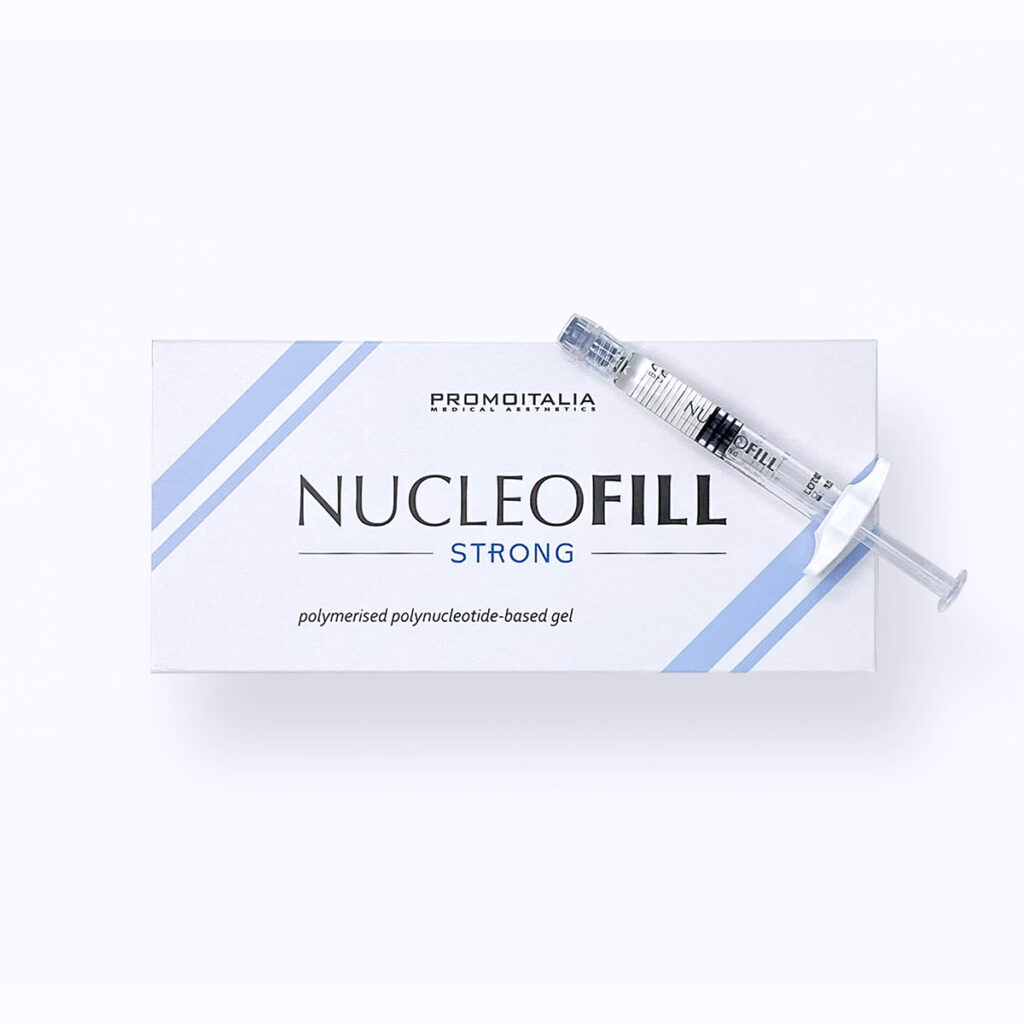
Nucleofill Strong
Promoitalia
Żel PDRN o wysokim stężeniu do użytku profesjonalnego — 25 mg/ml polinukleotydów do intensywnego odmładzania.
zł800.00–zł1800.00 per session

Rejuran Healer
Pharmaresearch Products
Oryginalny koreański skin booster z PDRN — c-PDRN pochodzący z DNA łososia do odmładzania skóry i naprawy bariery ochronnej.
Sagging skin results from the convergence of multiple biological processes. Intrinsic aging causes fibroblast activity to decline by approximately 1% per year after age 30, reducing the rate of new collagen and glycosaminoglycan production. Photoaging from chronic UV exposure accelerates this decline by upregulating matrix metalloproteinases (MMPs) that actively degrade collagen and cause solar elastosis — the replacement of organized elastic fibers with dysfunctional, amorphous material. Hormonal changes, particularly the estrogen decline during perimenopause and menopause, further accelerate collagen loss, with studies showing up to 30% of dermal collagen is lost in the first five postmenopausal years.
PDRN (polydeoxyribonucleotide) addresses sagging skin at the cellular level by reactivating the fibroblasts responsible for producing the dermal matrix. Through adenosine A2A receptor activation, PDRN stimulates fibroblast proliferation and collagen synthesis, gradually rebuilding the structural density of the dermis from within. While PDRN cannot reverse the loss of elastin (which is nearly irreplaceable in adult skin) or restore displaced facial fat pads, it can meaningfully improve dermal collagen density, skin thickness, and overall firmness — the components most amenable to regenerative therapy.
Both injectable PDRN skin boosters (administered by dermatologists) and topical PDRN serums can contribute to managing sagging skin. Injectable treatments deliver PDRN directly into the dermis at therapeutic concentrations, producing more dramatic improvements in skin quality and firmness. Topical products support daily maintenance and are particularly valuable for sustaining results between professional treatments.
Frequently Asked Questions
Can PDRN actually tighten sagging skin?
How long does it take to see firming results from PDRN?
Is PDRN better than collagen supplements for sagging skin?
At what age should I start using PDRN for sagging prevention?
Sources
- Squadrito F, Bitto A, Irrera N, Pizzino G, Pallio G, Minutoli L, Altavilla D. “Pharmacological Activity and Clinical Use of PDRN.” Current Pharmaceutical Design 23(27): 3948-3957 (2017). doi:10.2174/1381612823666170516153716
- Colangelo MT, Galli C, Gentile P. “Polydeoxyribonucleotide: A Promising Biological Platform for Dermal Regeneration.” Current Pharmaceutical Design 26(17): 2049-2056 (2020). doi:10.2174/1381612826666200113152555
- Kim TH, Kim JY, Bae JH, et al.. “Biostimulatory effects of polydeoxyribonucleotide for facial skin rejuvenation.” Journal of Cosmetic Dermatology 18(6): 1767-1773 (2019). doi:10.1111/jocd.12958
Other PDRN Skin Concerns
PDRN na aktywny trądzik
Aktywne wypryski trądzikowe są napędzane przez cykl nadmiernej produkcji sebum, kolonizacji bakteryj…
PDRN na blizny potrądzikowe
Blizny potrądzikowe należą do najtrudniejszych do leczenia schorzeń dermatologicznych i dotyczą szac…
PDRN na plamy starcze
Plamy starcze — medycznie znane jako plamy soczewicowate (lentigines solares) lub plamy wątrobowe — …
PDRN na zapalenie kątów ust
Zapalenie kątów ust to stan zapalny, pękanie i bolesność, które rozwijają się w jednym lub obu kącik…
PDRN na starzenie się skóry
Starzenie się skóry to złożony proces biologiczny napędzany zarówno przez czynniki wewnętrzne (genet…
PDRN na blizny po trądziku na plecach
Blizny po trądziku na plecach — często nazywane bliznami po bacne — to trwałe ślady pozostające po z…
PDRN na zaskrniki
Zaskrniki (otwarte zaskrniki) sa jednym z najczestszych i najbardziej uporczywych problemow skornych…
PDRN na uszkodzenia od niebieskiego światła
Niebieskie światło lub wysokoenergetyczne światło widzialne (HEV) w zakresie fal 380–500 nm jest emi…
PDRN na trądzik ciała
Trądzik ciała — występujący na plecach (tzw. bacne), klatce piersiowej, ramionach i górnych częściac…
PDRN na pekniete naczynka
Pekniete naczynka — medycznie znane jako teleangiektazje — to trwale rozszerzone male naczynia krwio…
PDRN na zmarszczki królicze
Zmarszczki królicze to drobne, ukośne zmarszczki, które rozchodzą się wachlarzowato po górnej części…
PDRN na cellulit
Cellulit dotyka szacunkowo 80-90% kobiet po okresie dojrzewania i charakteryzuje sie wglebiona, nier…
PDRN na spierzchnięte dłonie
Spierzchnięte dłonie są szorstkie, suche, ściągnięte, zaczerwienione, a czasem popękane lub łuszcząc…
PDRN na spierzchnięte usta
Spierzchnięte usta — suche, popękane, łuszczące się, czasem obolałe lub krwawiące wargi — to jeden z…
PDRN na zmarszczki dekoltu
Zmarszczki dekoltu — znane również jako linie dekoltu lub zmarszczki międzypiersiowe — to częsty i c…
PDRN na blizny po ospie wietrznej
Blizny po ospie wietrznej to trwałe przypomnienia infekcji ospowej i należą do najbardziej opornych …
PDRN na zmarszczki brody
Zmarszczki brody to bruzdy, wgłębienia i pergaminowa tekstura, które pojawiają się na brodzie i wokó…
PDRN na zaskórniki zamknięte
Zaskórniki zamknięte to małe, cieliste lub lekko białawe grudki, które nadają skórze szorstką, nieró…
PDRN na cerę mieszaną
Cera mieszana to najczęstszy typ skóry, charakteryzujący się tłustą strefą T — czołem, nosem i brodą…
PDRN na kontaktowe zapalenie skóry
Kontaktowe zapalenie skóry to zaczerwieniona, swędząca, zaogniona wysypka, która rozwija się, gdy sk…
PDRN na uszkodzenia skóry spowodowane kortyzolem
Uszkodzenia skóry spowodowane kortyzolem to skumulowane pogorszenie struktury, funkcji barierowej i …
PDRN na popękane pięty
Popękane pięty — sucha, zgrubiała skóra wokół pięty, która pęka w widoczne szczeliny — to częsty i c…
PDRN na pomarszczoną skórę ramion
Pomarszczona skóra ramion to cienka, drobno pofałdowana, luźno napięta skóra, która pojawia się na r…
PDRN na skórę pergaminową
Skóra pergaminowa (crepey skin) opisuje charakterystyczny typ starzenia się skóry, w którym tkanka s…
PDRN na kurze łapki
Kurze łapki — klinicznie znane jako boczne zmarszczki kącików oczu (lateral canthal lines) — to wach…
PDRN na trądzik torbielowaty
Trądzik torbielowaty to najcięższa i najbardziej uporczywa postać trądziku, cechująca się dużymi, gł…
PDRN na cienie pod oczami
Cienie pod oczami to jedna z najczęstszych skarg kosmetycznych, dotykająca ludzi w każdym wieku i z …
PDRN na ciemne łokcie i kolana
Ciemne, szorstkie plamy na łokciach i kolanach to jeden z najczęstszych i najbardziej upartych probl…
PDRN na ciemne wewnętrzne strony ud
Ciemne wewnętrzne strony ud to bardzo częsta i całkowicie nieszkodliwa forma przebarwień ciała — pla…
PDRN na ciemne kostki palców
Ciemne kostki palców to plamy przebarwień, które rozwijają się nad stawami palców, a czasem nad palc…
PDRN na ciemne usta
Ciemne usta — matowy, nierówny lub przebarwiony koloryt na powierzchni i wzdłuż krawędzi ust — to cz…
PDRN na ciemne pachy
Ciemne pachy — brązowawe lub szarawe przebarwienie skóry pod pachami — są niezwykle powszechne i rza…
PDRN for Dehydrated Skin
Dehydrated skin is one of the most widely misunderstood skin conditions because it is frequently con…
PDRN na cyfrowe starzenie się skóry
Cyfrowe starzenie się skóry to przyspieszony wzorzec starzenia napędzany przez połączone efekty dług…
PDRN na podwójny podbródek
„Podwójny podbródek” — pełność lub obwisłość pod żuchwą i brodą — to jedno z najczęstszych zmartwień…
PDRN na suche skórki
Suche skórki to szorstka, łuszcząca się, popękana lub złuszczająca się skóra wokół nasady i boków pa…
PDRN na suchą skórę
Sucha skóra, czyli xerosis, to powszechny stan charakteryzujący się osłabioną warstwą rogową, która …
PDRN na matową skórę
Matowa skóra pozbawiona jest blasku z powodu spowolnionego obrotu komórkowego, słabego krążenia i na…
PDRN na egzemę
Egzema — klinicznie znana jako atopowe zapalenie skóry (AZS) — to przewlekła, nawracająca zapalna ch…
PDRN na rozszerzone pory
Rozszerzone pory to jedna z najczęstszych skarg estetycznych, dotykająca pacjentów w każdym wieku i …
PDRN na worki pod oczami
Worki pod oczami — opuchnięty, obrzęknięty wygląd pod oczami — to jeden z najczęstszych problemów es…
PDRN na starzenie się powiek
Starzenie się powiek jest jednym z najwcześniejszych i najbardziej wpływowych oznak starzenia się tw…
PDRN na zaczerwienienie twarzy
Zaczerwienienie twarzy to jedna z najczęstszych dolegliwości skórnych i jedna z najbardziej zróżnico…
PDRN na drobne zmarszczki
Drobne zmarszczki pojawiają się, gdy skóra właściwa traci swoje strukturalne rusztowanie — produkcja…
PDRN na łuszczącą się skórę
Łuszcząca się skóra — widoczne złuszczanie małych, suchych, czasem szorstkich lub odchodzących płatk…
PDRN na zmarszczki mimiczne czoła
Zmarszczki mimiczne czoła to dynamiczne linie, które pojawiają się, gdy unosimy brwi, marszymy czoło…
PDRN na zmarszczki na czole
Zmarszczki na czole — klinicznie określane jako linie frontalne (frontalis lines) — to poziome bruzd…
PDRN na zmarszczki mimiczne między brwiami
Zmarszczki mimiczne między brwiami — często nazywane „jedenastkami” lub zmarszczkami gładzizny — to …
PDRN na grzybicze trądzikopodobne zmiany
Grzybicze trądzikopodobne zmiany to małe, jednolite, często swędzące grudki skupiające się na czole,…
PDRN na porost włosów
Utrata włosów dotyka około 50% mężczyzn i 25% kobiet do 50. roku życia, przy czym łysienie androgeno…
PDRN na odmłodzenie dłoni
Dłonie należą do pierwszych obszarów ciała, na których pojawiają się widoczne oznaki starzenia, a je…
PDRN na potówki
Potówki — nazywane też wysypką cieplną lub prosówką (miliaria) — to swędzące, kłujące, grudkowate po…
PDRN na opadające powieki
Opadające powieki występują, gdy fałda skóry górnej powieki opada w dół nad załamaniem, częściowo za…
PDRN na trądzik hormonalny
Trądzik hormonalny to uporczywa, często frustrująca forma trądziku napędzana głównie przez wahania a…
PDRN na przebarwienia
Przebarwienia to jedno z najczęstszych problemów dermatologicznych na świecie, dotykające szacunkowo…
PDRN na wrastające włosy
Wrastające włosy powstają, gdy włos zawija się z powrotem lub rośnie bokiem w głąb skóry, zamiast wy…
PDRN na opadanie linii żuchwy
Opadanie linii żuchwy — klinicznie określane jako wiotkość dolnej części twarzy lub tworzenie się ch…
PDRN na opadanie policzków
Opadanie policzków to opadanie skóry i tkanek miękkich wzdłuż dolnej linii żuchwy, tworzące charakte…
PDRN na blizny keloidowe
Blizny keloidowe to patologiczna forma gojenia ran charakteryzująca się nadmiernym, nieuporządkowany…
PDRN na rogowacenie mieszkowe
Rogowacenie mieszkowe (keratosis pilaris, KP) jest jednym z najczestszych schorzen skory, dotykajacy…
PDRN na zmarszczki na kolanach
Zmarszczki na kolanach to fałdy, pomarszczona faktura i lekko opadająca skóra, które pojawiają się n…
PDRN na zmarszczki wokół ust
Zmarszczki wokół ust — klinicznie określane jako zmarszczki perioralne lub rytidom perioralne — to d…
PDRN na utrate objetosci twarzy
Utrata objetosci twarzy jest jednym z najbardziej znaczacych i widocznych oznak starzenia sie, przek…
PDRN na zmarszczki marionetki
Zmarszczki marionetki to pionowe bruzdy biegnące od kącików ust w dół w kierunku brody, tworzące wyg…
PDRN na maskne
Maskne — zbitka słów maska i akne — to skupisko wyprysków, podrażnień i zaczerwienienia, które rozwi…
PDRN na melasmę
Melasma to przewlekłe zaburzenie hiperpigmentacji charakteryzujące się nieregularnymi brązowymi lub …
PDRN na skórę w menopauzie
Zmiany skórne w menopauzie należą do najszybszych i najbardziej zauważalnych przesunięć, jakich dośw…
PDRN na prosaki (milia)
Prosaki (milia) to małe, twarde, białe lub żółtawe torbiele tworzące się tuż pod powierzchnią skóry,…
PDRN na poranny obrzęk twarzy
Poranny obrzęk twarzy to spuchnięty, ciężki, lekko rozdęty wygląd, jaki wiele osób widzi zaraz po pr…
PDRN na fałdy nosowo-wargowe
Fałdy nosowo-wargowe — potocznie nazywane bruzdami uśmiechu, zmarszczkami śmiechu lub liniami nawias…
PDRN na starzenie się szyi
Szyja jest jednym z pierwszych obszarów ciała, na których pojawiają się widoczne oznaki starzenia, a…
PDRN na zmarszczki szyi
Zmarszczki szyi — poziome bruzdy okalające szyję niczym naszyjniki oraz pionowe pasma wynikające z r…
PDRN na tłustą skórę głowy
Tłusta skóra głowy to znajomy cykl włosów, które wyglądają płasko i tłusto w ciągu doby od umycia, u…
PDRN dla skory tlustej
Skora tlusta jest jednym z najczestszych typow skory, charakteryzujacym sie nadmierna produkcja sebu…
PDRN na skórę przetartą złuszczaniem
Skóra przetarta złuszczaniem to efekt zbyt częstego, zbyt silnego lub zbyt wielorakiego stosowania k…
PDRN na twarz po Ozempicu
„Twarz po Ozempicu” to popularna nazwa zapadniętego, wydrążonego, przedwcześnie postarzałego wyglądu…
PDRN na zapalenie skóry wokół ust
Zapalenie skóry wokół ust (perioral dermatitis) to przewlekła, nawrotowa zapalna wysypka pojawiająca…
PDRN na przebarwienia wokół ust
Przebarwienia wokół ust to ściemnienie skóry wokół ust — cieniste, brązowawe lub szarawe przebarwien…
PDRN na zmarszczki wokół ust
Zmarszczki perioralne, powszechnie znane jako zmarszczki palacza lub linie wokół ust, to drobne pion…
PDRN na skórę fotostarzałą
Fotostarzenie odnosi się do przedwczesnego starzenia się skóry spowodowanego kumulatywną ekspozycją …
PDRN na ślady potrądzikowe
Ślady potrądzikowe to płaskie, przebarwione plamy pozostające na skórze po wygojeniu się zmiany trąd…
PDRN na zaczerwienienia po trądziku (PIE)
Rumień pozapalny (PIE) to utrzymujące się czerwone lub różowe przebarwienie, które pozostaje po zago…
PDRN na rumień pozapalny (PIE)
Rumień pozapalny (PIE, post-inflammatory erythema) odnosi się do płaskich, różowo-czerwonych plam, k…
PDRN na regenerację po zabiegach
Regeneracja po zabiegu to kluczowa faza, która bezpośrednio wpływa na wynik zabiegów estetycznych. N…
PDRN na blizny pooperacyjne
Bliznowacenie pooperacyjne jest nieuniknionym wynikiem kazbdego zabiegu naruszajacego integralnosc s…
PDRN na opuchnięte oczy
Opuchnięte oczy (obrzęk periorbitalny) są jednym z najczęstszych problemów kosmetycznych, dotykający…
PDRN na podrażnienia po goleniu
Podrażnienie po goleniu (razor burn) to zaczerwienione, szczypiące, zapalne podrażnienie pojawiające…
PDRN na poparzenie retinolem
Poparzenie retinolem to podrażnienie, które może nastąpić po stosowaniu retinoidów — retinolu, retin…
PDRN na trądzik różowaty
Trądzik różowaty to przewlekła choroba zapalna skóry dotykająca ponad 400 milionów ludzi na całym św…
PDRN na szorstkość skóry
Szorstka tekstura skóry odnosi się do nierównej, grudkowatej lub chropowatej powierzchni skóry, któr…
PDRN na ziemistą skórę
Ziemista skóra to ten niezdrowy żółtawy, szarawy lub zmęczony odcień, który osadza się na cerze i ni…
PDRN na suchość skóry głowy
Suchość skóry głowy to powszechna dolegliwość dotykająca miliony osób, charakteryzująca się uczuciem…
PDRN na włókna łojowe
Włókna łojowe to jedna z najbardziej niezrozumianych cech skóry tłustej. W przeciwieństwie do zaskór…
PDRN na łojotokowe zapalenie skóry
Łojotokowe zapalenie skóry to powszechne, przewlekłe zapalne schorzenie skóry, które powoduje czerwo…
PDRN na skórę wrażliwą
Skóra wrażliwa jest jedną z najczęstszych skarg dermatologicznych na świecie — około 50% globalnej p…
PDRN na naprawę bariery skórnej
Bariera skórna — znana również jako warstwa rogowa naskórka lub płaszcz kwasowy — jest pierwszą lini…
PDRN na matowość skóry po chorobie
Matowość skóry po chorobie to powszechny, ale często pomijany problem dotyczący każdego, kto dochodz…
PDRN na utratę elastyczności skóry
Elastyczność skóry odnosi się do zdolności skóry do rozciągania się i powrotu do pierwotnego kształt…
PDRN na jezdrosc skory
Utrata jezdrosci skory jest jednym z najwczesniejszych i najbardziej uniwersalnie doswiadczanych ozn…
PDRN na nawilżenie skóry
Nawilżenie skóry to znacznie więcej niż wilgoć na powierzchni — odzwierciedla zdrowie i funkcję całe…
PDRN a oczyszczanie skóry
Oczyszczanie skóry (skin purging) to tymczasowe nasilenie wyprysków, które pojawia się, gdy niektóre…
PDRN na teksturę skóry
Tekstura skóry odnosi się do jakości powierzchni skóry — jak gładka, równomierna i udoskonalona wygl…
PDRN na ścieńczenie skóry
Ścieńczenie skóry — klinicznie określane jako zanik skóry właściwej (atrofia dermalna) — to postępuj…
PDRN na zmarszczki senne
Zmarszczki senne to bruzdy powstające, gdy twarz jest przez wiele godzin każdej nocy przyciskana i f…
PDRN na rzadkie brwi
Rzadkie brwi to brwi, które wyglądają na cienkie, przerzedzone lub z prześwitami — czy to od nadmier…
PDRN na pajaczki naczyniowe
Pajaczki naczyniowe, medycznie znane jako teleangiektazje, to male, rozszerzone naczynia krwionosne …
PDRN na truskawkowe nogi
Truskawkowe nogi to potoczna nazwa kropkowanego, cętkowanego wyglądu podudzi, gdzie mieszki włosowe …
PDRN na rozstępy
Rozstępy (striae distensae) to forma bliznowacenia skóry właściwej, która dotyka do 90% kobiet w cią…
PDRN na uszkodzenia słoneczne
Uszkodzenia słoneczne (fotostarzenie) są największym pojedynczym czynnikiem przyczyniającym się do p…
PDRN na regenerację po oparzeniu słonecznym
Oparzenie słoneczne to ostry, zapalny uraz skóry spowodowany nadmierną ekspozycją na promieniowanie …
PDRN na bruzdy łzowe
Bruzdy łzowe to wklęsłe zagłębienia rozciągające się od wewnętrznego kącika oka (kąt przyśrodkowy) u…
PDRN na tech neck
Tech neck — termin określający przedwczesne starzenie się skóry szyi spowodowane długotrwałym i powt…
PDRN na zapadnięte skronie
Zapadnięcie skroni to stopniowe zapadanie się miękkiego, lekko wypukłego obszaru po bokach czoła, mi…
PDRN na przerzedzające się rzęsy
Przerzedzające się rzęsy to rzęsy, które z czasem stały się rzadsze, krótsze lub bardziej łamliwe, p…
PDRN na indyczy szyję
Indycza szyja to potoczne określenie kombinacji obwisłej skóry, widocznych pasm mięśnia szerokiego s…
PDRN na zmarszczki pod oczami
Zmarszczki pod oczami to jedne z najwcześniejszych i najbardziej widocznych oznak starzenia się twar…
PDRN na nierówny koloryt skóry
Nierówny koloryt skóry wynika z nieregularnej dystrybucji melaniny, przewlekłego mikrostanu zapalneg…
PDRN na bielactwo
Bielactwo to przewlekła choroba autoimmunologiczna, w której układ odpornościowy niszczy melanocyty …
PDRN na zaskórniki zamknięte
Zaskórniki zamknięte to postać wągra zamkniętego — mieszek włosowy, który zatkał się mieszaniną nadm…
PDRN na odmrożenie wiatrem
Odmrożenie wiatrem to sucha, zaczerwieniona, napięta i piekąca skóra, która rozwija się po długiej e…
PDRN na gojenie ran
Gojenie ran to podstawowe zastosowanie kliniczne PDRN — to wlasnie tutaj zaczela sie cala dziedzina …