 PDRN Care
PDRN for Dark Circles: Does It Work? Science & Product Guide
Dark circles under the eyes are one of the most common cosmetic complaints, affecting people of all ages and skin types. The causes are multifactorial — thinning skin, vascular congestion, hyperpigmentation, and loss of volume in the tear trough all contribute to the appearance of under-eye shadows. Traditional remedies like topical creams containing vitamin K, caffeine, or retinol offer limited improvement because they fail to address the structural deterioration of periorbital tissue at a cellular level.
3–4
Treatment sessions
2–6 wk
Visible improvement
A2A
Receptor pathway
How PDRN Works
Periorbital Delivery
Micro-injections around the delicate under-eye area
Collagen Thickening
Builds dermal thickness to conceal underlying vasculature
Microcirculation
Promotes angiogenesis and vascular repair in the area
Brighter Eyes
Reduced dark circles, less puffiness, smoother skin
Periorbital Delivery
Micro-injections around the delicate under-eye area
Collagen Thickening
Builds dermal thickness to conceal underlying vasculature
Microcirculation
Promotes angiogenesis and vascular repair in the area
Brighter Eyes
Reduced dark circles, less puffiness, smoother skin
How PDRN Targets Dark Circles
PDRN addresses dark circles through multiple biological mechanisms. First, it activates the adenosine A2A receptor on fibroblasts in the periorbital dermis, triggering increased production of type I and type III collagen. This thickens the exceptionally thin under-eye skin (typically only 0.5mm thick), reducing the visibility of underlying blood vessels that create the dark appearance. Second, PDRN exerts potent anti-inflammatory effects by suppressing pro-inflammatory cytokines, which reduces the chronic low-grade inflammation that contributes to vascular congestion and fluid retention beneath the eyes. Third, PDRN promotes healthy angiogenesis, replacing damaged and dilated capillaries with properly functioning microvasculature. This directly addresses the hemosiderin deposits and blood pooling that cause bluish-purple discoloration. Finally, the nucleotide salvage pathway activated by PDRN provides raw materials for cellular DNA repair, supporting faster turnover of hyperpigmented cells in the under-eye area.
Recommended Products (4)

PDRN+ 2% Flat Eyebag Cream
Leaders Cosmetics
All-in-one eye formula with PDRN and SPILANTHOX for under-eye puffiness, bags, and contour definition.
$18–26
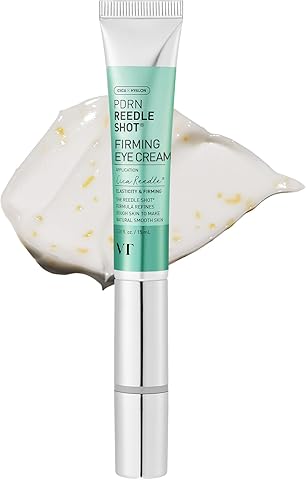
Phyto Exosome PDRN Lifting Shot Eye Cream
Medi-Peel
Specialized eye treatment with phyto exosomes, PDRN, and lifting peptides for under-eye firming.
$30–40

PDRN Pink Peptide Eye Cream
Medicube
Targets dark circles and fine lines with salmon DNA PDRN, retinol, peptides, and niacinamide — 22.5% moisture increase in 1 week.
$25–35

PDRN Collagen Hydrating Eye Cream Serum
Mixsoon
Plant-derived PDRN eye treatment from rice with collagen and peptides for deep hydration and fine line reduction.
$25–35
PDRN (polydeoxyribonucleotide) represents a paradigm shift in treating dark circles because it works through the adenosine A2A receptor pathway to stimulate genuine tissue regeneration. When injected or delivered topically into the delicate under-eye area, PDRN activates fibroblasts to produce new collagen and elastin, thickening the thin periorbital skin that allows underlying blood vessels to show through. Clinical studies have demonstrated that PDRN increases microcirculation and reduces inflammatory cytokines such as TNF-alpha and IL-6, directly addressing the vascular congestion component of dark circles.
Beyond structural repair, PDRN promotes angiogenesis — the formation of healthy new blood vessels — which replaces the damaged, leaky capillaries responsible for the bluish-purple discoloration beneath the eyes. The nucleotide fragments in PDRN also serve as building blocks for cellular DNA repair, accelerating the turnover of damaged melanocytes that contribute to periorbital hyperpigmentation.
Clinical data from Korean dermatology practices shows significant improvement in under-eye darkness after a series of 3-5 PDRN treatments spaced 2-4 weeks apart. Patients typically notice brighter, more hydrated under-eye skin within 2 weeks of the first session. The results are progressive, with collagen remodeling continuing for up to 3 months after the final treatment. PDRN eye treatments are particularly effective when combined with hyaluronic acid for volume restoration, creating a comprehensive approach that addresses both the surface discoloration and the underlying structural deficiency.
Frequently Asked Questions
How many PDRN sessions are needed to see improvement in dark circles?
Is PDRN under-eye treatment painful?
Can PDRN completely eliminate dark circles?
How does PDRN compare to fillers for dark circles?
Sources
- Squadrito F, Bitto A, Irrera N, Pizzino G, Pallio G, Minutoli L, Altavilla D. “Pharmacological Activity and Clinical Use of PDRN.” Current Pharmaceutical Design 23(27): 3990-3995 (2017). doi:10.2174/1381612823666170516153632
- Shin DH, Seo JH, Hong SP, Oh CH. “Periorbital Rejuvenation With Polydeoxyribonucleotide Injection: A Prospective Clinical Study.” Dermatologic Surgery 46(9): 1187-1193 (2020). doi:10.1097/DSS.0000000000002340
Other PDRN Skin Concerns
PDRN for Acne Scars
Acne scars represent one of the most challenging dermatological conditions to treat, affecting an es…
PDRN for Anti-Aging
Skin aging is a complex biological process driven by both intrinsic factors (genetics, hormonal chan…
PDRN for Enlarged Pores
Enlarged pores are one of the most common aesthetic complaints, affecting patients across all ages a…
PDRN for Hair Growth
Hair loss affects approximately 50% of men and 25% of women by the age of 50, with androgenetic alop…
PDRN for Hyperpigmentation
Hyperpigmentation is one of the most common dermatological concerns worldwide, affecting an estimate…
PDRN for Post-Procedure Recovery
Post-procedure recovery is a critical phase that directly impacts the outcome of aesthetic treatment…
PDRN for Rosacea
Rosacea is a chronic inflammatory skin condition affecting over 400 million people worldwide, charac…
PDRN for Skin Barrier Repair
The skin barrier — also known as the stratum corneum or acid mantle — is your body's first line of d…
PDRN for Skin Hydration
Skin hydration goes far deeper than surface moisture — it reflects the health and function of the en…
PDRN for Skin Texture
Skin texture refers to the surface quality of the skin — how smooth, even, and refined it appears an…
PDRN for Stretch Marks
Stretch marks (striae distensae) are a form of dermal scarring that affects up to 90% of women durin…
PDRN for Sun Damage
Sun damage (photoaging) is the single largest contributor to premature skin aging, responsible for u…