 PDRN Care
Best PDRN Body Care Products in 2026: Lotions, Treatments & Results
Dr. Min-Ji Park
MD, Board-Certified Dermatologist
Why Body Skin Needs Its Own PDRN Strategy
The skincare industry has spent decades focused on the face, and for good reason — it is the most visible, most expressive, and most scrutinized area of the body. But body skin makes up roughly 95% of your total skin surface area, and it ages too. Often, it is the body — the backs of the hands, the inner arms, the decolletage, the shins — that reveals a person's true age when the face has been well-maintained.
Body skin is fundamentally different from facial skin in ways that matter for PDRN application. Understanding these differences is essential for choosing the right products, applying them effectively, and setting realistic expectations for results.
How body skin differs from facial skin
Thickness. Body skin is significantly thicker than facial skin in most areas. The epidermis on the trunk is roughly 50-100 micrometers thick, compared to 30-50 micrometers on the face. The dermis follows the same pattern — thicker on the back and thighs, thinner on the inner arms and decolletage . This greater thickness means topical PDRN must travel a longer distance to reach the dermal fibroblasts where it exerts its primary effects.
Fewer sebaceous glands. Most body skin has fewer sebaceous glands than the face. The back and chest are exceptions, but the arms, legs, and hands produce significantly less sebum, resulting in a drier baseline and a lipid barrier that is more prone to dehydration, especially with age .
Lower fibroblast density. Fibroblast density varies by body region, and many body areas — particularly the extremities — have lower fibroblast concentrations than the face. This means the cellular targets for PDRN are more spread out, and the response to PDRN stimulation may be less concentrated per unit area.
Different collagen architecture. Body skin collagen is organized differently depending on the region. Areas subject to mechanical stress (knees, elbows, hands) have denser, more cross-linked collagen networks. Areas that remain relatively static (inner upper arms, abdomen) have looser collagen architecture that is more susceptible to crepiness and laxity with age.
Larger treatment area. The practical reality: treating the body requires substantially more product than treating the face. A 30ml PDRN serum that lasts a month on the face might last a week if applied to the full body. Body-specific PDRN products are formulated in larger volumes and at price points that account for this reality.
Key Body Concerns PDRN Addresses
Crepey arms
The inner upper arms are among the first body areas to show visible aging. The skin here is thin (comparable to facial skin), has few sebaceous glands, and is subject to gravity-driven sagging as underlying muscle tone decreases. Crepiness — the tissue-paper-like texture that results from collagen and elastin fragmentation — responds well to PDRN's fibroblast-stimulating mechanism . The A2A receptor activation upregulates both type I collagen and elastin production, addressing the two structural proteins whose loss creates the crepey appearance. Regular PDRN body lotion application to the inner arms, combined with gentle massage to stimulate circulation, produces gradual but meaningful improvements in skin texture and resilience over 3-6 months.
Stretch marks (striae)
Stretch marks result from rapid dermal stretching that ruptures collagen and elastin fibers — during pregnancy, rapid weight gain or loss, growth spurts, or bodybuilding. Fresh stretch marks (striae rubrae) appear red or purple due to inflammation and blood vessel visibility through the thinned dermis. Mature stretch marks (striae albae) are white or silver, representing permanent collagen scarring .
PDRN's relevance to stretch marks comes from its demonstrated ability to stimulate fibroblast proliferation, upregulate collagen synthesis, and promote angiogenesis in damaged tissue . For striae rubrae (fresh stretch marks), PDRN's anti-inflammatory properties through A2A receptor activation can reduce the inflammatory component while simultaneously stimulating new collagen deposition in the stretched dermis . For striae albae (mature stretch marks), the response is slower and more limited — the atrophic, scarred dermis has fewer viable fibroblasts to stimulate — but consistent PDRN application can improve texture and reduce the visual contrast between stretch marks and surrounding skin.
Clinical approaches using injectable PDRN for stretch marks (direct injection into the striae) have shown more dramatic results than topical application alone, particularly for mature stretch marks where the barrier overhead of topical delivery limits the concentration reaching the scarred dermis . For a deep dive into this topic, see our guide to PDRN for stretch marks.
Keratosis pilaris (KP)
Keratosis pilaris — the small, rough, "chicken skin" bumps commonly found on the upper arms, thighs, and buttocks — is driven by keratin plugging of hair follicles, often worsened by dry skin and impaired barrier function. While PDRN does not directly address the keratin plugging (that requires exfoliation with AHAs or BHAs), its barrier-repair and anti-inflammatory properties help create a healthier skin environment that reduces the severity of KP over time . Combining a PDRN body lotion with a chemical exfoliant (lactic acid or salicylic acid body wash) produces better results than either approach alone: the exfoliant clears keratin plugs while PDRN supports the barrier repair and reduces inflammation that keeps KP cycling.
Dry legs and body dehydration
Leg skin, particularly the shins, is one of the driest areas on the body. Minimal sebaceous gland density, chronic exposure to clothing friction, and poor microcirculation in the lower extremities create an environment of persistent dryness that worsens significantly with age . PDRN body lotions address this through multiple mechanisms: the PDRN itself stimulates glycosaminoglycan production (improving the dermis's intrinsic water-holding capacity) while the lotion vehicle delivers emollients and humectants that address the immediate moisture deficit .
Cellulite appearance
Cellulite is primarily a structural issue — fat herniating through weakened connective tissue septae creates the dimpled appearance. PDRN cannot fundamentally alter this architecture. However, improving the quality and thickness of the dermal collagen overlying areas of cellulite can reduce the visibility of the dimpling by creating a smoother, firmer skin surface . Think of it as improving the "canvas" rather than changing the underlying structure. PDRN body lotions applied consistently to thighs and buttocks, combined with dry brushing or massage to stimulate circulation, may produce modest improvements in skin surface texture over 4-6 months — but dramatic cellulite elimination is not a realistic expectation from any topical product.
Product Reviews: The Best PDRN Body Care in 2026
Clinical-Grade: Plinest Body
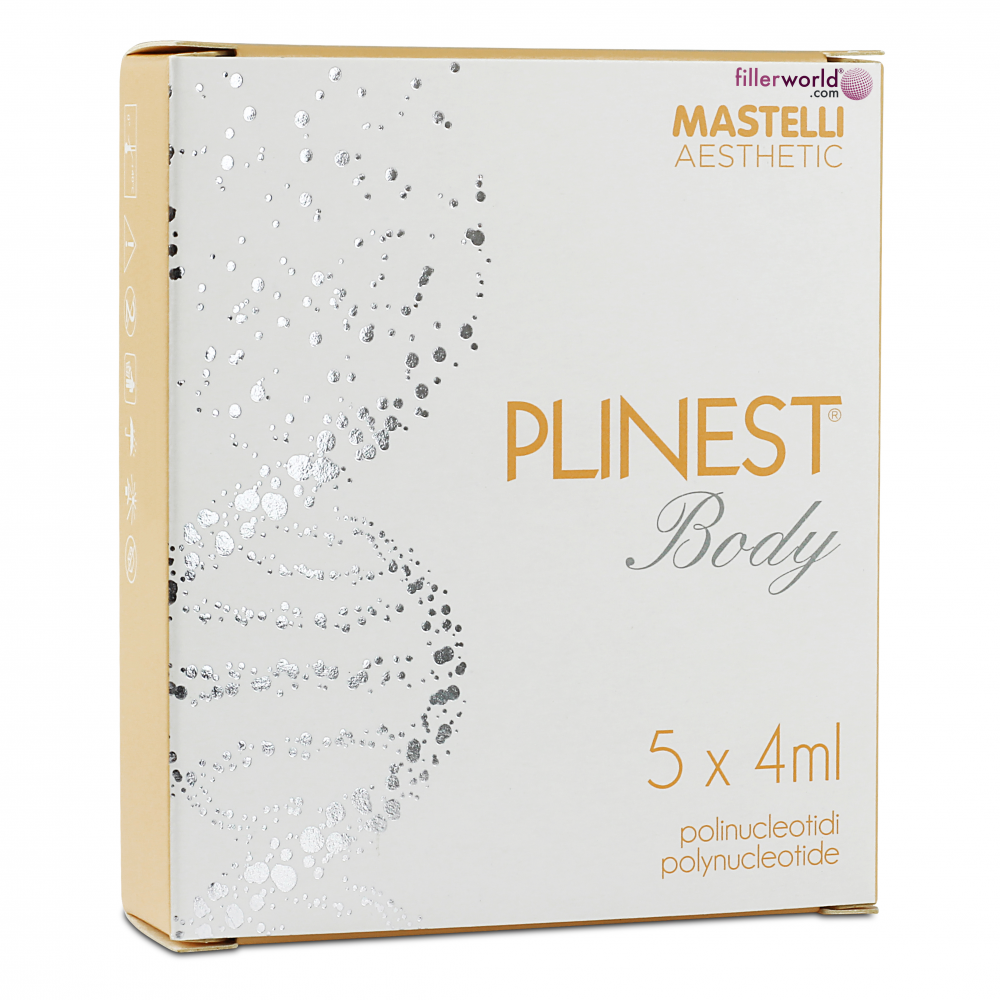
Plinest Body represents the clinical end of the PDRN body care spectrum. This is a polynucleotide-based injectable gel designed specifically for body skin rejuvenation and administered by medical professionals. The formulation delivers a high concentration of polynucleotides directly into the dermis of body areas — arms, decolletage, hands, abdomen, and thighs — bypassing the penetration limitations of topical products entirely .
Why it stands out: Plinest Body's injectable delivery achieves concentrations in the target tissue that no topical product can match. Clinical data demonstrates improvements in skin firmness, hydration, and texture in treated body areas, with effects lasting 3-6 months per treatment session . The formulation is specifically optimized for body skin — the polynucleotide concentration and gel viscosity are calibrated for the thicker dermis and larger treatment areas of the body, unlike facial PDRN injectables that are too concentrated for large-surface application.
Best for: Crepey arms, decolletage aging, hand rejuvenation, visible stretch marks, overall body skin quality improvement.
Treatment protocol: Typically 2-3 initial sessions spaced 3-4 weeks apart, followed by maintenance sessions every 4-6 months. Each session treats the target body areas with microinjections or cannula delivery. Recovery is minimal — mild redness and swelling at injection sites for 24-48 hours.
Considerations: Plinest Body is a medical device administered by licensed practitioners. It is not available for home use and represents a significant investment compared to topical products. However, for body concerns like crepey arms or aged decolletage where topical products produce slow, limited improvement, Plinest Body delivers more dramatic, faster results that topical products can then maintain between sessions.
Daily Use: Rejuran Body Lotion
Rejuran Body Lotion brings the Rejuran brand's PDRN expertise to a daily-use body format. Formulated with c-PDRN (Rejuran's proprietary PDRN) in a lightweight but moisturizing lotion vehicle, it is designed for practical daily application across large body surface areas.
Why it stands out: The formulation balances PDRN concentration with the practical reality of body care — you need enough product to cover arms, legs, and torso without the cost becoming prohibitive for daily use. The lotion texture absorbs relatively quickly for a body product, allowing you to dress within minutes of application. The c-PDRN technology is the same salmon-derived polydeoxyribonucleotide used in Rejuran's clinical injectable products, adapted to a concentration and vehicle suitable for topical body use .
Best for: General body skin maintenance, dry skin on arms and legs, maintaining results between professional PDRN treatments, daily anti-aging body care.
How to use: Apply generously to damp skin (post-shower) for optimal absorption. Focus on areas of concern — inner arms, shins, hands, decolletage — and massage in with upward circular motions to stimulate microcirculation. The damp-skin application technique is important for body PDRN products because the body's thicker stratum corneum absorbs active ingredients more effectively when hydrated.
How to Apply PDRN to Body Areas Effectively
Applying PDRN to the body is not the same as applying it to the face. The larger surface areas, thicker skin, and different barrier characteristics require adapted techniques to ensure meaningful PDRN delivery to the dermis.
Post-shower application (critical)
Always apply PDRN body products within 2-3 minutes of showering, while the skin is still damp. The shower accomplishes three things that enhance PDRN penetration: it hydrates the stratum corneum (swelling it and increasing intercellular space for penetration), it raises skin temperature (increasing blood flow and absorption), and it removes the dead cell and sebum layer that can impede product penetration . Pat skin lightly with a towel — damp, not dripping — then apply immediately.
Massage technique matters
Unlike facial application, where gentle pressing is preferred, body skin benefits from more vigorous massage during PDRN application. Firm circular motions for 30-60 seconds per area accomplish two things: they generate friction-heat that enhances absorption, and they stimulate local microcirculation, improving blood flow that delivers oxygen and nutrients to the fibroblasts you are trying to activate . Focus particularly on areas with poor natural circulation — the lower legs, the upper arms, and the hands.
Occlusion for targeted areas
For areas of particular concern — crepey inner arms, prominent stretch marks, very dry elbows and knees — apply PDRN body lotion and then wrap the area with plastic wrap or wear tight-fitting cotton clothing over the product for 1-2 hours. This occlusion technique traps heat and moisture, significantly enhancing PDRN penetration into the thicker body dermis. This is the body-care equivalent of a facial sleeping mask — creating the extended-contact, hydrated conditions that maximize nucleotide delivery to fibroblasts .
Exfoliate first (weekly)
Body skin accumulates a thicker dead cell layer than facial skin, and this corneocyte buildup can significantly impede topical PDRN penetration. Weekly exfoliation — with a body scrub, an AHA/BHA body wash, or dry brushing before showering — removes this barrier and improves PDRN absorption for the following week. A body wash containing 10% glycolic acid or lactic acid used 2-3 times per week provides chemical exfoliation without the mechanical irritation of scrubbing.
Application volume
Be generous. Body skin requires significantly more product than the face to achieve meaningful PDRN coverage. A rough guide: use a quarter-sized amount per arm, per leg (front and back), and for the torso (front and back). This means each full-body application uses approximately 10-15ml of product — a 200ml body lotion should last about 2-3 weeks of daily full-body use. If you are using a smaller or more expensive PDRN body product, prioritize the areas of greatest concern rather than diluting coverage across the entire body.
Body PDRN Routine: Morning vs Evening
Morning body routine
The morning body routine should be efficient — most people do not have time for an elaborate body care ritual before work. The goal is hydration, protection, and a baseline PDRN delivery.
- Shower with a gentle, pH-balanced body wash. Avoid hot water — it strips the lipid barrier and increases TEWL. Lukewarm is ideal.
- Pat damp — do not fully dry.
- Apply PDRN body lotion to arms, legs, and any areas of concern. Massage in with firm circular motions for 30 seconds per area.
- Sunscreen on exposed areas. If your arms, legs, or decolletage will be exposed to UV, apply SPF 50+ to these areas. This is non-negotiable — building collagen with PDRN while allowing UV to degrade it is counterproductive .
Total time: 3-5 minutes.
Evening body routine
The evening offers an opportunity for more intensive body PDRN treatment, particularly for areas of concern.
- Shower or bath. A slightly warmer (not hot) bath with colloidal oatmeal or bath oil supports barrier function and provides extended hydration to the stratum corneum.
- Exfoliate (2-3 times per week) with an AHA body wash, a gentle scrub, or dry brush before showering.
- Pat damp.
- Apply PDRN body lotion generously, massaging for 60 seconds per priority area.
- Targeted treatment for specific concerns:
- Stretch marks: Apply an additional layer of PDRN serum directly to striae, pressing in with fingertips. Consider occlusion with plastic wrap for 1-2 hours or overnight with compression garments.
- Crepey arms: Apply PDRN lotion and wear a long-sleeve cotton shirt to bed for occlusion.
- Dry legs: Apply PDRN lotion, then seal with a thin layer of body oil or petroleum jelly on the driest areas (shins, ankles).
- Hands: Apply PDRN cream (you can use your facial PDRN cream for hands), then wear cotton gloves overnight. For more detail, see our PDRN for aging hands guide.
- Rich body butter or oil as a final occlusive seal over the PDRN lotion for maximum overnight hydration.
Total time: 5-10 minutes (15-20 minutes with targeted occlusion).
Combining Professional and Topical Body PDRN
The most effective body PDRN strategy combines professional treatments with daily topical maintenance — each amplifies the other.
The combination protocol
Professional foundation: Plinest Body treatments every 4-6 months provide the deep-dermis PDRN delivery that stimulates significant fibroblast activation and collagen synthesis in body areas . Each professional session places polynucleotides directly into the dermis at concentrations that topical products cannot achieve, regardless of formulation or application technique.
Daily topical maintenance: Between professional treatments, daily application of Rejuran Body Lotion provides ongoing fibroblast stimulation at the superficial dermis level, maintains hydration, and supports the barrier function that preserves the results of professional treatments. Think of topical PDRN as the daily maintenance that protects and extends the investment of professional treatments.
Timing around professional treatments: After a Plinest Body session, wait 48-72 hours before resuming topical PDRN body lotion application. The injection sites need time to heal, and the concentration of polynucleotides already present in the dermis from the injection is sufficient during this period. After 72 hours, resume daily topical PDRN application — the combination of the deep-dermis depot from the injection and the ongoing topical delivery creates a sustained regenerative environment that maximizes collagen production.
When topical alone is sufficient
For preventive body care — maintaining good skin quality in your 30s and 40s before significant aging has occurred — daily topical PDRN body lotion may be sufficient. The fibroblasts are still abundant and responsive, and the barrier function is intact enough for topical delivery to be effective . Professional body treatments become more valuable in your 50s and beyond, or earlier if specific concerns (prominent stretch marks, advanced crepiness, significant sun damage) are not responding adequately to topical treatment alone.
When professional treatment is strongly recommended
Certain body concerns respond poorly to topical PDRN alone:
- Mature stretch marks (striae albae): The scarred, atrophic dermis has limited fibroblasts and poor topical penetration. Injectable PDRN delivered directly into the striae produces significantly better results .
- Advanced arm or thigh crepiness: When the collagen loss is severe enough to create visible tissue-paper texture, topical PDRN alone cannot deliver sufficient stimulus to the depleted dermis. Professional PDRN provides the concentrated, deep-delivery needed to stimulate meaningful regeneration .
- Post-surgical scars on the body: Large scars from procedures (C-section, orthopedic surgery, breast surgery) respond well to injectable PDRN's wound-healing and collagen-remodeling effects .
Realistic Results Timeline for Body PDRN
Body skin responds to PDRN more slowly than facial skin due to its greater thickness, lower fibroblast density in many areas, and the practical challenges of consistent daily application to large surface areas.
Topical PDRN body lotion
- Weeks 1-2: Improved hydration and smoother surface texture. This is primarily the effect of the lotion vehicle rather than PDRN-mediated collagen changes.
- Weeks 4-6: Skin feels slightly firmer to the touch. Barrier function improves measurably. Dry, rough areas (shins, elbows, knees) show meaningful improvement.
- Months 2-3: Early collagen synthesis effects become palpable — skin on the inner arms may feel more resilient and less crepey. KP severity often decreases noticeably by this point.
- Months 4-6: Visible improvement in skin texture and firmness in treated areas. Fresh stretch marks may show reduced redness and improved blending with surrounding skin. Hands appear smoother and less veiny as dermal thickness improves.
- Months 6-12: Maximum topical PDRN benefit with consistent daily use. Skin quality is measurably improved across treated areas — firmer, better hydrated, more resilient. Results plateau around 9-12 months, at which point continued use maintains the improvements.
Professional PDRN treatments (Plinest Body)
- Weeks 1-2 post-treatment: Initial healing. Mild swelling resolves. Hydration improvement is noticeable as the polynucleotide gel attracts and holds water in the dermis.
- Weeks 3-6: Fibroblast activation produces measurable new collagen. Skin firmness and elasticity improve. Treatment areas feel smoother and denser to the touch.
- Months 2-3: Peak collagen synthesis from the treatment session. Maximum improvement in skin quality is typically visible by this point .
- Months 3-6: Collagen remodeling continues but new production from the single treatment session slows. This is when the next maintenance session is ideally scheduled to sustain the regenerative stimulus.
Body Areas Where PDRN Delivers the Best Results
Not all body areas respond equally to PDRN treatment. The best results occur in areas with thinner skin (closer to facial skin characteristics), decent baseline fibroblast density, and concerns driven primarily by collagen loss rather than structural changes.
Highest-impact areas
- Hands — Thin skin, visible aging, responsive fibroblasts, dramatic improvement with consistent PDRN use. See our dedicated PDRN for aging hands guide.
- Decolletage — Thin dermis, chronic photodamage, and crepe-like texture respond well to PDRN's collagen stimulation and barrier repair .
- Neck — Already covered extensively in facial routines but anatomically body skin. PDRN is highly effective for horizontal necklines and crepiness.
- Inner upper arms — Thin, sebum-poor skin with early crepiness responds well to topical PDRN with massage.
Moderate-impact areas
- Shins and lower legs — Significant hydration and texture improvement, but thicker skin means slower collagen response.
- Abdomen — Stretch marks and post-pregnancy skin laxity show gradual improvement, best with professional PDRN treatment.
- Knees and elbows — Roughness and crepiness improve with PDRN plus exfoliation.
Lower-impact areas (manage expectations)
- Upper back — Thick skin and difficult self-application limit effectiveness. Body treatments from a partner or professional are more practical.
- Thighs — Cellulite appearance may show modest improvement in skin surface quality, but the underlying structural issue is not addressed by PDRN.
Tips for Getting the Most From Body PDRN
Consistency beats intensity
Applying PDRN body lotion every single day after showering produces better long-term results than intensive weekly treatments with gaps between them. Fibroblast stimulation is cumulative — regular daily signaling maintains a baseline of elevated collagen synthesis, while intermittent use allows MMP-driven collagen degradation to catch up between applications .
Do not skip SPF on exposed body skin
Building collagen with PDRN while allowing UV to degrade it is counterproductive. Any body area that receives regular sun exposure — arms, legs below the knee in shorts season, the decolletage — needs SPF 50+ sunscreen applied daily. This is the single most important step for preserving PDRN's collagen-building results on the body .
Combine with body-appropriate actives
- AHA/BHA body wash (2-3x per week) for exfoliation and KP management
- Body oil (jojoba, squalane, or rosehip) layered over PDRN lotion for enhanced occlusion
- Niacinamide body lotion alternated with PDRN lotion for hyperpigmentation on the body
- Urea cream (10-20%) on very dry areas (heels, elbows, knees) on alternate days from PDRN
Invest in professional treatment for stubborn concerns
If 3-6 months of consistent topical PDRN use has not produced satisfactory improvement in your primary body concern, consult a dermatologist about professional PDRN body treatments. Some concerns — mature stretch marks, advanced crepiness, significant sun damage — genuinely require the deeper delivery and higher concentrations that injectable treatment provides . Topical PDRN is excellent for maintenance and prevention, but it has limitations when the damage is deep and the fibroblasts are depleted.
Read the full body PDRN guide
For a comprehensive overview of how PDRN works on body skin, area-by-area treatment strategies, and the science behind body skin regeneration, explore our detailed guide to PDRN for body skin. For information on PDRN cream formulations that work for both face and body, see our PDRN cream guide.
The Bottom Line
Body skin deserves the same regenerative attention that facial skin receives — and PDRN provides a mechanism of action that is effective across all body areas, from the thin, delicate skin of the hands and decolletage to the thicker dermis of the arms and legs . The 2026 body PDRN landscape offers genuine options at every level: clinical injectables like Plinest Body for targeted, high-impact body rejuvenation, and daily-use topicals like Rejuran Body Lotion for accessible, whole-body maintenance.
The key principles are simple: apply to damp post-shower skin, massage thoroughly, be generous with quantity, exfoliate regularly to improve penetration, protect sun-exposed areas with SPF, and be patient — body skin responds more slowly than facial skin, but the improvements are real and cumulative. With consistent daily use, PDRN body care in 2026 is one of the most effective strategies available for maintaining youthful, resilient skin from head to toe.
References
- [1]Squadrito F, Bitto A, Irrera N, Pizzino G, Pallio G, Minutoli L, Altavilla D. Pharmacological Activity and Clinical Use of PDRN. Current Pharmaceutical Design. 2017;23(27):3948-3957. doi:10.2174/1381612823666170516153716
- [2]Colangelo MT, Galli C, Giannelli M. Polydeoxyribonucleotide: A Promising Biological Platform for Dermal Regeneration. Current Pharmaceutical Design. 2020;26(17):2049-2056. doi:10.2174/1381612826666200116154430
- [3]Galeano M, Bitto A, Altavilla D, et al.. Polydeoxyribonucleotide stimulates angiogenesis and wound healing in the genetically diabetic mouse. Wound Repair and Regeneration. 2008;16(2):208-217. doi:10.1111/j.1524-475X.2008.00361.x
- [4]Ud-Din S, McGeorge D, Bayat A. Topical management of striae distensae (stretch marks): prevention and therapy of striae rubrae and albae. Journal of the European Academy of Dermatology and Venereology. 2016;30(2):211-222. doi:10.1111/jdv.13223
- [5]Farage MA, Miller KW, Elsner P, Maibach HI. Characteristics of the Aging Skin. Advances in Wound Care. 2013;2(1):5-10. doi:10.1089/wound.2011.0356
- [6]Cavallini M, Papagni M. Long chain polynucleotide gel and target skin areas: hand, neck and decolletage. Journal of Cosmetic and Laser Therapy. 2019;21(4):218-224. doi:10.1080/14764172.2018.1511913
Recommended Products
Plinest Body
Mastelli
PDRN injectable specifically formulated for body areas — neck, décolletage, hands, and arms rejuvenation.
$250–500 per session

Body Lotion c-PDRN
Rejuran
Full-body PDRN care with c-PDRN technology in a lightweight, fast-absorbing lotion for skin quality improvement.
$40–60
Related Posts
PDRN for Body Skin: Rejuvenating Your Neck, Hands, and Beyond
PDRN is not just for your face. Discover how polydeoxyribonucleotide therapy can rejuvenate the neck, decolletage, hands, and body skin — areas that often reveal aging first but receive the least attention.
PDRN for Stretch Marks: A Regenerative Approach to Striae Treatment
Stretch marks result from dermal rupture and collagen fragmentation. Learn how PDRN's ability to stimulate fibroblast proliferation, collagen synthesis, and extracellular matrix restoration offers a regenerative approach to improving striae.
PDRN for Aging Hands: How DNA Repair Technology Rejuvenates Hand Skin
Hands often reveal age before the face does. Learn how PDRN treatments — both injectable and topical — address thinning skin, crepiness, and visible veins on aging hands through cellular-level regeneration.