 PDRN Care
Using PDRN After Chemical Peels: Recovery Protocol and Benefits
Dr. Min-Ji Park
MD, Board-Certified Dermatologist
How Chemical Peels Work and Why Recovery Matters
Chemical peels use acid solutions to dissolve the bonds between skin cells, causing controlled exfoliation at a depth determined by the acid type, concentration, and application time. The body responds to this controlled injury by producing new skin cells and remodeling collagen in the treated area .
The quality of the healing response directly determines the quality of the final result. Poor recovery management can lead to prolonged redness, post-inflammatory hyperpigmentation, delayed healing, and in severe cases, scarring. This is why what you do after a peel matters as much as the peel itself.
Peel depths and healing demands
Superficial peels (glycolic acid 20-50%, salicylic acid 20-30%, lactic acid 30-40%) remove the stratum corneum and part of the epidermis. Recovery is mild with 1 to 3 days of redness and flaking. The skin barrier is compromised but not destroyed.
Medium peels (TCA 20-35%, glycolic acid 50-70%, Jessner's solution) penetrate through the entire epidermis to the papillary dermis. Recovery involves 5 to 7 days of significant peeling, redness, and sensitivity. The wound extends into the dermis, triggering meaningful collagen remodeling .
Deep peels (TCA 50%+, phenol) reach the reticular dermis. Recovery takes 2 to 3 weeks of intensive wound care with risk of complications including scarring and pigment changes. These are rarely performed today due to the availability of fractional lasers with more controllable results.
Why PDRN Is an Ideal Post-Peel Recovery Agent
PDRN's mechanism of action aligns precisely with the biological needs of post-peel skin. Each phase of wound healing benefits from PDRN's multi-pathway approach .
Inflammatory phase (days 0-3)
Immediately after a chemical peel, the immune system mounts an inflammatory response. Neutrophils and macrophages flood the treated area, releasing cytokines that coordinate the healing process. Excessive inflammation, however, damages surrounding healthy tissue and increases the risk of hyperpigmentation, especially in darker skin tones.
PDRN activates adenosine A2A receptors, which downregulate pro-inflammatory cytokines TNF-alpha, IL-6, and IL-8 . This modulates rather than suppresses the inflammatory response, allowing necessary immune activity while preventing the excessive inflammation that leads to complications.
Proliferative phase (days 3-14)
During this phase, keratinocytes migrate to re-epithelialize the wound surface, fibroblasts begin producing new collagen, and new blood vessels form to supply the regenerating tissue. PDRN supports all three processes simultaneously:
- Keratinocyte proliferation: PDRN provides nucleotide building blocks through the salvage pathway, enabling faster cell division and wound closure .
- Fibroblast activation: PDRN stimulates fibroblast proliferation and procollagen synthesis via the PKA-CREB signaling pathway .
- Angiogenesis: PDRN upregulates VEGF, promoting new capillary formation that delivers oxygen and nutrients to the healing tissue .
Remodeling phase (weeks 2-12+)
Collagen produced during wound healing is initially disorganized type III collagen. Over weeks to months, it is gradually replaced by stronger, more organized type I collagen. PDRN supports this remodeling by maintaining elevated fibroblast activity and providing the cellular building blocks needed for ongoing collagen turnover .
Post-Peel PDRN Protocol by Peel Depth
After superficial peels
Superficial peels have minimal downtime, and PDRN can be introduced early.
Day 0 (same day): After the neutralization step, once any tingling has subsided and the skin feels calm, apply a PDRN hydrating mist. Anua PDRN Hydrating Mist is well-suited for this purpose because it delivers PDRN without the physical contact of serum application.
Days 1-3: Apply PDRN serum morning and evening to clean skin. Follow with a gentle, fragrance-free moisturizer and broad-spectrum SPF 50 sunscreen during the day.
Days 4-7: Continue PDRN serum. Flaking is normal and should not be picked or peeled. The PDRN serum helps keep the flaking skin hydrated and supports the new skin forming underneath.
Weeks 2-4: Maintain PDRN application to support the ongoing collagen remodeling phase. Gradually reintroduce other active ingredients starting at week 2.
After medium peels
Medium peels require a more structured recovery approach.
Day 0: Do not apply any products unless specifically directed by your dermatologist. The skin is an open wound.
Days 1-2: Once initial oozing has stopped and a thin protective film has formed, begin PDRN mist application 2 to 3 times daily. Use a spray application that does not require touching the skin.
Days 3-5: Transition to PDRN serum if the skin can tolerate gentle touch. Apply with clean fingertips using a pressing motion, not rubbing. Follow with a PDRN-enriched cream like Genabelle PDRN Rejuvenating Cream for added barrier support .
Days 6-10: Continue PDRN serum and cream twice daily. Peeling should be nearly complete. Begin regular sunscreen application as the new skin is extremely photosensitive.
Weeks 2-8: Maintain daily PDRN serum application. This is the critical collagen remodeling window. Do not introduce retinoids, AHAs, or other active exfoliants for at least 4 weeks after a medium peel .
After deep peels
Deep peels require medically supervised recovery. Any post-procedure skincare should be approved by the treating physician.
Days 0-5: Medical wound care only. The physician may apply or inject PDRN as part of the in-office wound management protocol.
Days 6-10: Once re-epithelialization is progressing, PDRN mist may be introduced under physician guidance.
Days 11-21: Transition to PDRN serum and cream as the skin surface closes.
Weeks 4-16: Long-term PDRN application supports the extended collagen remodeling phase that follows deep peels .
What to Avoid After Chemical Peels
During the PDRN recovery phase, certain products and behaviors can undermine healing:
- Retinoids: No retinol, tretinoin, or retinal for at least 2 weeks after superficial peels and 4 to 6 weeks after medium or deep peels. These increase cell turnover on already compromised skin.
- AHAs and BHAs: The skin has already been exfoliated by the peel. Adding chemical exfoliants can cause burns, irritation, and hyperpigmentation .
- Vitamin C at high concentrations: L-ascorbic acid above 10% can be irritating on post-peel skin. Reintroduce gradually after the peeling phase is complete.
- Physical exfoliation: Do not scrub, peel, or pick at flaking skin. Let it shed naturally.
- Sun exposure: Post-peel skin is extremely photosensitive. Strict SPF 50 sunscreen use and sun avoidance are essential for at least 4 weeks.
- Fragranced products: Avoid any products with synthetic fragrance, essential oils, or denatured alcohol.
PDRN is notably absent from the avoidance list. It is well-tolerated on compromised skin, does not cause irritation, and actively supports the healing process .
PDRN vs. Other Post-Peel Recovery Products
Several products compete for a place in post-peel recovery routines. Here is how PDRN compares.
PDRN vs. hyaluronic acid
Hyaluronic acid is the most common post-peel ingredient, valued for its hydrating properties. It draws and binds water, keeping the healing skin moist. However, hyaluronic acid does not stimulate collagen production or accelerate wound healing at the cellular level. PDRN provides both hydration support and active cellular regeneration. Using both together is ideal: hyaluronic acid for moisture and PDRN for biological repair .
PDRN vs. centella asiatica (cica)
Centella asiatica is popular for its soothing and anti-inflammatory properties. Like PDRN, it has some collagen-stimulating effects. However, PDRN acts through a more specific and well-characterized mechanism (A2A receptor activation and nucleotide supplementation) with stronger evidence for wound healing acceleration . The two can be combined effectively.
PDRN vs. growth factors
Topical growth factors (EGF, FGF, TGF-beta) directly signal cells to proliferate and produce collagen. PDRN complements growth factors by providing the cellular building blocks that growth factor-stimulated cells need to execute their programmed responses . Combining PDRN with growth factors provides both the signal (growth factors) and the raw materials (PDRN).
Choosing the Right PDRN Product for Post-Peel Use
Not all PDRN products are equally suitable for post-peel application. Key considerations:
- Minimal ingredients: Post-peel skin is sensitized. Choose PDRN products with short ingredient lists and no potential irritants (fragrance, essential oils, alcohol, active acids).
- Appropriate format: Mists for the first days when skin is raw, serums for the active healing phase, and creams for the later remodeling phase.
- Concentration: Higher PDRN concentration is generally better for post-peel use. Look for products where PDRN or sodium DNA is listed in the first five ingredients.
- pH compatibility: Post-peel skin has a disrupted acid mantle. Products with a pH close to physiological (5.0 to 6.0) are gentler than strongly acidic formulations .
Frequently Asked Questions
How soon after a chemical peel can I apply PDRN?
For superficial peels, PDRN mist can typically be applied the same day once the peel has been neutralized. For medium peels, wait until initial oozing stops (usually 24 to 48 hours). For deep peels, follow your physician's specific guidance .
Will PDRN interfere with the peel's results?
No. PDRN enhances the peel's results by supporting the collagen remodeling process that the peel was designed to trigger. PDRN does not reverse or neutralize the exfoliation that has already occurred .
Can I use PDRN before a chemical peel to prepare my skin?
Yes. Using PDRN serum for 2 to 4 weeks before a scheduled chemical peel can improve baseline skin health and may support better healing post-procedure. Discontinue PDRN 24 hours before the peel to ensure the skin surface is clean for acid application .
Is PDRN safe for all skin types after a peel?
PDRN is well-tolerated across all Fitzpatrick skin types. Its anti-inflammatory properties may be particularly beneficial for darker skin tones (Fitzpatrick IV-VI), which have a higher risk of post-inflammatory hyperpigmentation after chemical peels .
References
- [1]Squadrito F, Bitto A, Irrera N, Pizzino G, Pallio G, Minutoli L, Altavilla D. Pharmacological Activity and Clinical Use of PDRN. Current Pharmaceutical Design. 2017;23(27):3948-3957. doi:10.2174/1381612823666170516153716
- [2]Galeano M, Bitto A, Altavilla D, Minutoli L, Polito F, Calo M. Polydeoxyribonucleotide stimulates angiogenesis and wound healing. Wound Repair and Regeneration. 2008;16(2):208-217. doi:10.1111/j.1524-475X.2008.00361.x
- [3]Colangelo MT, Galli C, Gentile P. Polydeoxyribonucleotide: A Promising Biological Platform for Dermal Regeneration. Current Pharmaceutical Design. 2020;26(17):2049-2056. doi:10.2174/1381612826666200210100726
- [4]Kim TH, Kim JY, Bae JH, Kim HM, Park ES. Biostimulatory effects of polydeoxyribonucleotide for facial skin rejuvenation. Journal of Cosmetic Dermatology. 2019;18(6):1767-1773. doi:10.1111/jocd.12958
- [5]Soleymani T, Lanoue J, Rahman Z. A practical approach to chemical peels: a review of fundamentals and step-by-step algorithmic protocol for treatment. Journal of Clinical and Aesthetic Dermatology. 2018;11(8):21-28.
Recommended Products

5 PDRN Collagen Intense Vitalizing Serum
COSRX
Multi-PDRN formula with 5 types of PDRN from salmon, centella, rice, lactobacillus, and sea grapes plus low-molecular collagen.
$30–40
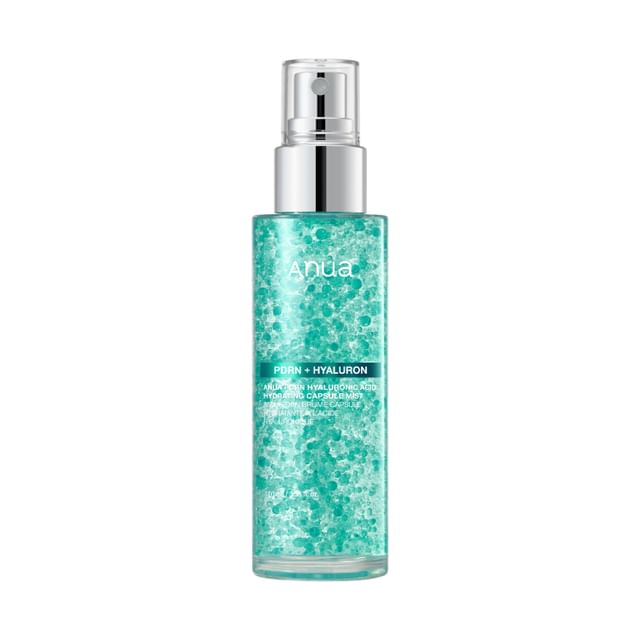
PDRN Hyaluronic Acid Hydrating Capsule Mist
Anua
Hydrating capsule mist with PDRN and hyaluronic acid for instant moisture boost throughout the day.
$19–26

PDRN Rejuvenating Cream
Genabelle
Lightweight moisturizer with PDRN, CICA, and triple-layer hyaluronic acid for deep hydration and soothing.
$25–35

Rejuran Healer
Pharmaresearch Products
The original Korean PDRN skin booster — c-PDRN derived from salmon DNA for skin rejuvenation and barrier repair.
Related Posts
PDRN After Laser Treatment: How It Speeds Recovery and Boosts Results
Using PDRN after laser treatments like fractional CO2, IPL, or picosecond lasers can dramatically speed healing and enhance results. Here is the science behind PDRN as a post-laser recovery tool.
PDRN for Post-Procedure Recovery: After Laser, Peels, and Microneedling
PDRN is used in Korean dermatology clinics as a go-to recovery agent after laser treatments, chemical peels, and microneedling. Learn why it accelerates healing, reduces redness, and improves treatment outcomes.
PDRN for Hyperpigmentation and Dark Spots: What the Evidence Shows
PDRN is not a traditional brightening agent — but its tissue repair and anti-inflammatory properties make it surprisingly effective for certain types of hyperpigmentation. Learn which dark spots respond to PDRN and which need different approaches.