 PDRN Care
PDRN and Vitamin E: The Antioxidant Repair Duo
James Liu
MSc, Cosmetic Chemistry
Why This Pairing Makes Sense
Skin aging and damage are driven by two interconnected processes: oxidative stress (free radical damage) and impaired tissue repair [2][4]. Most skincare ingredients address one or the other. PDRN and vitamin E address both — simultaneously and through complementary mechanisms — making them a logical and effective pairing for comprehensive skin protection and recovery.
Vitamin E (tocopherol) is the skin's primary lipid-soluble antioxidant, neutralizing free radicals before they can damage cell membranes, DNA, and structural proteins [2][3]. It acts as a shield, preventing damage from occurring.
PDRN (polydeoxyribonucleotide) activates cellular repair mechanisms through the A2A adenosine receptor, stimulating fibroblast activity, collagen synthesis, and anti-inflammatory pathways [1][4]. It acts as a repair crew, fixing damage that has already occurred.
Together, they form a defend-and-repair system: vitamin E reduces the incoming damage load while PDRN accelerates the recovery from whatever damage gets through [1][2].
Understanding Vitamin E in Skincare
Forms of Vitamin E
Vitamin E is not a single compound but a family of eight related molecules — four tocopherols and four tocotrienols [2]. In skincare, the most commonly used forms are:
- Alpha-tocopherol — the most biologically active form, best studied for skin benefits [3]
- Tocopheryl acetate — a stabilized ester form that converts to active tocopherol in the skin; more stable in formulations but requires enzymatic conversion [3][5]
- Tocotrienol — emerging research suggests superior antioxidant activity compared to tocopherols in certain contexts [2]
How Vitamin E Protects Skin
Vitamin E resides in cell membranes, where it intercepts free radicals generated by UV radiation, pollution, and normal metabolic processes [2][3]. When a free radical attacks a lipid molecule in the cell membrane, vitamin E donates a hydrogen atom to neutralize it, breaking the chain reaction of lipid peroxidation. This protects:
- Cell membrane integrity — preventing the structural damage that leads to cell death
- Collagen and elastin fibers — shielding structural proteins from oxidative degradation
- DNA — reducing oxidative mutations that contribute to photoaging and cellular dysfunction [2][5]
After neutralizing a free radical, vitamin E becomes oxidized and needs to be regenerated by other antioxidants (particularly vitamin C), which is why vitamin E and vitamin C are often paired together [3].
The Synergy Between PDRN and Vitamin E
Complementary Mechanisms
The PDRN-vitamin E pairing works because each ingredient fills the gap left by the other:
Vitamin E prevents damage but cannot repair it. Once oxidative stress has degraded collagen fibers, damaged fibroblasts, or triggered chronic inflammation, vitamin E alone cannot reverse these changes [2][3]. It is purely protective.
PDRN repairs damage but does not prevent it. While PDRN's anti-inflammatory effects indirectly reduce some oxidative stress, its primary function is regenerative — stimulating cells to produce new collagen, proliferate, and restore tissue architecture [1][4].
Combined, they create a cycle: vitamin E minimizes the daily damage burden, and PDRN ensures that whatever damage accumulates is actively repaired. This means the skin's net collagen balance tips toward production rather than degradation [1][2].
Anti-Inflammatory Convergence
Both PDRN and vitamin E have anti-inflammatory properties, but through different pathways [1][2]:
- PDRN suppresses NF-kB signaling and reduces TNF-alpha, IL-6, and IL-8 through A2A receptor activation [1]
- Vitamin E reduces inflammation by inhibiting prostaglandin synthesis and modulating protein kinase C activity [2][5]
This dual anti-inflammatory action provides broader coverage against chronic low-grade skin inflammation (inflammaging), which is increasingly recognized as a primary driver of premature skin aging [2].
Membrane Protection Enhances PDRN Efficacy
Here is a subtler but important point: vitamin E protects cell membranes, including the membranes of the fibroblasts that PDRN is trying to activate [2][3]. If fibroblast membranes are damaged by oxidative stress, the cells respond less effectively to growth signals — including the A2A receptor stimulation that PDRN provides. By maintaining fibroblast membrane integrity, vitamin E may actually enhance the cellular response to PDRN [2][4].
How to Use PDRN and Vitamin E Together
Layering Approach
For those using separate PDRN and vitamin E products:
- Cleanse — start with a clean, slightly damp face
- PDRN serum — apply first as a lightweight, water-based treatment
- Wait 1-2 minutes — allow initial absorption
- Vitamin E product — apply as a heavier, oil-based treatment (vitamin E is lipid-soluble and typically comes in richer formulations)
- Moisturizer — seal everything in
- Sunscreen (AM) — vitamin E enhances sunscreen efficacy
This order follows the thin-to-thick principle: water-based PDRN serum goes on before oil-based vitamin E products.
Combined Products
Some formulations include both PDRN and vitamin E in a single product, which simplifies application. These products typically use a stable vitamin E derivative (tocopheryl acetate) alongside PDRN in an emulsion base that accommodates both water-soluble and lipid-soluble actives.
Morning vs Night
Both PDRN and vitamin E can be used morning and night, but their benefits are optimized differently:
- Morning: Vitamin E provides daytime antioxidant protection against UV and pollution. PDRN supports cellular function throughout the day. The combination works well under sunscreen.
- Night: PDRN's regenerative effects align with the skin's natural nighttime repair cycle. Vitamin E provides overnight protection against oxidative stress from metabolic processes.
For maximum benefit, use both ingredients twice daily. If choosing only one application, nighttime use allows PDRN to support the body's natural repair window while vitamin E provides overnight protection.
Concentration and Formulation Considerations
Vitamin E Concentrations
Clinical studies showing skin benefits typically use alpha-tocopherol concentrations of 2-5% [3][5]. Higher concentrations (above 10%) can occasionally cause contact dermatitis in sensitive individuals. Most well-formulated vitamin E serums and creams fall within the 1-5% range.
PDRN Concentrations
Effective topical PDRN products typically contain PDRN concentrations ranging from 0.1% to 5%, with higher concentrations found in ampoules and concentrated serums. The molecular weight of the PDRN fragments also matters — smaller fragments penetrate more easily through the stratum corneum.
Stability Considerations
Vitamin E (particularly alpha-tocopherol) is susceptible to oxidation when exposed to air and light [3]. Look for products in opaque, airless pump packaging rather than dropper bottles. Tocopheryl acetate is more stable but requires conversion in the skin to become active [3][5].
PDRN is relatively stable in formulation but benefits from refrigerated storage to maintain the integrity of the polynucleotide fragments.
Who Benefits Most from This Combination?
| Skin Concern | How PDRN + Vitamin E Helps |
|---|---|
| Photoaging | Vitamin E prevents further UV damage; PDRN repairs existing collagen loss |
| Post-inflammatory hyperpigmentation | Dual anti-inflammatory action reduces melanocyte overstimulation |
| Pollution-exposed skin | Vitamin E neutralizes pollution-generated free radicals; PDRN repairs barrier damage |
| Dry, dehydrated skin | PDRN improves barrier function; vitamin E strengthens cell membranes and reduces TEWL |
| Post-procedure recovery | Vitamin E provides antioxidant protection for vulnerable healing skin; PDRN accelerates tissue repair |
| General anti-aging prevention | Combined defend-and-repair action slows net collagen loss |
Adding Vitamin C for the Triple Antioxidant Network
While PDRN + vitamin E is a powerful pairing on its own, adding vitamin C (ascorbic acid) creates the skin's complete antioxidant network [3]. Vitamin C regenerates oxidized vitamin E, restoring its antioxidant capacity. This means the vitamin E in your skin can neutralize more free radicals before being depleted.
A complete morning routine might include:
- Vitamin C serum (L-ascorbic acid, 10-20%)
- PDRN serum
- Vitamin E moisturizer or oil
- Sunscreen
This stack provides maximum antioxidant defense (vitamins C and E) plus active tissue repair (PDRN), which is arguably the most scientifically complete anti-aging topical approach available [1][2][3].
The Bottom Line
PDRN and vitamin E complement each other perfectly because they address the two sides of the skin aging equation: damage prevention and damage repair [1][2]. Vitamin E neutralizes free radicals before they can degrade collagen and damage cells, while PDRN stimulates fibroblasts to produce new collagen and repair tissue that has been affected by oxidative stress. Together, they shift the skin's balance toward net regeneration — less damage coming in, more repair going on. Whether through layered individual products or combined formulations, this pairing delivers comprehensive protection and recovery for healthier, more resilient skin [3][4][5].
References
- [1]Squadrito F, Bitto A, Irrera N, et al.. Pharmacological Activity and Clinical Use of PDRN. Curr Pharm Des. 2017;23(27):3948-3957. doi:10.2174/1381612823666170516153716
- [2]Rizvi S, Raza ST, Ahmed F, Ahmad A, Abbas S, Mahdi F. The Role of Vitamin E in Human Health and Some Diseases. Sultan Qaboos Univ Med J. 2014;14(2):e157-e165. doi:10.12816/0003751
- [3]Thiele JJ, Hsieh SN, Ekanayake-Mudiyanselage S. Vitamin E: Critical Review of Its Current Use in Cosmetic and Clinical Dermatology. Dermatol Surg. 2005;31(7):805-813. doi:10.1111/j.1524-4725.2005.31724
- [4]Colangelo MT, Galli C, Giannelli M. Polydeoxyribonucleotide: A Promising Biological Platform for Dermal Regeneration. Curr Pharm Des. 2020;26(17):2049-2056. doi:10.2174/1381612826666200110091648
- [5]Keen MA, Hassan I. Vitamin E in dermatology. Indian Dermatol Online J. 2016;7(4):311-315. doi:10.4103/2229-5178.185494
Recommended Products
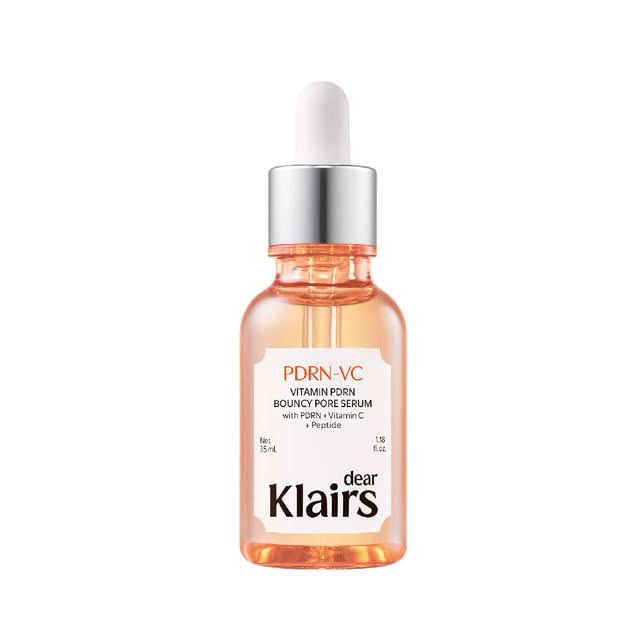
Vitamin PDRN Bouncy Pore Serum
Dear, Klairs
Vitamin-enriched PDRN serum targeting enlarged pores with a bouncy, lightweight texture.
$17–24

5 PDRN Collagen Intense Vitalizing Serum
COSRX
Multi-PDRN formula with 5 types of PDRN from salmon, centella, rice, lactobacillus, and sea grapes plus low-molecular collagen.
$30–40

Revive PDRN Serum
Beauty of Joseon
A traditional-medicine inspired PDRN serum from Beauty of Joseon, blending salmon PDRN with rice extract and ginseng for resilient, glowing skin.
$19–25
Related Posts
What is PDRN? The Complete Guide to Salmon DNA Skincare
PDRN (Polydeoxyribonucleotide) is a DNA-derived skincare ingredient extracted from salmon. Learn what PDRN means, how it works, its benefits for skin, and the different product types available.
PDRN Ingredient Interactions: What to Combine and What to Avoid
PDRN is one of the most compatible active ingredients in skincare, but knowing which combinations amplify its effects and which to time carefully makes a real difference. This guide covers every major ingredient pairing — retinol, vitamin C, AHAs, BHAs, niacinamide, peptides, and more — with specific application order and timing advice.
PDRN and Hyaluronic Acid: Why This Combination Works So Well
PDRN rebuilds skin from the inside while hyaluronic acid hydrates from the outside. Learn how to layer these two ingredients for maximum benefit, which products combine them, and why the pairing makes scientific sense.