 PDRN Care
PDRN for Melanin-Rich Skin: A Fitzpatrick III-VI Guide to Safe, Effective Regenerative Skincare
Dr. Sarah Chen
PhD, Molecular Biology
The Skincare Industry's Blind Spot
Skincare science has historically been developed with lighter skin tones as the default. Clinical trials overrepresent Fitzpatrick I-II skin types, product development prioritizes concerns like redness and photoaging that manifest differently in darker skin, and marketing rarely addresses the specific biological realities of melanin-rich skin [4][6]. This is not merely a representation issue — it is a safety issue. Ingredients that are well-tolerated by lighter skin can trigger significant adverse effects in Fitzpatrick III-VI skin types, most notably post-inflammatory hyperpigmentation (PIH) — a paradoxical outcome where the very treatment meant to improve skin creates new pigmentation problems [3][8].
PDRN represents a genuinely different category of skincare active — one that is inherently compatible with melanin-rich skin because of how it works at the biological level. It does not bleach, does not peel, does not photosensitize, and does not irritate. Instead, it repairs tissue through mechanisms that address the root causes of the skin concerns most prevalent in darker skin tones: inflammation-driven hyperpigmentation, impaired wound healing, and loss of structural integrity [1][2]. This guide explains why, and how to use it effectively.
Why Melanin-Rich Skin Has Unique Skincare Needs
The PIH vulnerability
Post-inflammatory hyperpigmentation is the single most important dermatological concern specific to melanin-rich skin [3][4]. In Fitzpatrick III-VI skin, any inflammatory event — acne, an allergic reaction, an aggressive skincare product, a cosmetic procedure, even friction — can trigger excess melanin production that persists long after the original inflammation resolves [3][8]. The mechanism is straightforward: inflammation activates melanocytes (pigment-producing cells), and in skin with higher baseline melanin production, this activation produces disproportionate and persistent pigmentation changes [3].
PIH affects an estimated 65% of African Americans, and is the most common reason for dermatological consultation among people with darker skin [3][4]. The cruel irony is that many treatments for other skin conditions — retinoids, chemical peels, laser treatments — are themselves inflammatory enough to trigger PIH in the skin types they are meant to help [3][8]. This creates a therapeutic Catch-22: the treatment for one problem becomes the cause of another.
Different aging patterns
Melanin-rich skin ages differently from lighter skin [6]. Higher melanin content provides greater natural UV protection, which means photoaging — the wrinkles, sunspots, and textural changes that dominate aging in lighter skin — develops more slowly and later in life [4][6]. Instead, the primary aging concerns in darker skin are: loss of skin evenness and increased dyschromia, periorbital hyperpigmentation (dark circles), nasolabial fold deepening, and mottled pigmentation [6]. These concerns respond better to anti-inflammatory and repair-based approaches than to the aggressive resurfacing strategies that lighter skin can tolerate [4][8].
Greater keloid and hypertrophic scarring risk
Fitzpatrick IV-VI skin types have significantly higher rates of keloid and hypertrophic scar formation following skin injury [6]. This means that procedures involving skin disruption — microneedling, laser treatments, deep chemical peels — carry higher risk, and post-procedure recovery requires ingredients that support healing without excessive inflammatory stimulation [4][6]. The ideal post-procedure ingredient for melanin-rich skin calms inflammation, supports tissue repair, and does not stimulate melanocytes — a description that maps precisely onto PDRN's mechanism of action [1][2].
Why PDRN Is Particularly Well-Suited for Darker Skin Tones
Non-irritating mechanism of action
PDRN works through two primary pathways: activating the adenosine A2A receptor to trigger anti-inflammatory and regenerative signaling, and supplying deoxyribonucleotide building blocks for DNA repair via the salvage pathway [1][2][7]. Neither pathway involves irritation. There is no acid-based exfoliation, no retinoid-receptor binding that causes initial irritation flares, no oxidative burst from vitamin C at high concentrations [1]. PDRN does not disrupt the skin surface to deliver its benefits — it works with existing cellular machinery, providing substrates and signals rather than forcing chemical reactions [2][7].
For melanin-rich skin, this non-irritating profile is not merely a comfort feature — it is a safety requirement. Every inflammatory event, no matter how minor, carries PIH risk in Fitzpatrick III-VI skin [3][8]. An ingredient that achieves cellular repair, collagen stimulation, and skin quality improvement without triggering inflammation is fundamentally safer for darker skin tones than one that achieves similar endpoints through irritating mechanisms [1][2][3].
Anti-inflammatory properties specifically address PIH
PIH is, by definition, inflammation-driven pigmentation [3]. PDRN's primary mechanism — A2A receptor activation — is potently anti-inflammatory [1][5]. By inhibiting NF-kB nuclear translocation, reducing pro-inflammatory cytokine production (TNF-alpha, IL-1beta, IL-6, IL-8), and decreasing immune cell infiltration into tissue, PDRN directly addresses the upstream cause of PIH rather than attempting to bleach the downstream melanin it produces [1][5]. This is a fundamentally different approach from conventional hyperpigmentation treatments like hydroquinone, kojic acid, or arbutin, which target melanin synthesis or melanocyte activity directly but do nothing to prevent the inflammatory triggers that cause PIH in the first place [3][8].
Think of it this way: most depigmenting agents mop up the spilled paint (melanin) after it has been spilled. PDRN prevents the bucket (inflammation) from tipping over in the first place [1][3].
No photosensitivity
Many effective skincare actives — retinoids, AHAs, BHAs, certain vitamin C derivatives — increase the skin's sensitivity to UV radiation [8]. For darker skin tones, which already face a unique calculus with sun protection (melanin provides partial natural UV protection, but sunscreen is still necessary to prevent PIH and melasma), adding photosensitizing ingredients complicates an already nuanced equation [4][6]. PDRN causes zero photosensitivity [1][2]. It can be used morning or evening, year-round, without requiring changes to sun protection behavior or creating additional UV vulnerability.
Safe for post-procedure recovery
When individuals with Fitzpatrick III-VI skin undergo cosmetic procedures — microneedling, laser treatments, chemical peels — the post-procedure recovery period is critical [4][6]. Inflammation must be managed aggressively to prevent PIH, but aggressive management cannot itself be inflammatory [3][8]. PDRN is ideally positioned for this application: it accelerates wound healing through fibroblast stimulation and angiogenesis support, calms inflammation through A2A receptor activation, provides nucleotides for DNA repair in procedure-damaged cells, and does all of this without creating additional inflammatory burden [1][2][5].
Clinical use of PDRN in post-procedure settings has demonstrated accelerated healing times and improved outcomes, making it a valuable addition to the recovery protocol for melanin-rich skin types who pursue professional treatments [1][5].
PDRN vs. Common Actives: A Safety Comparison for Melanin-Rich Skin
Understanding how PDRN compares to other popular actives helps contextualize why it deserves a central role in darker skin routines.
PDRN vs. Retinol
Retinol is one of the most evidence-backed anti-aging ingredients, but it comes with significant caveats for melanin-rich skin [8]. The initial "retinization" period — weeks of redness, peeling, dryness, and sensitivity — is an inflammatory event that frequently triggers PIH in Fitzpatrick III-VI skin [3][8]. Even after adaptation, retinol increases photosensitivity, which adds a layer of UV management complexity [8]. PDRN achieves many of retinol's benefits — collagen stimulation, cellular turnover support, improved skin quality — through entirely non-inflammatory mechanisms [1][2]. For individuals who cannot tolerate retinol due to PIH risk, PDRN offers a viable alternative pathway to similar long-term skin improvement goals.
PDRN vs. AHA/BHA
Chemical exfoliants (glycolic acid, salicylic acid, lactic acid) are popular for addressing texture, tone, and acne, but they work by dissolving the bonds between skin cells — an inherently disruptive and potentially inflammatory process [3][8]. In melanin-rich skin, even mild chemical exfoliation can trigger PIH, particularly if the product is too concentrated, left on too long, or used too frequently [3][8]. PDRN does not exfoliate. It improves skin texture and tone through cellular repair and regeneration rather than through surface removal [1][2]. Users can still incorporate gentle exfoliation alongside PDRN, but PDRN itself adds no irritation risk.
PDRN vs. Vitamin C
Vitamin C (ascorbic acid) is valued for its brightening and antioxidant properties, but high-concentration formulas (15-20% L-ascorbic acid) can cause stinging, redness, and irritation — especially on reactive skin [8]. The low pH required for vitamin C stability and penetration can also disrupt the skin barrier in sensitive individuals [3]. PDRN can be used alongside vitamin C at lower, gentler concentrations, but for individuals whose skin reacts to vitamin C, PDRN provides complementary brightening benefits through its anti-inflammatory mechanism — reducing the inflammation that drives PIH and uneven tone — without any pH-dependent irritation risk [1][2].
PDRN Routine Recommendations for Fitzpatrick III-VI Skin
Morning routine
- Gentle, pH-balanced cleanser — Avoid foaming sulfate cleansers that can disrupt the skin barrier. A cream or gel cleanser in the pH 5.0-5.5 range is ideal for melanin-rich skin, which tends to have a slightly lower natural pH that aggressive cleansers can disturb.
- PDRN serum — Apply 2-3 drops to clean, slightly damp skin. The Torriden DIVE-IN PDRN Serum or COSRX 5% PDRN Collagen Serum provide meaningful PDRN concentration in lightweight, fast-absorbing formats that work well under sunscreen. Allow 1-2 minutes for absorption [1][2].
- Moisturizer with barrier support — A ceramide-based or centella-based moisturizer that reinforces the skin barrier. The Beplain Cica PDRN Cream combines PDRN with centella asiatica for dual anti-inflammatory and barrier support — particularly valuable for melanin-rich skin prone to sensitivity.
- Broad-spectrum sunscreen SPF 30-50 — Yes, melanin provides natural UV protection, but it is not sufficient to prevent PIH, melasma, or UV-induced hyperpigmentation [4][6]. Tinted sunscreens with iron oxides provide additional protection against visible light, which can worsen hyperpigmentation in darker skin types — a concern that untinted chemical-only sunscreens do not address [8].
Evening routine
- Double cleanse — Oil cleanser followed by water-based cleanser to remove sunscreen, makeup, and daily debris without stripping the barrier.
- PDRN serum — Evening application supports overnight DNA repair processes. The Isntree GIM PDRN Ampoule provides a concentrated dose ideal for nighttime recovery [1][7].
- Optional targeted treatment — If using retinol, start at the lowest concentration (0.025-0.05%), apply only 2-3 nights per week, and always buffer by applying PDRN serum first. The anti-inflammatory properties of PDRN may help buffer retinol-induced irritation, potentially reducing PIH risk [1][3]. Alternatively, use niacinamide (3-5%) for additional brightening without irritation risk.
- Rich moisturizer or sleeping mask — An occlusive final layer that prevents transepidermal water loss overnight.
Weekly considerations
- Exfoliation (if desired): Limit to once per week maximum. Use a gentle PHA (polyhydroxy acid) rather than AHA/BHA — PHAs are larger molecules that exfoliate more gently with less irritation and PIH risk [3]. Always apply PDRN serum immediately after exfoliation to support barrier recovery.
- Sheet masks: PDRN-infused sheet masks provide a concentrated treatment session. Use 1-2 times per week for an intensive PDRN boost.
Addressing Specific Concerns in Melanin-Rich Skin with PDRN
Post-inflammatory hyperpigmentation
PDRN addresses PIH at its source — inflammation — rather than trying to bleach existing pigmentation [1][3]. Consistent daily use reduces the inflammatory background that triggers new PIH episodes, while supporting the cellular renewal that gradually fades existing marks [1][2]. Expect 8-12 weeks of consistent use before significant PIH improvement, as melanin turnover in the epidermis follows natural cell cycle timing [3]. Combining PDRN with niacinamide (which inhibits melanosome transfer) and gentle vitamin C (which inhibits tyrosinase) creates a comprehensive, non-irritating approach to PIH management [3][8].
Acne scarring
Melanin-rich skin faces a double burden with acne: the acne itself causes inflammation that triggers PIH, and many acne treatments (benzoyl peroxide, retinoids, strong chemical exfoliants) also trigger PIH [3][4]. PDRN's anti-inflammatory and tissue-repair properties make it valuable both during active acne (reducing the inflammation that causes PIH) and after acne resolves (supporting the collagen remodeling that improves atrophic scar appearance) [1][2][5]. It is one of the few ingredients that can be used safely throughout the entire acne-to-scar timeline in darker skin.
Post-procedure recovery
After microneedling, laser treatments, or chemical peels on Fitzpatrick III-VI skin, begin PDRN application as soon as the treating physician approves topical products — typically 24-48 hours post-procedure [1][5]. Apply PDRN serum 2-3 times daily during the first week of recovery to maximize anti-inflammatory support during the critical PIH-risk window. The Isntree GIM PDRN Ampoule's concentrated formula is particularly well-suited for this intensive recovery period [1][2].
Melasma management
Melasma is disproportionately common in Fitzpatrick III-V skin types and is notoriously difficult to treat [6][8]. While PDRN alone is not a melasma treatment, its anti-inflammatory properties make it a valuable adjunct to standard melasma protocols (sunscreen, tyrosinase inhibitors, azelaic acid) by reducing the inflammatory component that can worsen melasma and by supporting skin health without adding irritation that could trigger melasma flares [1][3][8].
Setting Realistic Expectations
PDRN is not a depigmenting agent. It does not bleach melanin, inhibit tyrosinase, or block melanin transfer. What it does is create optimal conditions for healthy skin function by reducing inflammation, supporting cellular repair, stimulating collagen production, and maintaining barrier integrity [1][2]. For melanin-rich skin, these effects translate into:
- Weeks 1-4: Improved hydration, calmer skin, reduced reactive sensitivity. Background inflammation decreases, which means fewer triggers for new PIH episodes [1][2].
- Weeks 4-8: More even skin tone as inflammatory pigmentation begins to normalize. New PIH episodes become less frequent and less intense [1][3].
- Weeks 8-16: Visible improvement in existing PIH marks as epidermal turnover gradually replaces hyperpigmented cells. Improved skin texture and firmness from collagen remodeling [1][2][5].
- Months 4-6+: Cumulative improvement in overall skin clarity, evenness, and resilience. Skin becomes progressively more resistant to PIH triggers due to stronger barrier function and reduced baseline inflammation [1][2][7].
The most significant benefit of PDRN for melanin-rich skin is not any single visible outcome — it is the cumulative safety profile. Month after month of effective skincare without PIH risk, without photosensitivity, without irritation flares. For individuals who have experienced the frustration of treatments that improved one concern while creating another, this reliability is transformative [1][2][3].
The Bottom Line
Melanin-rich skin deserves skincare ingredients that respect its biology rather than ignoring it. PDRN meets this standard because its mechanism of action — A2A receptor-mediated anti-inflammatory signaling and nucleotide-driven cellular repair — is inherently compatible with the heightened inflammatory reactivity of Fitzpatrick III-VI skin [1][2][3]. It achieves meaningful skincare outcomes (collagen stimulation, barrier support, anti-inflammatory protection, cellular repair) without the irritation, photosensitivity, or PIH risk that accompany most high-performance actives [1][2][5]. For darker skin tones, PDRN is not just another ingredient option — it is a fundamentally safer pathway to the same skin improvement goals that irritating actives pursue through mechanisms that melanin-rich skin cannot safely tolerate [1][3][8]. The science supports its use as a cornerstone ingredient in any evidence-based skincare routine for Fitzpatrick III-VI skin [1][2][5][7].
References
- [1]Squadrito F, Bitto A, Irrera N, et al.. Pharmacological Activity and Clinical Use of PDRN. Curr Pharm Des. 2017;23(27):3948-3957. doi:10.2174/1381612823666170516153716
- [2]Colangelo MT, Galli C, Giannelli M. Polydeoxyribonucleotide: A Promising Biological Platform for Dermal Regeneration. Curr Pharm Des. 2020;26(17):2049-2056.
- [3]Davis EC, Callender VD. Postinflammatory hyperpigmentation: a review of the epidemiology, clinical features, and treatment options in skin of color. J Clin Aesthet Dermatol. 2010;3(7):20-31.
- [4]Alexis AF, Sergay AB, Taylor SC. Common dermatologic disorders in skin of color: a comparative practice survey. Cutis. 2007;80(5):387-394.
- [5]Galeano M, Bitto A, Altavilla D, et al.. Polydeoxyribonucleotide stimulates angiogenesis and wound healing in the genetically diabetic mouse. Wound Repair Regen. 2008;16(2):208-217. doi:10.1111/j.1524-475X.2008.00361.x
- [6]Halder RM, Nootheti PK. Ethnic skin disorders overview. J Am Acad Dermatol. 2003;48(6 Suppl):S143-148. doi:10.1067/mjd.2003.274
- [7]Magnani M, Balestra E, Bhatt DK, et al.. Nucleotide salvage pathway and its role in cellular metabolism. Nucleosides Nucleotides Nucleic Acids. 2020;39(10-12):1349-1361. doi:10.1080/15257770.2020.1815770
- [8]Grimes PE. Management of hyperpigmentation in darker racial ethnic groups. Semin Cutan Med Surg. 2009;28(2):77-85. doi:10.1016/j.sder.2009.04.001
Recommended Products

5 PDRN Collagen Intense Vitalizing Serum
COSRX
Multi-PDRN formula with 5 types of PDRN from salmon, centella, rice, lactobacillus, and sea grapes plus low-molecular collagen.
$30–40

Gim PDRN Hydro Bouncy Ampoule
Isntree
Water jelly ampoule with low-molecular PDRN from Korean seaweed (gim), 8 types of hyaluronic acid, collagen, and squalane.
$22–28

DIVE-IN Low Molecular PDRN Serum
Torriden
Lightweight hydrating PDRN serum built around Torriden's signature 5D low-molecular hyaluronic acid complex for deep, layered hydration.
$22–30
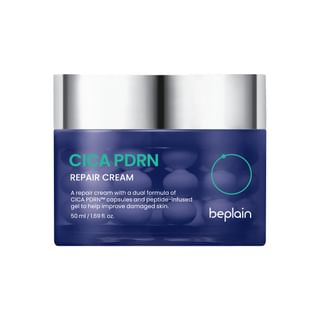
Cica PDRN Repair Cream
beplain
Minimalist cica cream with PDRN for sensitive skin repair, redness relief, and barrier restoration.
$20–28
Related Posts
What is PDRN? The Complete Guide to Salmon DNA Skincare
PDRN (Polydeoxyribonucleotide) is a DNA-derived skincare ingredient extracted from salmon. Learn what PDRN means, how it works, its benefits for skin, and the different product types available.
PDRN for Hyperpigmentation and Dark Spots: What the Evidence Shows
PDRN is not a traditional brightening agent — but its tissue repair and anti-inflammatory properties make it surprisingly effective for certain types of hyperpigmentation. Learn which dark spots respond to PDRN and which need different approaches.
PDRN for Melasma: Can Salmon DNA Help Stubborn Pigmentation?
Melasma is one of the hardest pigmentation disorders to treat. This guide explains how PDRN's anti-inflammatory and barrier-repairing actions can support melasma protocols, what realistic results look like, and how to combine PDRN with proven brighteners safely.