 PDRN Care
PDRN for Décolletage: Treating Chest Wrinkles and Sun Damage
Dr. Min-Ji Park
MD, Board-Certified Dermatologist
The Forgotten Zone: Why the Décolletage Ages So Visibly
Most people invest time and money caring for their face. Some extend that care to their neck. Almost no one gives the décolletage — the chest area from the collarbones to the top of the breasts — the attention it needs until the damage is already visible. By then, the area often looks a decade older than the face above it.
This mismatch is not an accident. The décolletage has structural characteristics that make it uniquely vulnerable to aging, and it receives a disproportionate amount of the environmental damage that accelerates that aging. Understanding why the chest ages differently is the first step toward choosing the right treatment — and PDRN's specific biological mechanisms make it particularly well-suited for this challenging area.
Why the Chest Ages Differently Than the Face
Thinner skin with less dermal support
The skin on the décolletage is significantly thinner than facial skin. The dermis — the collagen-rich structural layer — has fewer collagen bundles and less elastic fiber density compared to the cheeks, forehead, or even the neck . This thinner architecture means the chest starts with less structural reserve and reaches visible aging thresholds sooner as collagen production naturally declines with age.
Fewer sebaceous glands and appendages
The chest has fewer oil glands than the face, resulting in lower natural lipid production and a weaker skin barrier. This reduced sebaceous activity means the décolletage is more prone to dehydration, transepidermal water loss, and the dull, crepey texture that accompanies chronic dryness. The lack of natural moisture protection also makes the skin more susceptible to environmental damage .
Chronic sun exposure
The décolletage is one of the most sun-exposed areas of the body, particularly for women. V-neck tops, dresses, and swimwear leave this area exposed to cumulative UV radiation year after year. Most people never apply sunscreen to their chest — and even those who do rarely apply enough or reapply consistently.
This chronic UV exposure drives all three pillars of photoaging: MMP-mediated collagen destruction, DNA photodamage, and chronic inflammation . The thin, poorly supported skin of the chest is less equipped to withstand this assault than the thicker, more resilient skin of the face.
Sleep-induced mechanical creasing
Side sleeping creates sustained compression and folding of the chest skin, producing vertical sleep lines that run between and across the breasts. In younger skin with abundant collagen and elastin, these creases disappear within minutes of waking. In aging skin with depleted structural proteins, the creases persist progressively longer — and eventually become permanent wrinkles that are visible even when standing.
Hormonal changes
The décolletage is particularly sensitive to hormonal shifts during perimenopause and menopause. Declining estrogen levels accelerate collagen loss throughout the body, but the effect is more visible on the chest because the starting reserve is lower . Post-menopausal women often notice a rapid deterioration in chest skin quality — crepiness, increased wrinkling, loss of firmness — that seemed to appear almost overnight.
Types of Décolletage Aging
Understanding the specific type of chest aging you are experiencing helps guide the most effective approach.
- Crepey texture — Fine, tissue-paper-like wrinkling across the entire chest surface. This results from combined collagen loss, elastin degradation, and chronic dehydration. It is the most common form of décolletage aging and often the earliest to appear.
- Horizontal lines — Etched creases that run across the chest, often corresponding to natural skin fold lines. Deepened by UV damage and further etched by repetitive movement.
- Vertical sleep lines — Lines running from the sternum outward, created by side-sleeping compression. These start as temporary creases but become permanent as the skin loses its elastic rebound.
- Mottled pigmentation — Sun spots, freckles, and uneven color distribution from cumulative UV exposure. Often accompanied by poikiloderma — a reddish-brown discoloration pattern that combines pigment changes with visible blood vessels.
- Loss of volume and firmness — A general deflation and laxity where the chest skin appears to hang or drape rather than lying smoothly.
How PDRN Addresses Décolletage Aging
PDRN's dual mechanism — A2A receptor activation plus nucleotide salvage — addresses the root biological processes behind chest skin aging, not just the surface symptoms .
Collagen rebuilding in thin skin
The décolletage's primary structural deficit is insufficient collagen. PDRN directly addresses this by stimulating fibroblast proliferation and activity through A2A receptor signaling . Activated fibroblasts produce new type I and type III collagen — the same structural proteins lost through photoaging and chronological aging.
Clinical studies have demonstrated measurable increases in dermal density and collagen content following PDRN treatment, with improvements visible on histological analysis . For the collagen-poor décolletage, this targeted fibroblast stimulation is precisely the intervention needed to rebuild the structural foundation the area lacks.
DNA repair for sun-accumulated damage
Decades of UV exposure leave the chest skin burdened with accumulated DNA damage — pyrimidine dimers, oxidized bases, and strand breaks that overwhelm the cell's normal repair capacity . PDRN provides deoxyribonucleotides through the salvage pathway, fueling the DNA repair machinery with ready-to-use building blocks .
For the décolletage, where years of unprotected sun exposure may have established a heavy DNA damage burden, this repair support is not cosmetic — it is restorative at the cellular level.
Anti-inflammatory action
Chronic sun damage and dehydration create a persistent low-grade inflammatory state in chest skin. This inflammation continuously activates collagen-degrading MMPs and generates oxidative stress — a self-perpetuating cycle that accelerates aging even in the absence of new UV exposure .
PDRN's A2A receptor activation suppresses NF-kB signaling and reduces pro-inflammatory cytokines (TNF-alpha, IL-6, IL-1beta), helping to break this inflammaging cycle . By calming the chronic inflammatory environment, PDRN allows the chest skin's remaining repair mechanisms to function more effectively.
Microcirculation support
Poor blood supply limits the décolletage's capacity for self-repair. PDRN promotes angiogenesis through VEGF upregulation, supporting the formation of functional new capillaries that improve oxygen and nutrient delivery to fibroblasts . Better microcirculation means faster collagen turnover, more efficient waste removal, and improved overall skin health — all critical for an area that often suffers from vascular insufficiency.
Topical PDRN for the Décolletage
Daily topical PDRN application is the most accessible approach for chest skin rejuvenation and delivers meaningful results with consistent use .
Choosing the right product
For the décolletage, product selection should account for the area's large surface and specific needs:
- PDRN serums — The most concentrated topical format. Products like COSRX 5% PDRN Collagen Serum or Numbuzin No.2 Rose PDRN 2x Serum deliver high PDRN concentrations in a lightweight, fast-absorbing vehicle. Serums are ideal for targeted treatment but require more product when covering the entire décolletage.
- PDRN body lotions — Products like Rejuran Body Lotion are formulated for larger surface areas and provide PDRN in a more emollient base that also addresses the décolletage's dehydration issues. Lower PDRN concentration per milliliter but more practical for daily full-chest application.
- Professional PDRN body treatments — Plinest Body is designed for injectable treatment of body areas including the décolletage, delivering PDRN directly to the dermis for maximum collagen-stimulating effect .
For optimal results, consider using a concentrated PDRN serum for targeted treatment of the most affected areas (center chest, visible wrinkles) and a PDRN body lotion for overall chest maintenance.
Décolletage-specific application technique
The chest requires a different application approach than the face:
- Apply to damp skin — After showering or misting with thermal water, PDRN absorbs better on hydrated skin
- Use generous amounts — The décolletage surface area is two to three times larger than the face. Use enough product to cover evenly without stretching or pulling
- Press, do not rub — Gentle pressing motions help the product absorb without creating friction on thin, fragile skin
- Cover the full area — From the collarbone to just above the breast line, and from shoulder to shoulder. Do not forget the lateral chest and the sternum area where sleep lines tend to form
- Allow absorption time — Wait 60-90 seconds before layering moisturizer or sunscreen on top
Professional PDRN Treatments for the Chest
For moderate to severe décolletage aging, professional treatments deliver higher concentrations of PDRN directly to the dermis where structural repair is most needed.
PDRN skin booster injections
Intradermal microinjections of PDRN solution deposit the active ingredient precisely within the dermal layer of the chest skin . This bypasses the epidermal barrier entirely, delivering therapeutic concentrations to the fibroblasts responsible for collagen production. For the décolletage:
- Treatments are typically spaced 2-4 weeks apart over 3-4 initial sessions
- The chest area requires more injection points than the face due to its larger surface
- Results build progressively, with measurable improvements in skin density and elasticity beginning around weeks 4-6
- Maintenance sessions every 3-6 months sustain results
Products like Plinest Body are specifically formulated for body-area injections, with concentrations and volumes suited to the larger treatment surface .
Microneedling with PDRN
Microneedling creates thousands of microchannels that dramatically increase PDRN penetration while simultaneously triggering collagen-induction therapy . This dual mechanism is particularly effective for the décolletage:
- Needle depth of 0.5-1.0 mm is appropriate for the thinner chest skin (shorter than typical facial depths)
- PDRN serum is applied immediately after microneedling for maximum absorption
- The wound-healing response adds a second collagen-stimulating signal on top of PDRN's A2A receptor activation
- Sessions are typically spaced 4-6 weeks apart, with 3-4 sessions for initial treatment
Combination approaches
Many aesthetic practitioners now combine PDRN with complementary modalities for comprehensive décolletage rejuvenation:
- PDRN + radiofrequency — RF devices deliver heat to the deep dermis, causing collagen contraction and remodeling. PDRN then supplies the biological support (nucleotides, fibroblast activation) for the collagen regeneration triggered by RF energy.
- PDRN + IPL (intense pulsed light) — IPL targets pigmentation and vascular irregularities in the chest while PDRN addresses the underlying structural damage. This combination is particularly effective for poikiloderma of the décolletage.
- PDRN + chemical peels — Superficial peels (lactic acid, mandelic acid) resurface texture irregularities while PDRN supports deeper dermal repair and reduces post-peel inflammation through A2A activation .
Building a Décolletage PDRN Routine
Morning routine
- Gentle cleanser — Extend your facial cleanser down to the décolletage during morning cleansing. Avoid stripping formulations — the chest needs its remaining barrier lipids.
- PDRN serum — Apply generously across the full décolletage. Use upward and outward pressing motions. Allow 60 seconds to absorb.
- Moisturizer with ceramides or peptides — The chest benefits from a richer moisturizer than most people use on their face. The lower sebaceous activity means the décolletage needs more occlusive support to prevent transepidermal water loss.
- Broad-spectrum sunscreen SPF 50+ — Apply a generous amount covering the entire exposed chest area. This is the single most important step for preventing further damage. Reapply if the area remains exposed throughout the day.
Evening routine
- Double cleanse — If sunscreen was applied, start with an oil-based cleanser to dissolve UV filters, followed by a gentle water-based cleanser.
- PDRN serum — Second daily application. Evening application supports overnight repair processes when cellular regeneration activity peaks.
- Retinol (optional, 2 nights per week) — A low-concentration retinol (0.025-0.3%) can complement PDRN's collagen-building effects. The chest is more sensitive than the face, so introduce retinol slowly and use less frequently than you would on your face. PDRN's anti-inflammatory properties help buffer retinol irritation .
- Rich night cream or body oil — Seal in actives and provide overnight hydration. Formulations containing squalane, shea butter, or ceramides work well for the chest.
Weekly additions
- Gentle exfoliation (1-2 times per week) — A mild AHA (lactic acid 5-10% or PHA) helps improve surface texture and enhance PDRN penetration. Apply on evenings when you skip retinol.
- PDRN sheet mask — Cut a facial sheet mask to cover the chest area, or use a dedicated décolletage mask if available. The extended contact time (15-20 minutes) enhances delivery.
- Hydrating body mask or sleeping pack — An overnight occlusive treatment once weekly provides intensive hydration support for the chest's naturally drier skin.
Lifestyle Factors That Accelerate Décolletage Aging
No topical routine can fully compensate for habits that actively damage chest skin. Addressing these factors amplifies PDRN's benefits:
- Sleep position — Side sleeping is the primary cause of vertical chest wrinkles. Back sleeping eliminates this mechanical creasing entirely. If side sleeping is unavoidable, a décolletage pillow or pillow placed between the breasts can reduce compression. Silk or satin sleepwear reduces friction.
- Sun protection habits — Extend sunscreen application to the chest every day, not just beach days. Wear UV-protective clothing when possible. A lightweight scarf or high-neckline top provides better protection than any sunscreen.
- Bra support — A well-fitted bra reduces the gravitational pulling and folding of chest skin throughout the day. Poorly supported breast tissue increases mechanical stress on the décolletage skin.
- Hydration — The chest's fewer sebaceous glands make it more dependent on both topical moisturization and systemic hydration. Adequate water intake supports skin hydration from within.
PDRN vs Other Décolletage Treatments
| Treatment | Collagen Rebuilding | DNA Repair | Anti-Inflammatory | Irritation Risk | Best For |
|---|---|---|---|---|---|
| PDRN | Strong (A2A-mediated fibroblast stimulation) | Strong (nucleotide supply) | Strong (NF-kB suppression) | Very low | All-around décolletage rejuvenation |
| Retinol/Tretinoin | Strong (proven for photoaging) | None | None (pro-inflammatory) | High on chest | Deep wrinkles, severe photodamage |
| Vitamin C | Moderate (collagen cofactor) | None | Mild (antioxidant) | Moderate | Brightening, pigment correction |
| Peptides | Moderate (signaling-dependent) | None | Varies | Low | Fine lines, firmness support |
| Chemical peels | Moderate (wound response) | None | None (creates inflammation) | Moderate-High | Surface texture, pigmentation |
| Radiofrequency | Strong (thermal collagen induction) | None | None | Low-Moderate | Deep laxity, skin tightening |
| IPL | Minimal | None | Mild | Moderate | Pigmentation, redness, poikiloderma |
PDRN's advantage for the décolletage is its combination of strong collagen stimulation with very low irritation risk . The chest is far more sensitive than the face, which limits the tolerability of retinoids, acids, and energy-based devices at facial-equivalent intensities. PDRN delivers regenerative benefits without provoking the irritation, redness, or peeling that makes many active treatments impractical for this delicate area.
What to Expect: Timeline for Décolletage Improvement
The décolletage responds to treatment, but patience is required. The area's thinner dermis and extensive sun damage mean improvement takes longer than the face.
- Weeks 1-4: Improved hydration and surface smoothness. The anti-inflammatory effect of PDRN may reduce background redness and blotchiness relatively quickly .
- Weeks 4-8: Early improvements in skin texture and crepiness as epidermal turnover normalizes and superficial collagen begins to remodel .
- Weeks 8-16: Measurable improvements in firmness and elasticity as new collagen is deposited in the dermis. Fine lines begin to soften. Skin feels denser to the touch .
- Months 4-8: Progressive improvement in deeper wrinkles and sleep lines. Overall chest skin quality approaches facial skin quality for those maintaining a consistent routine.
- Months 8-12+: Continued refinement. Professional treatments combined with daily topical PDRN produce cumulative improvement that builds over time.
Deep sleep lines and severe crepiness will improve but may not resolve completely with topical treatment alone. Professional PDRN treatments (injections, microneedling) accelerate and deepen the improvement for more advanced décolletage aging.
Frequently Asked Questions
Can I use my facial PDRN serum on my chest?
Yes. There is no reason to purchase a separate product for the décolletage. The same PDRN serum you use on your face works identically on the chest . The only practical consideration is product volume — the décolletage is a larger area, so you will use more product per application. A dedicated PDRN body lotion can be more economical for daily full-chest coverage.
How does PDRN compare to retinol for the chest?
Both stimulate collagen synthesis, but through different mechanisms. Retinol works through retinoic acid receptor signaling; PDRN works through A2A receptor activation . The key difference for the chest: retinol is significantly more irritating, and chest skin is more sensitive than facial skin. Many people who tolerate retinol on their face find it too irritating for the décolletage. PDRN delivers collagen stimulation without irritation, making it easier to use consistently on the chest. The two can be combined — use PDRN daily and retinol 1-2 nights per week on the chest if tolerated.
Is the décolletage too large an area for PDRN injections?
The décolletage is a larger treatment area than the face, which means injectable PDRN treatments require more product and more injection points. This makes the treatment somewhat more expensive and time-consuming than facial treatments, but it is a well-established protocol. Products like Plinest Body are specifically designed for body-area treatments . Discuss coverage area and treatment plans with your practitioner.
At what age should I start treating my décolletage with PDRN?
Prevention is always easier than correction. If you have a history of sun exposure on the chest, starting PDRN treatment in your late twenties or early thirties can help maintain collagen density before visible damage appears . For those already seeing crepiness or wrinkles, PDRN is effective at any age — the biological mechanisms of collagen stimulation and DNA repair work regardless of how long the damage has been present.
Can PDRN help with chest acne scars?
PDRN's fibroblast stimulation and tissue remodeling properties can improve the appearance of atrophic (indented) acne scars on the chest . For active chest acne, address the acne first before beginning PDRN treatment. PDRN's anti-inflammatory properties may help with post-inflammatory redness, but it is not an acne treatment.
The Bottom Line
The décolletage ages faster and more visibly than the face due to thinner skin, fewer oil glands, chronic sun exposure, and mechanical stress from sleep and clothing . PDRN addresses the root biological causes of this accelerated aging — stimulating collagen production in collagen-depleted tissue, fueling DNA repair in UV-damaged cells, calming the chronic inflammation that drives progressive deterioration, and improving the microcirculation that sustains tissue health . A consistent routine combining daily topical PDRN with rigorous sun protection can meaningfully reverse décolletage aging, and professional PDRN treatments offer accelerated results for those with more advanced damage. The most important step is the simplest: start treating your chest with the same attention you give your face.
References
- [1]Squadrito F, Bitto A, Irrera N, Pizzino G, Pallio G, Minutoli L, Altavilla D. Pharmacological Activity and Clinical Use of PDRN. Current Pharmaceutical Design. 2017;23(27):3948-3957. doi:10.2174/1381612823666170516153716
- [2]Kim TH, Kim JY, Bae JH, Kim HM, Park ES. Biostimulatory effects of polydeoxyribonucleotide for facial skin rejuvenation. Journal of Cosmetic Dermatology. 2019;18(6):1767-1773. doi:10.1111/jocd.12958
- [3]Colangelo MT, Galli C, Giannelli M. Polydeoxyribonucleotide: A Promising Biological Platform for Dermal Regeneration. Current Pharmaceutical Design. 2020;26(17):2049-2056. doi:10.2174/1381612826666200210100726
- [4]Galeano M, Bitto A, Altavilla D, Minutoli L, Polito F, Calò M, Lo Cascio P, Stagno d'Alcontres F, Squadrito F. Polydeoxyribonucleotide stimulates angiogenesis and wound healing in the genetically diabetic mouse. Wound Repair and Regeneration. 2008;16(2):208-217. doi:10.1111/j.1524-475X.2008.00361.x
- [5]Veronesi F, Dallari D, Sabbioni G, Carubbi C, Martini L, Fini M. Polydeoxyribonucleotides (PDRNs): From Physical Chemistry to Biological Activities and Clinical Applications. International Journal of Molecular Sciences. 2017;18(9):1927. doi:10.3390/ijms18091927
- [6]Fisher GJ, Wang Z, Datta SC, Varani J, Kang S, Voorhees JJ. Pathophysiology of premature skin aging induced by ultraviolet light. New England Journal of Medicine. 1997;337(20):1419-1428. doi:10.1056/NEJM199711133372003
- [7]Cavallini M, Papagni M. Long chain polynucleotide gel and target skin area rejuvenation. Journal of Plastic Dermatology. 2007;3:25-28.
Recommended Products
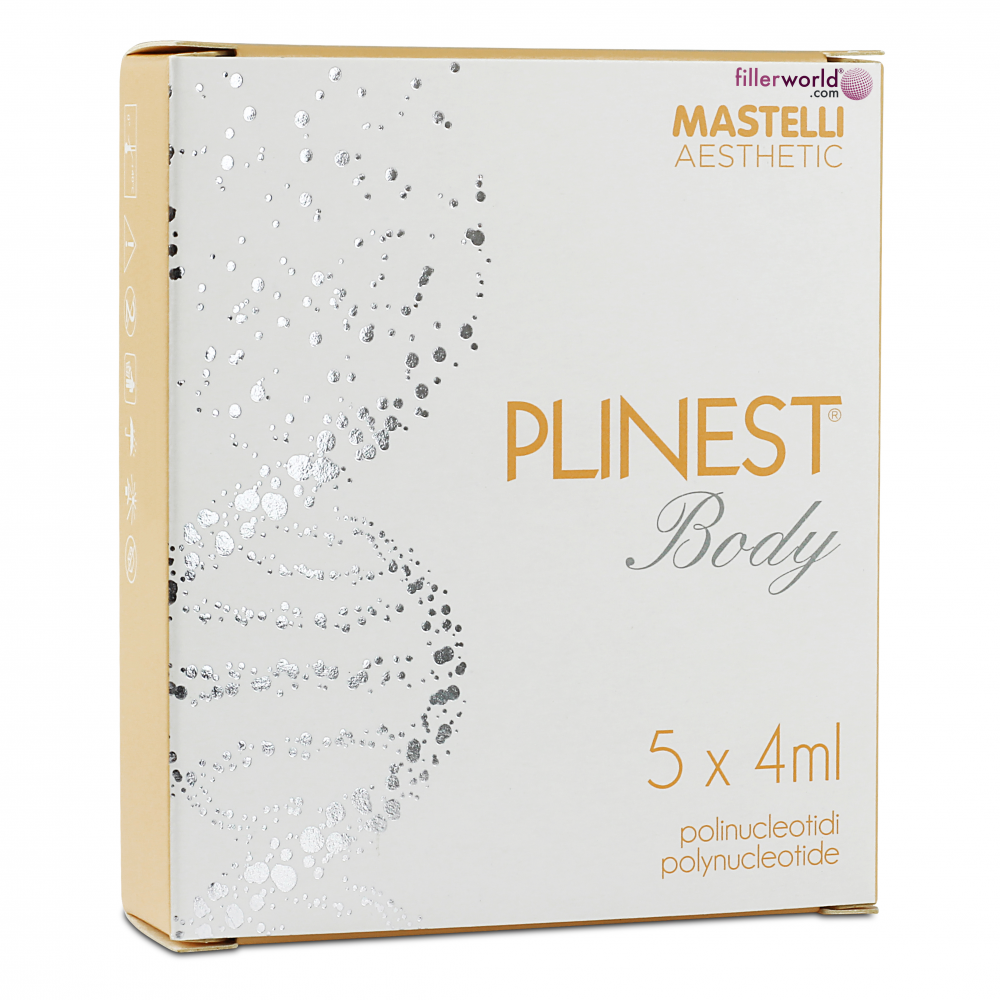
Plinest Body
Mastelli
PDRN injectable specifically formulated for body areas — neck, décolletage, hands, and arms rejuvenation.
$250–500 per session

Body Lotion c-PDRN
Rejuran
Full-body PDRN care with c-PDRN technology in a lightweight, fast-absorbing lotion for skin quality improvement.
$40–60

5 PDRN Collagen Intense Vitalizing Serum
COSRX
Multi-PDRN formula with 5 types of PDRN from salmon, centella, rice, lactobacillus, and sea grapes plus low-molecular collagen.
$30–40

No.2 Rose PDRN Collagen 2X Plumping Serum
Numbuzin
Enhanced formula with 10% Rose PDRN and 15 peptide types — clinically proven to improve elasticity across 15 skin layers.
$25–32
Related Posts
What is PDRN? The Complete Guide to Salmon DNA Skincare
PDRN (Polydeoxyribonucleotide) is a DNA-derived skincare ingredient extracted from salmon. Learn what PDRN means, how it works, its benefits for skin, and the different product types available.
PDRN for Body Skin: Rejuvenating Your Neck, Hands, and Beyond
PDRN is not just for your face. Discover how polydeoxyribonucleotide therapy can rejuvenate the neck, decolletage, hands, and body skin — areas that often reveal aging first but receive the least attention.
PDRN for Neck Wrinkles: How to Treat Tech Neck and Necklace Lines
The neck ages faster than the face but gets far less attention. Learn how PDRN targets neck wrinkles, tech neck lines, and crepey skin through collagen stimulation and tissue repair.