 PDRN Care
PDRN for Perioral Aging: Treating Lip Lines and Mouth Area Wrinkles
Dr. Min-Ji Park
MD, Board-Certified Dermatologist
Why the Perioral Area Ages Faster
The skin surrounding the mouth is uniquely vulnerable to aging. Unlike the cheeks or forehead, the perioral region has thinner dermis, fewer sebaceous glands, and a dense network of muscles that contract thousands of times daily during speaking, eating, smiling, and every other facial expression. This constant mechanical stress, combined with the structural thinness of the tissue, makes the mouth area one of the first places where fine lines appear and deepen over time.
Several distinct types of wrinkles develop in the perioral zone. Vertical lip lines, sometimes called barcode lines or smoker's lines, radiate outward from the vermilion border of the lips. Marionette lines run downward from the corners of the mouth toward the chin, creating a puppet-like appearance. Nasolabial folds, while technically adjacent, contribute to the overall aged appearance of the lower face. The lips themselves lose volume, definition, and the crisp contour of the Cupid's bow as dermal collagen and hyaluronic acid diminish with age .
Traditional approaches to perioral aging include dermal fillers, botulinum toxin, laser resurfacing, and chemical peels. Each has merits, but none directly addresses the underlying cellular decline that drives the aging process. This is where PDRN introduces a fundamentally different mechanism of action.
How PDRN Addresses Perioral Aging at the Cellular Level
PDRN (polydeoxyribonucleotide) works through the adenosine A2A receptor pathway to stimulate fibroblast proliferation, reduce inflammation, and promote angiogenesis . In the context of perioral aging, these mechanisms translate into specific and measurable benefits.
Fibroblast activation and collagen synthesis
The perioral dermis thins progressively with age as fibroblast activity declines. PDRN provides nucleotide building blocks through the salvage pathway, enabling fibroblasts to proliferate more efficiently without the full energy cost of de novo DNA synthesis . Activated fibroblasts produce more type I and type III collagen, which directly addresses the structural deficit responsible for lip lines and marionette folds .
Research demonstrates that PDRN-treated skin shows measurably increased procollagen synthesis through the PKA-CREB signaling cascade . For the perioral area specifically, this means gradual thickening of the dermis, improved skin elasticity, and progressive softening of established fine lines.
Microcirculation improvement
The perioral area has relatively sparse vascular supply compared to the cheeks. PDRN upregulates vascular endothelial growth factor (VEGF), promoting the formation of new capillaries and improving blood flow to the treated area . Better microcirculation means improved oxygen and nutrient delivery to fibroblasts, which enhances collagen production and supports the overall health of the perioral tissue. Clinically, patients often report improved skin color and reduced dullness around the mouth.
Anti-inflammatory effects
Chronic low-grade inflammation accelerates skin aging, a process termed inflammaging. The perioral area is particularly susceptible because of constant mechanical stress and frequent exposure to irritants from food, beverages, and environmental factors. PDRN's activation of the A2A receptor downregulates pro-inflammatory cytokines including TNF-alpha, IL-6, and IL-8 , creating a more favorable environment for tissue repair and collagen maintenance.
Injectable PDRN for Perioral Rejuvenation
Injectable PDRN, such as Rejuran Healer, is the most direct approach for treating perioral aging. In Korean dermatology clinics, microinjections of PDRN into the perioral dermis have become a standard treatment for lip lines and mouth area rejuvenation .
Treatment protocol
A typical injectable PDRN protocol for the perioral area involves:
- Injection technique: Serial micro-deposits of PDRN are placed intradermally at 2 to 5 mm intervals around the lip border, along vertical lip lines, and into marionette line creases. The injections target the superficial to mid-dermis where fibroblast stimulation has the greatest cosmetic impact .
- Volume: Approximately 1 to 2 mL per session, distributed across the treatment area.
- Frequency: Three to four sessions spaced 2 to 4 weeks apart, followed by maintenance sessions every 3 to 6 months.
- Downtime: Mild swelling and potential bruising for 24 to 48 hours. The perioral area bruises more easily than other facial zones due to its rich vascular network.
Expected results
Patients typically begin noticing improved skin texture and reduced fine line depth after the second session. Maximum collagen remodeling occurs 8 to 12 weeks after the final treatment session. Studies report significant improvement in skin elasticity, hydration, and wrinkle depth following PDRN injection protocols .
Topical PDRN for Daily Perioral Care
Not everyone has access to injectable PDRN, and topical products serve as an important daily maintenance strategy. The perioral area is well-suited to topical PDRN because the skin is thin, which allows better penetration than thicker-skinned areas like the forehead or cheeks.
Choosing the right product
For the lip border and vertical lip lines, a dedicated lip treatment containing PDRN, such as Genabelle PDRN Lip Treatment, delivers concentrated PDRN directly to the area of concern. For broader perioral coverage including marionette lines and nasolabial folds, a PDRN serum like COSRX 5 PDRN Collagen Serum applied to the entire lower face provides more comprehensive coverage .
Application technique
The perioral area benefits from a specific application approach:
- Cleanse thoroughly to remove any food residue, lip products, or sunscreen.
- Apply PDRN serum using gentle upward and outward strokes, working against the direction of gravity and muscle pull.
- Pay special attention to the vermilion border by tracing the product along the lip line with a fingertip.
- Layer a PDRN lip treatment over the serum for the lip border area specifically.
- Seal with moisturizer and sunscreen during the day.
Consistency matters
Topical PDRN produces gradual results. Expect to use products consistently for 8 to 12 weeks before evaluating effectiveness. The perioral area responds well to sustained treatment because the thin skin allows ongoing absorption and the fibroblast stimulation accumulates over time .
Combining PDRN with Other Perioral Treatments
PDRN works synergistically with several established perioral rejuvenation methods.
PDRN plus hyaluronic acid fillers
Hyaluronic acid fillers provide immediate volume restoration to thinning lips and marionette lines, while PDRN gradually rebuilds the dermal infrastructure. Combining both approaches addresses the immediate cosmetic concern and the underlying structural decline. PDRN can be applied topically during the filler recovery period to support tissue integration .
PDRN plus botulinum toxin
Low-dose botulinum toxin around the orbicularis oris muscle (the lip flip technique) reduces the dynamic muscle contractions that create and deepen vertical lip lines. PDRN complements this by improving the skin quality between the relaxed muscles. Together, they address both the mechanical cause and the structural consequence of perioral lines.
PDRN plus fractional laser
Fractional laser resurfacing of the perioral area is effective for deeper lip lines but requires careful recovery management. Applying PDRN during the post-laser healing phase accelerates re-epithelialization and enhances collagen remodeling .
Prevention: Starting PDRN Before Lines Deepen
The most effective approach to perioral aging is early intervention. Incorporating PDRN into a daily skincare routine in the late 20s to early 30s, before significant collagen loss has occurred, helps maintain dermal thickness and elasticity in this vulnerable area.
A preventive protocol is straightforward: apply a PDRN serum to the lower face morning and evening, use a PDRN lip treatment daily, and maintain rigorous sun protection. The perioral area receives significant UV exposure but is often neglected during sunscreen application, so deliberate coverage of the lip border and surrounding skin is essential .
For those already noticing early signs of perioral aging, topical PDRN combined with good sun protection can slow progression significantly. For established lines, combining topical PDRN with professional injectable treatments offers the most comprehensive rejuvenation strategy.
What to Expect: Realistic Results Timeline
| Timeframe | Topical PDRN | Injectable PDRN |
|---|---|---|
| Week 2-4 | Improved hydration and skin texture | Visible softening of fine lines |
| Week 6-8 | Fine lines begin to soften | Measurable improvement in elasticity |
| Week 10-12 | Noticeable reduction in shallow lines | Maximum collagen remodeling |
| Month 4-6 | Continued gradual improvement | Maintenance session recommended |
Results vary based on the severity of existing lines, skin type, age, and consistency of application. Deeper marionette lines and established barcode lines typically require injectable treatment for significant improvement, while fine surface lines respond well to topical PDRN alone .
Frequently Asked Questions
Can PDRN eliminate deep lip lines completely?
PDRN significantly improves deep lip lines but may not eliminate them entirely on its own. For deep, established barcode lines, combining injectable PDRN with dermal fillers or fractional laser produces the best results. Topical PDRN is most effective for fine to moderate lines and as a maintenance strategy after professional treatments .
Is PDRN safe for the lip area?
Yes. PDRN has an excellent safety profile and is well-tolerated on the delicate perioral skin . The biological origin of PDRN (purified DNA fragments from salmon) means it is biocompatible and does not trigger allergic reactions in the vast majority of patients. However, those with known fish allergies should consult their dermatologist before use.
How does PDRN compare to lip fillers for perioral aging?
They serve different purposes. Fillers provide immediate volume and structural support. PDRN gradually improves skin quality, thickness, and elasticity through cellular regeneration. The ideal approach for significant perioral aging uses both: fillers for volume restoration and PDRN for skin quality improvement .
References
- [1]Squadrito F, Bitto A, Irrera N, Pizzino G, Pallio G, Minutoli L, Altavilla D. Pharmacological Activity and Clinical Use of PDRN. Current Pharmaceutical Design. 2017;23(27):3948-3957. doi:10.2174/1381612823666170516153716
- [2]Kim TH, Kim JY, Bae JH, Kim HM, Park ES. Biostimulatory effects of polydeoxyribonucleotide for facial skin rejuvenation. Journal of Cosmetic Dermatology. 2019;18(6):1767-1773. doi:10.1111/jocd.12958
- [3]Colangelo MT, Galli C, Gentile P. Polydeoxyribonucleotide: A Promising Biological Platform for Dermal Regeneration. Current Pharmaceutical Design. 2020;26(17):2049-2056. doi:10.2174/1381612826666200210100726
- [4]Cavallini M, Papagni M. Long chain polynucleotide gel and periorbital rejuvenation: a pilot study. Journal of Plastic Dermatology. 2007;3:27-32. doi:10.1007/s12325-007-0047-9
- [5]Galeano M, Bitto A, Altavilla D, Minutoli L, Polito F, Calo M. Polydeoxyribonucleotide stimulates angiogenesis and wound healing. Wound Repair and Regeneration. 2008;16(2):208-217. doi:10.1111/j.1524-475X.2008.00361.x
Recommended Products
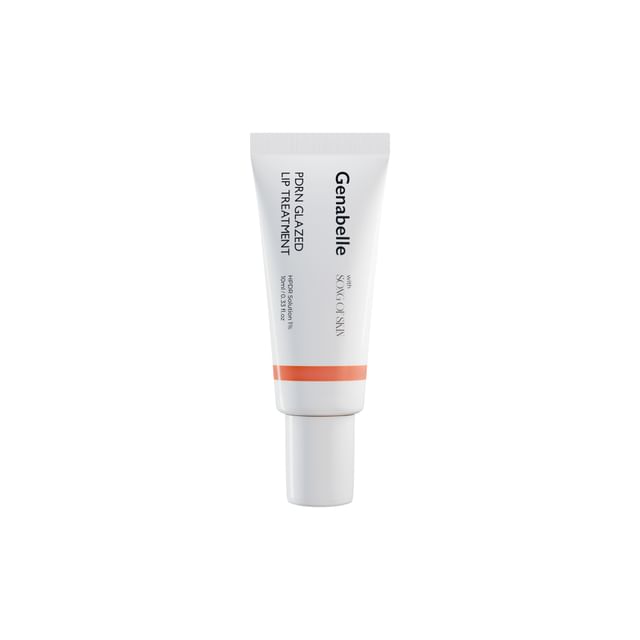
PDRN Glazed Lip Treatment
Genabelle
Hydrating lip treatment with PDRN for repairing and plumping dry, cracked lips with a glazed finish.
$12–16

Rejuran Healer
Pharmaresearch Products
The original Korean PDRN skin booster — c-PDRN derived from salmon DNA for skin rejuvenation and barrier repair.

5 PDRN Collagen Intense Vitalizing Serum
COSRX
Multi-PDRN formula with 5 types of PDRN from salmon, centella, rice, lactobacillus, and sea grapes plus low-molecular collagen.
$30–40

PDRN Pink Peptide Serum
Medicube
Viral K-beauty serum with 99% purity salmon DNA PDRN and 5 peptides for instant glow and visible firming within a week.
$20–25
Related Posts
PDRN for Wrinkles: How DNA Fragments Rebuild Aging Skin
Wrinkles form when collagen breaks down faster than your skin can replace it. PDRN reverses this imbalance by activating your skin's own regenerative machinery — stimulating fibroblasts, building new collagen, and restoring dermal thickness. Here is how it works and what results to expect.
PDRN for Mature Skin Over 50: Rebuilding Collagen at Any Age
After 50, collagen production slows dramatically — but PDRN can restart the process. Learn how PDRN addresses the specific challenges of mature skin, from deep wrinkles to loss of firmness.
PDRN vs Botox: Regeneration vs Relaxation — Which Is Right for You?
PDRN and Botox are both popular anti-aging treatments, but they work through completely different mechanisms. This guide compares their approaches — regeneration versus muscle relaxation — so you can choose the right treatment for your goals.