 PDRN Care
PDRN for Pollution-Damaged Skin: Repairing and Defending Against Urban Environmental Stress
Dr. Sarah Chen
PhD, Molecular Biology
The Invisible Assault: What Urban Air Does to Your Skin
If you live in a city, your skin is under constant chemical attack. Every breath you take outdoors exposes you to a cocktail of airborne pollutants — particulate matter, ozone, nitrogen dioxide, polycyclic aromatic hydrocarbons — and your skin, as the body's largest organ and outermost barrier, absorbs a disproportionate share of that burden [1][3]. The consequences are not hypothetical. Epidemiological studies have linked chronic air pollution exposure to a 20% increase in pigment spots on the forehead and a 25% increase on the cheeks, independent of UV exposure [2]. Pollution is now recognized as a major driver of premature skin aging, second only to ultraviolet radiation in its capacity to degrade skin quality over time [1].
Most skincare routines do not account for pollution damage. Sunscreen blocks UV, but it does not neutralize the chemical pollutants that penetrate the skin barrier and trigger oxidative destruction from within [1][6]. This is where PDRN — polydeoxyribonucleotide, a biological repair material derived from salmon DNA — offers a uniquely relevant approach. Rather than forming a superficial shield, PDRN works at the cellular level to repair the specific types of damage pollution inflicts [4][5].
How Air Pollution Damages Skin: The Mechanisms
Understanding why pollution ages skin requires looking at the specific pollutants involved and the biological cascades they trigger [1][3].
PM2.5: particles small enough to penetrate skin
Particulate matter with a diameter of 2.5 micrometers or less (PM2.5) is small enough to lodge in skin pores and even penetrate the stratum corneum — the outermost layer of the epidermis [3][6]. These particles carry a payload of heavy metals, organic chemicals, and microbial components on their surface. Once embedded in the skin, PM2.5 particles act as continuous sources of oxidative stress, generating reactive oxygen species (ROS) that overwhelm the skin's natural antioxidant defenses [3]. Studies have shown that PM2.5 exposure significantly increases intracellular ROS levels in keratinocytes within hours of contact, triggering inflammatory signaling cascades and DNA damage [3][6].
Ozone: surface-level oxidative damage
Ground-level ozone (O3) does not penetrate deeply into the skin, but it does not need to [1]. Ozone reacts with lipids and proteins in the stratum corneum upon contact, generating lipid peroxides and reactive aldehyde species that deplete the skin's vitamin E and vitamin C reserves [1][6]. This oxidative depletion compromises the skin's first line of antioxidant defense, leaving deeper layers vulnerable to secondary damage from other pollutants and UV radiation [1].
Polycyclic aromatic hydrocarbons (PAHs): the AhR pathway
PAHs — found in diesel exhaust, cigarette smoke, and industrial emissions — are among the most insidious skin pollutants [1][3]. When PAHs penetrate the skin, they bind to the aryl hydrocarbon receptor (AhR), a transcription factor that activates genes involved in xenobiotic metabolism [1]. While AhR activation is initially a detoxification response, chronic or repeated activation triggers a pathological cascade: upregulation of matrix metalloproteinases (MMPs) that degrade collagen, increased melanogenesis leading to hyperpigmentation, and sustained production of pro-inflammatory cytokines [1][3]. The AhR pathway is now considered a central mechanism through which pollution accelerates extrinsic skin aging [1].
The four pillars of pollution damage
These pollutants converge on four interconnected damage pathways [1][2][3][6]:
- Oxidative stress — ROS generated by PM2.5 and ozone oxidize DNA, lipids, and proteins in skin cells, depleting natural antioxidants and damaging cellular structures [3][6].
- Barrier disruption — Pollution degrades the lipid matrix of the stratum corneum, increasing transepidermal water loss (TEWL) and allowing further pollutant penetration in a vicious cycle [1][6].
- Premature aging — MMP upregulation through ROS and AhR activation breaks down collagen and elastin in the dermis, causing wrinkles and loss of firmness independent of sun exposure [1][2].
- Hyperpigmentation — PAH-mediated AhR activation and ROS-driven melanocyte stimulation produce dark spots and uneven skin tone, particularly on exposed facial areas [1][2][3].
How PDRN Counteracts Pollution Damage
PDRN is not an antioxidant, not a physical barrier, and not a simple hydrator. It is a biological material — a mixture of deoxyribonucleotide polymers ranging from 50 to 2000 base pairs — that provides cells with repair substrates and activates specific regenerative signaling pathways [4][5]. Its mechanisms of action align remarkably well with the specific types of damage pollution inflicts.
A2A receptor-mediated anti-inflammatory response
Chronic pollution exposure maintains a state of low-grade inflammation in exposed skin [1][3]. PM2.5 activates NF-kB signaling in keratinocytes, leading to sustained production of pro-inflammatory cytokines — TNF-alpha, IL-1beta, IL-6, and IL-8 [3][6]. This background inflammation is not dramatic enough to notice day to day, but it continuously activates MMPs and generates additional ROS, creating a self-perpetuating damage cycle [1][3].
PDRN activates the adenosine A2A receptor, triggering a potent anti-inflammatory cascade that directly opposes this pollution-driven inflammation [4][7]. A2A receptor activation inhibits NF-kB nuclear translocation — the same pathway that pollution upregulates — reducing the transcription of pro-inflammatory cytokines [4]. It also decreases neutrophil and macrophage infiltration into tissue, calming the immune overreaction that pollution provokes [4][7]. By interrupting the inflammatory feedback loop, PDRN prevents pollution-induced inflammation from cascading into collagen degradation and further oxidative damage [4][5].
Nucleotide salvage pathway supports DNA repair
The ROS generated by PM2.5 and other pollutants cause oxidative DNA damage — primarily 8-oxoguanine lesions and single-strand breaks — that accumulates in chronically exposed skin cells [3][6]. Cells repair this damage using base excision repair and nucleotide excision repair pathways, but these processes require a supply of nucleotide building blocks [4][8].
PDRN provides a direct supply of deoxyribonucleotides that enter the salvage pathway, bypassing the energy-expensive de novo synthesis route [4][5][8]. In pollution-stressed cells that are already metabolically burdened by chronic ROS detoxification, this exogenous nucleotide supply is not trivial — it provides the substrates cells need to repair oxidative DNA damage without further depleting their energy reserves [4][8]. The salvage pathway essentially allows PDRN-supplied nucleotides to be recycled directly into DNA repair machinery, improving the cell's capacity to keep pace with ongoing pollution-induced DNA damage [5][8].
Fibroblast activation rebuilds collagen degraded by pollution-induced MMPs
Pollution accelerates collagen loss through two converging mechanisms: AhR-mediated MMP upregulation and ROS-driven MMP activation [1][3]. The result is accelerated degradation of type I and type III collagen in the dermis — the same structural collapse seen in photoaging, but driven by chemical rather than UV-mediated processes [1][2].
PDRN counteracts this collagen loss by stimulating fibroblast proliferation and biosynthetic activity through the A2A receptor pathway [4][5]. Activated fibroblasts increase production of type I and type III collagen, as well as extracellular matrix components like fibronectin and glycosaminoglycans [5]. This is not a cosmetic plumping effect — it is genuine tissue remodeling, demonstrated in histological studies showing increased collagen fiber density and improved dermal organization following PDRN treatment [4][5]. By tipping the balance from collagen degradation back toward collagen synthesis, PDRN directly opposes the structural aging that pollution accelerates [4][5].
Barrier support helps restore pollution-compromised skin barrier
A damaged skin barrier is both a consequence and an amplifier of pollution damage [1][6]. When pollutants degrade the lipid matrix of the stratum corneum, TEWL increases, the skin becomes dehydrated, and the compromised barrier allows even greater pollutant penetration [1][6]. PDRN supports barrier recovery through multiple mechanisms: promoting keratinocyte proliferation and differentiation to restore epidermal structure, reducing the inflammation that impairs barrier repair, and supporting the cellular energy metabolism needed for lipid synthesis [4][5][7]. While PDRN does not directly supply barrier lipids (ceramides, cholesterol, fatty acids), it creates the biological conditions under which the skin can more effectively rebuild its own barrier [5].
PDRN Anti-Pollution Skincare Routine for City Dwellers
Living in a polluted city requires a skincare strategy that does three things: removes pollutants that have accumulated on the skin, repairs the damage they have already caused, and provides ongoing support for the skin's defense systems [1][6]. Here is how to structure a PDRN-centered anti-pollution routine.
Morning routine
- Gentle water-based cleanser — Remove overnight metabolic waste and any residual products without stripping the barrier. Pollution-stressed skin tends toward sensitivity, so avoid high-pH or heavily foaming formulas.
- Antioxidant serum — Apply a vitamin C serum (15-20% L-ascorbic acid or a stable derivative) or a green tea-based antioxidant. This provides a frontline defense against the ROS that pollutants will generate throughout the day. Allow one to two minutes to absorb.
- PDRN serum — Two to three drops of a PDRN serum pressed into damp skin. The Isntree GIM PDRN Ampoule or Torriden DIVE-IN PDRN Serum work well for this step, providing hydration alongside nucleotide delivery.
- Barrier-supporting moisturizer — A ceramide-rich moisturizer seals in the previous layers and reinforces the skin barrier against pollutant penetration throughout the day.
- Broad-spectrum sunscreen SPF 50+ — UV and pollution have synergistic damaging effects — UV radiation amplifies the oxidative stress caused by pollutants [1][6]. Sunscreen is non-negotiable even on overcast days.
- PDRN mist (optional, midday refresh) — A product like the Anua PDRN Hydrating Mist can be spritzed over sunscreen during the day to maintain hydration and provide a light PDRN boost without disturbing sun protection.
Evening routine
- Oil cleanser or cleansing balm — The critical first step. Oil-based cleansers dissolve the mixture of sunscreen, sebum, and pollution particles (PM2.5, soot, PAHs) that accumulates on the skin throughout the day. Massage thoroughly for 60 seconds to emulsify and lift particulate matter from pores.
- Gentle water-based cleanser — Complete the double cleanse to remove any remaining residue. This two-step process is more important for city dwellers than for anyone else — a single cleanse consistently fails to remove all PM2.5 particles from the skin surface [6].
- PDRN serum — Evening application is particularly important because DNA repair processes are most active during sleep. The nucleotide supply from PDRN supports the overnight repair of oxidative DNA damage accumulated during daytime pollution exposure [4][8].
- Targeted treatment (2-3 nights per week) — Alternate between a retinol product (for additional collagen stimulation and cell turnover) and a niacinamide treatment (for pigmentation control and barrier support). Both complement PDRN's repair mechanisms.
- Rich night cream or sleeping mask — An occlusive final layer that prevents TEWL and creates optimal conditions for overnight barrier repair.
Best PDRN Products for Pollution Protection
The ideal anti-pollution PDRN routine combines thorough cleansing with dedicated repair. Here is how to think about product selection:
For daily PDRN delivery: Look for serums or ampoules with PDRN listed in the first five ingredients. The COSRX 5% PDRN Collagen Serum provides a high concentration alongside collagen-supporting peptides. The Isntree GIM PDRN Ampoule offers a lightweight, fast-absorbing format ideal for layering under sunscreen.
For barrier repair: The Torriden DIVE-IN PDRN Serum combines PDRN with hyaluronic acid variants, making it particularly suited for dehydrated, barrier-compromised skin — a common consequence of chronic pollution exposure.
For midday maintenance: The Anua PDRN Hydrating Mist allows reapplication throughout the day without disrupting makeup or sunscreen layers, providing a continuous low-level supply of PDRN during peak pollution exposure hours.
The double-cleanse non-negotiable: No PDRN product can repair damage if you leave the damaging agents on your skin. Thorough double cleansing every evening is the foundation of any anti-pollution routine. Oil cleansers physically dissolve and lift the lipophilic pollutants (PAHs, soot) that water-based cleansers leave behind [6].
Combining PDRN with Antioxidants for Maximum Anti-Pollution Defense
PDRN and antioxidants operate through complementary mechanisms, and combining them creates a more comprehensive anti-pollution defense than either provides alone.
PDRN + Vitamin C
Vitamin C (ascorbic acid) neutralizes ROS before they damage cellular structures — it is a frontline interceptor [1]. PDRN repairs the damage that gets past antioxidant defenses — it is a cellular repair crew [4][5]. Together, they reduce the total oxidative burden (vitamin C) while simultaneously accelerating the repair of whatever damage still occurs (PDRN). Vitamin C also supports collagen synthesis as an essential cofactor for prolyl and lysyl hydroxylase enzymes, complementing PDRN's fibroblast-stimulating effects from a different mechanistic angle [4].
Application order: Vitamin C serum first (lower pH, water-based, needs direct skin contact for optimal penetration), then PDRN serum on top once vitamin C has absorbed.
PDRN + Green tea (EGCG)
Epigallocatechin gallate (EGCG), the primary polyphenol in green tea, is one of the few antioxidants shown to specifically inhibit AhR signaling — the receptor pathway through which PAHs drive pollution-related skin aging [1][3]. PDRN does not directly target AhR, so green tea extract fills an important mechanistic gap. EGCG also provides broad-spectrum ROS scavenging and has anti-inflammatory properties that synergize with PDRN's A2A receptor-mediated anti-inflammatory effects [4].
PDRN + Niacinamide
Niacinamide (vitamin B3) strengthens the skin barrier by increasing ceramide synthesis, reduces hyperpigmentation by inhibiting melanosome transfer, and supports cellular energy metabolism through its role as a precursor to NAD+ [6]. These barrier and pigmentation benefits complement PDRN's deeper repair functions, creating a comprehensive defense against pollution's most visible skin effects: dullness, uneven tone, and dehydration.
What to avoid combining
There are no known contraindications between PDRN and common antioxidants. However, avoid layering too many active products in a single routine step — the goal is to support, not overwhelm, the skin. If using vitamin C, green tea, PDRN, and niacinamide, spread them between morning and evening routines rather than applying all four simultaneously.
Urban Skincare Tips Beyond Products
Products are only part of the equation. Environmental and behavioral strategies can significantly reduce your skin's pollution burden [1][6].
Monitor air quality indices. On high-AQI days (above 100 on the US EPA scale), minimize time outdoors during rush hours when traffic-related pollution peaks. Many weather apps now include real-time air quality data. On severe pollution days, consider wearing a face covering that filters PM2.5 — the same particles that damage lungs also damage skin [3].
Create clean air zones indoors. HEPA air purifiers in bedrooms and workspaces reduce indoor PM2.5 levels significantly. Since skin repair processes are most active during sleep, ensuring clean air in the bedroom supports overnight recovery [6].
Wash your face as soon as you get home. Do not wait until your full evening routine. A quick rinse with water or a micellar water when you arrive home reduces the total exposure time — and total damage — from pollution particles sitting on your skin [6].
Do not touch your face outdoors. Hands accumulate pollution particles from surfaces throughout the day. Transferring these to your face bypasses the stratum corneum and deposits pollutants directly into pores.
Hydrate from the inside. Chronic dehydration impairs skin barrier function and reduces the availability of water needed for enzymatic repair processes. Aim for adequate daily water intake, and consider foods rich in omega-3 fatty acids and polyphenols that support skin health systemically [1].
Protect during commutes. If you walk, cycle, or use public transit, your pollution exposure is highest during commuting. Applying sunscreen with antioxidant ingredients before commuting, and cleansing promptly after, minimizes the damage window.
Setting Realistic Expectations
Pollution damage is cumulative and chronic, similar to sun damage [1][2]. Reversing its effects takes consistent effort over weeks and months. Here is what you can reasonably expect from a PDRN-centered anti-pollution routine:
- Weeks 1-3: Improved hydration and reduced surface dullness. The anti-inflammatory effects of PDRN may reduce background redness and sensitivity [4].
- Weeks 3-6: Better skin tone evenness and smoother texture as barrier function improves and epidermal turnover normalizes [5].
- Weeks 6-12: Firmer skin and reduction in fine lines as new collagen is deposited. Hyperpigmentation may begin to fade with consistent antioxidant and PDRN use [4][5].
- Months 3-6+: Progressive structural improvement as collagen remodeling continues. The full benefits of PDRN's repair mechanisms require sustained use [4][5][7].
The most dramatic improvement often comes from the double cleansing step alone. Many people underestimate how much residual pollution remains on their skin after a standard single cleanse, and the simple act of thorough removal stops the ongoing damage that occurs while those particles sit on the skin overnight [6].
The Bottom Line
Urban air pollution is a relentless, invisible aggressor that damages skin through oxidative stress, barrier disruption, collagen degradation, and chronic inflammation [1][2][3]. Most skincare approaches address only the surface — antioxidants intercept some ROS, cleansers remove some particles — but leave the deeper cellular damage unaddressed. PDRN operates at a different level entirely. By activating anti-inflammatory pathways through the A2A receptor, supplying nucleotides for DNA repair, stimulating fibroblasts to rebuild degraded collagen, and supporting barrier recovery, PDRN addresses the biological consequences of pollution exposure at their source [4][5][7]. Combined with thorough double cleansing, antioxidant layering, and environmental awareness, a PDRN-centered routine gives city dwellers a genuinely science-backed strategy for keeping their skin healthy in polluted environments — not by hiding from the damage, but by equipping their cells to repair and resist it [4][5][8].
References
- [1]Krutmann J, Liu W, Li L, et al.. Pollution and skin: from epidemiological and mechanistic studies to clinical implications. J Dermatol Sci. 2014;76(3):163-168. doi:10.1016/j.jdermsci.2014.08.008
- [2]Vierkotter A, Schikowski T, Ranft U, et al.. Airborne particle exposure and extrinsic skin aging. J Invest Dermatol. 2010;130(12):2719-2726. doi:10.1038/jid.2010.204
- [3]Kim KE, Cho D, Park HJ. Air pollution and skin diseases: Adverse effects of airborne particulate matter on various skin diseases. Life Sci. 2016;152:126-134. doi:10.1016/j.lfs.2016.03.039
- [4]Squadrito F, Bitto A, Irrera N, et al.. Pharmacological Activity and Clinical Use of PDRN. Curr Pharm Des. 2017;23(27):3948-3957. doi:10.2174/1381612823666170516153716
- [5]Colangelo MT, Galli C, Giannelli M. Polydeoxyribonucleotide: A Promising Biological Platform for Dermal Regeneration. Curr Pharm Des. 2020;26(17):2049-2056.
- [6]Puri P, Nandar SK, Kathuria S, Ramesh V. Effects of air pollution on the skin: A review. Indian J Dermatol Venereol Leprol. 2017;83(4):415-423. doi:10.4103/0378-6323.199579
- [7]Galeano M, Bitto A, Altavilla D, et al.. Polydeoxyribonucleotide stimulates angiogenesis and wound healing in the genetically diabetic mouse. Wound Repair Regen. 2008;16(2):208-217. doi:10.1111/j.1524-475X.2008.00361.x
- [8]Magnani M, Balestra E, Bhatt DK, et al.. Nucleotide salvage pathway and its role in cellular metabolism. Nucleosides Nucleotides Nucleic Acids. 2020;39(10-12):1349-1361. doi:10.1080/15257770.2020.1815770
Recommended Products

5 PDRN Collagen Intense Vitalizing Serum
COSRX
Multi-PDRN formula with 5 types of PDRN from salmon, centella, rice, lactobacillus, and sea grapes plus low-molecular collagen.
$30–40

Gim PDRN Hydro Bouncy Ampoule
Isntree
Water jelly ampoule with low-molecular PDRN from Korean seaweed (gim), 8 types of hyaluronic acid, collagen, and squalane.
$22–28

DIVE-IN Low Molecular PDRN Serum
Torriden
Lightweight hydrating PDRN serum built around Torriden's signature 5D low-molecular hyaluronic acid complex for deep, layered hydration.
$22–30
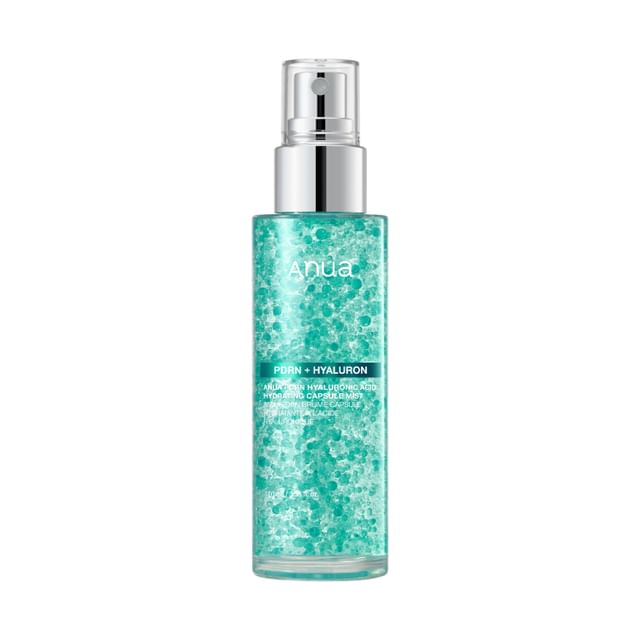
PDRN Hyaluronic Acid Hydrating Capsule Mist
Anua
Hydrating capsule mist with PDRN and hyaluronic acid for instant moisture boost throughout the day.
$19–26
Related Posts
What is PDRN? The Complete Guide to Salmon DNA Skincare
PDRN (Polydeoxyribonucleotide) is a DNA-derived skincare ingredient extracted from salmon. Learn what PDRN means, how it works, its benefits for skin, and the different product types available.
PDRN for Skin Barrier Repair: Rebuilding Your Moisture Barrier from Within
A damaged skin barrier leads to dehydration, sensitivity, and inflammation — but conventional barrier repair only patches the surface. PDRN supports barrier recovery at a deeper level by accelerating keratinocyte and fibroblast renewal, calming chronic inflammation, and strengthening the dermal-epidermal junction that underpins barrier integrity.
How to Build a PDRN Skincare Routine: Morning & Night Guide
A step-by-step guide to building an effective PDRN skincare routine. Learn where PDRN fits in your morning and evening regimen, how to layer it with other actives, and which products to pair it with.