 PDRN Care
PDRN for Post-Acne Marks: Fading PIE and PIH Naturally
Dr. Sarah Chen
PhD, Molecular Biology
If you have ever dealt with acne, you know that the breakouts themselves are only half the battle. Even after a pimple heals, it can leave behind a mark that persists for weeks, months, or even years. These post-acne marks — distinct from actual acne scars — come in two forms: post-inflammatory erythema (PIE), which appears as flat red or pink marks, and post-inflammatory hyperpigmentation (PIH), which presents as flat brown or dark spots. PDRN addresses the biological mechanisms that keep both types of marks visible, offering a regenerative approach to clearing post-acne skin [1][4].
PIE vs. PIH: Understanding the Difference
Before discussing treatment, it is essential to distinguish between these two types of post-acne marks, because they have different underlying causes and respond to different mechanisms.
Post-inflammatory erythema (PIE)
PIE appears as flat red, pink, or purplish marks at the site of a former breakout. It is caused by damage to the capillaries in the dermis during the inflammatory acne process. These damaged blood vessels dilate and remain visible through the thinned, post-inflammatory epidermis. PIE is more common in lighter skin tones.
How to identify PIE: Press a clear glass against the mark (diascopy). If the redness disappears under pressure, it is PIE — the color comes from blood in damaged vessels, not pigment.
Post-inflammatory hyperpigmentation (PIH)
PIH appears as flat brown, dark brown, or grayish marks. It occurs when inflammation triggers melanocytes to overproduce melanin, which is then deposited in the epidermis or dermis. PIH is more common and more persistent in darker skin tones (Fitzpatrick types III-VI) [7].
How to identify PIH: The diascopy test — if the brown color remains unchanged under glass pressure, it is melanin-based PIH.
Many people have a mix of both PIE and PIH, particularly if breakouts occurred at different times or affected skin with varying tones.
How PDRN Targets Post-Acne Marks
PDRN is uniquely suited for post-acne marks because it addresses the underlying inflammatory and regenerative processes that keep marks visible, rather than just masking them.
Anti-inflammatory resolution of PIE
PIE persists because of ongoing low-grade inflammation around damaged capillaries. Even after the acne lesion itself has resolved, the inflammatory cascade continues to stimulate vascular dilation and impair normal tissue repair. PDRN's anti-inflammatory mechanism — suppression of NF-kappaB, reduction of TNF-alpha and IL-6, activation of anti-inflammatory adenosine A2A receptors — directly addresses this persistent inflammation [1][3].
By quieting the inflammatory signaling that keeps capillaries dilated and damaged, PDRN creates the conditions for vascular normalization. The damaged blood vessels can begin to repair and contract, gradually reducing the visible redness.
Vascular remodeling
Beyond suppressing inflammation, PDRN influences vascular remodeling through its effects on VEGF (vascular endothelial growth factor) signaling. While PDRN upregulates VEGF in wound healing contexts, in post-inflammatory settings its primary benefit is normalizing the disordered vascular network — helping damaged capillaries repair properly rather than remaining in a chronic state of dilation and leakage [4][5].
Melanogenesis regulation for PIH
Research has demonstrated that PDRN possesses direct anti-melanogenesis properties. In vitro studies show that PDRN can suppress tyrosinase activity — the key enzyme in melanin production — and reduce melanin content in melanocytes [2]. This mechanism is distinct from common brightening ingredients like vitamin C or niacinamide, and can work complementarily with them.
PDRN's anti-inflammatory effect also reduces the ongoing inflammatory stimulation of melanocytes. Much of PIH persistence is driven by continued low-level inflammation that keeps melanocytes in an overproductive state. By resolving this inflammation, PDRN removes the stimulus that maintains excessive melanin production [1][2].
Epidermal regeneration and turnover
PDRN stimulates keratinocyte proliferation and supports healthy epidermal turnover [4]. This is relevant because both PIE and PIH resolve partly through the natural shedding of affected skin cells. By promoting healthy cell turnover — not aggressive exfoliation, but biologically normalized renewal — PDRN supports the gradual replacement of pigmented or damaged epidermal cells with healthy ones.
PDRN Treatment Protocol for Post-Acne Marks
Topical PDRN routine
For most people dealing with post-acne marks, a consistent topical PDRN routine is the appropriate starting point:
- Gentle cleanser. Use a low-pH, non-stripping cleanser. Harsh cleansing increases inflammation and can worsen both PIE and PIH.
- PDRN serum or ampoule. Apply to clean, slightly damp skin. Focus on applying to marked areas but treat the entire face — post-acne inflammation is often more widespread than the visible marks suggest. Products like Medicube PDRN Pink Peptide Serum or Isntree GIM PDRN Ampoule deliver meaningful PDRN concentrations in formulations designed for acne-prone skin.
- Soothing moisturizer. Follow with a moisturizer that supports barrier repair without clogging pores. Beplain Cica PDRN Cream combines PDRN with centella asiatica for dual anti-inflammatory action.
- Sunscreen (AM only). SPF 50, broad-spectrum, every day without exception. UV exposure darkens PIH marks and prolongs PIE by stimulating inflammation. This is the single most important step for preventing mark persistence.
What to expect
- PIE (red marks): Improvement typically begins at weeks 3-4, with significant fading by weeks 8-12. PIE that has persisted for less than 6 months responds fastest.
- PIH (brown marks): Improvement is slower, typically visible at weeks 6-8 for epidermal PIH, with continued improvement through weeks 12-16. Dermal PIH (deep, gray-toned marks) takes longer and may require combination treatment.
Combining PDRN with Other Mark-Fading Treatments
PDRN works well as part of a multi-ingredient approach to post-acne marks. Here are evidence-based combinations:
For PIE (red marks)
- PDRN + azelaic acid: Azelaic acid (15-20%) has anti-inflammatory and anti-redness properties that complement PDRN's mechanism. Use azelaic acid in the evening and PDRN morning and evening.
- PDRN + centella asiatica: Centella's asiaticoside and madecassoside compounds enhance PDRN's anti-inflammatory and regenerative effects. Many Korean PDRN formulations already include centella.
- PDRN + niacinamide: Niacinamide strengthens the skin barrier and has mild anti-inflammatory effects. It layers well with PDRN without compatibility issues.
For PIH (brown marks)
- PDRN + vitamin C: Vitamin C inhibits tyrosinase through a different pathway than PDRN, providing additive melanogenesis suppression. Apply vitamin C in the morning under sunscreen, PDRN serum morning and evening.
- PDRN + alpha arbutin: Alpha arbutin is a gentle tyrosinase inhibitor that pairs well with PDRN for stubborn PIH marks.
- PDRN + retinoid: Retinoids accelerate epidermal turnover, helping shed pigmented cells faster while PDRN provides regenerative support and anti-inflammatory protection against retinoid irritation. Start with low-strength retinol (0.3%) and increase gradually.
Common Mistakes When Treating Post-Acne Marks
- Picking or squeezing healing breakouts. This extends the inflammatory phase and deepens both PIE and PIH. PDRN can help resolve marks, but prevention is always better than treatment.
- Over-exfoliating. Aggressive chemical or physical exfoliation damages the barrier and increases inflammation — exactly the opposite of what post-acne marks need. PDRN works through gentle regeneration, not forced removal.
- Skipping sunscreen. A single afternoon of unprotected sun exposure can undo weeks of mark-fading progress. UV stimulates both inflammation (worsening PIE) and melanogenesis (darkening PIH).
- Expecting overnight results. Post-acne marks developed through inflammation over days to weeks. Resolving them through biological repair takes weeks to months. PDRN accelerates this timeline but does not eliminate it.
- Treating active acne and marks simultaneously with too many products. If you still have active breakouts, prioritize acne treatment first. Once breakouts are controlled, shift focus to mark resolution with PDRN.
PIE and PIH: Realistic Timelines
Based on clinical evidence and the biology of post-inflammatory resolution [5][6][7]:
| Mark type | Severity | Expected improvement with PDRN | Timeline |
|---|---|---|---|
| Fresh PIE (< 3 months) | Mild-moderate | 60-80% fading | 6-10 weeks |
| Established PIE (3-12 months) | Moderate | 40-60% fading | 10-16 weeks |
| Epidermal PIH | Mild-moderate | 50-70% fading | 8-14 weeks |
| Deep/dermal PIH | Moderate-severe | 30-50% fading | 12-20+ weeks |
These are approximate ranges. Individual results depend on skin tone, mark severity, sun protection compliance, and overall skincare routine consistency.
Key Takeaways
Post-acne marks are fundamentally an inflammatory and regenerative problem — and that is precisely where PDRN excels. Its multi-mechanism approach (anti-inflammatory, anti-melanogenic, vascular normalizing, and pro-regenerative) makes it one of the most logical active ingredients for addressing both PIE and PIH. Combined with diligent sun protection and a gentle, consistent routine, PDRN can meaningfully accelerate the resolution of post-acne marks and restore clearer, more even-toned skin.
References
- [1]Squadrito F, Bitto A, Irrera N, Pizzino G, Pallio G, Minutoli L, Altavilla D. Pharmacological Activity and Clinical Use of PDRN. Current Pharmaceutical Design. 2017;23(27):3948-3957. doi:10.2174/1381612823666170516153716
- [2]Noh TK, Chung BY, Kim SY, et al.. Novel anti-melanogenesis properties of polydeoxyribonucleotide. International Journal of Molecular Sciences. 2021;22(14):7513. doi:10.3390/ijms22147513
- [3]Bitto A, Polito F, Irrera N, D'Ascola A, et al.. Polydeoxyribonucleotide reduces cytokine production and the severity of collagen-induced arthritis. Arthritis Research & Therapy. 2011;13(1):R28. doi:10.1186/ar3254
- [4]Colangelo MT, Galli C, Muscari A. Polydeoxyribonucleotide for skin regeneration. Journal of Cosmetic Dermatology. 2023;22(4):1112-1119.
- [5]Giarratana LS, Virdis J, Uras G, Ferreli C, Atzori L. Polynucleotides and skin rejuvenation. International Journal of Dermatology. 2024;63(2):133-141.
- [6]Fabbrocini G, Annunziata MC, D'Arco V, et al.. Acne scars: pathogenesis, classification and treatment. Dermatology Research and Practice. 2010;2010:893080. doi:10.1155/2010/893080
- [7]Davis EC, Callender VD. Postinflammatory hyperpigmentation: a review of the epidemiology, clinical features, and treatment options in skin of color. Journal of Clinical and Aesthetic Dermatology. 2010;3(7):20-31.
Recommended Products

PDRN Pink Peptide Serum
Medicube
Viral K-beauty serum with 99% purity salmon DNA PDRN and 5 peptides for instant glow and visible firming within a week.
$20–25

Gim PDRN Hydro Bouncy Ampoule
Isntree
Water jelly ampoule with low-molecular PDRN from Korean seaweed (gim), 8 types of hyaluronic acid, collagen, and squalane.
$22–28
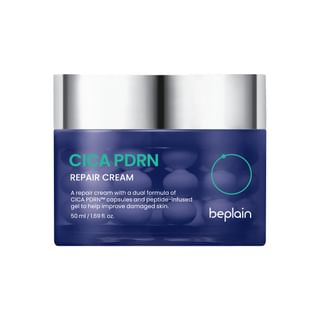
Cica PDRN Repair Cream
beplain
Minimalist cica cream with PDRN for sensitive skin repair, redness relief, and barrier restoration.
$20–28
Related Posts
What is PDRN? The Complete Guide to Salmon DNA Skincare
PDRN (Polydeoxyribonucleotide) is a DNA-derived skincare ingredient extracted from salmon. Learn what PDRN means, how it works, its benefits for skin, and the different product types available.
PDRN for Acne Scars: A Regenerative Approach to Scar Treatment
Acne scars are notoriously difficult to treat. Learn how PDRN uses cellular regeneration to improve scar texture, stimulate collagen remodeling, and complement other scar treatments.
PDRN for Hyperpigmentation and Dark Spots: What the Evidence Shows
PDRN is not a traditional brightening agent — but its tissue repair and anti-inflammatory properties make it surprisingly effective for certain types of hyperpigmentation. Learn which dark spots respond to PDRN and which need different approaches.