 PDRN Care
PDRN for Psoriasis: Can It Help Calm and Repair Plaque-Prone Skin?
Dr. Min-Ji Park
MD, Board-Certified Dermatologist
An Important Starting Point
Psoriasis is a chronic, immune-mediated disease — not a cosmetic skin concern — and it must be managed by a physician. Effective treatments range from topical corticosteroids and vitamin D analogues to phototherapy, systemic medications, and biologic therapies that target the specific immune signals driving the disease . Nothing in this article is a substitute for that medical care. PDRN should be understood as a potential supportive skincare ingredient for the dry, damaged, barrier-compromised skin that accompanies and follows psoriasis flares — used alongside, and never instead of, the treatment your dermatologist prescribes.
With that framing established, there is a genuine and interesting rationale for why PDRN may help support psoriasis-prone skin, rooted in the same anti-inflammatory and regenerative mechanisms that make it valuable for wound healing and barrier repair.
What Happens in Psoriatic Skin
Psoriasis is driven by a dysregulated immune response in which T-cells and dendritic cells release a cascade of pro-inflammatory cytokines — particularly TNF-alpha, IL-17, and IL-23 . These signals cause keratinocytes to proliferate far faster than normal: skin cells that should take roughly a month to migrate to the surface do so in just a few days. The result is the characteristic plaque — a thick, raised, scaly patch where immature skin cells pile up before they can shed properly.
This accelerated, disordered turnover has several downstream consequences relevant to skincare:
- A broken barrier. Plaques have a defective stratum corneum with elevated transepidermal water loss, leaving the skin dry, tight, and prone to cracking.
- Chronic inflammation. The underlying tissue is inflamed, red, and reactive.
- Fissuring and micro-wounds. Thick plaques over joints and high-movement areas often crack and bleed, creating small wounds vulnerable to infection.
- A self-perpetuating cycle. Barrier damage itself can trigger more inflammation, feeding the flare.
A useful way to think about PDRN's possible role is that it addresses the consequences of psoriatic inflammation on the skin — the barrier damage, the dryness, the micro-wounds — rather than the deep immune dysregulation that medical therapy targets.
Why PDRN Is Mechanistically Interesting for Psoriasis
Anti-Inflammatory Action Through the A2A Receptor
The most compelling reason to consider PDRN in inflammatory skin conditions is its anti-inflammatory mechanism. PDRN activates the adenosine A2A receptor, which suppresses the production of pro-inflammatory cytokines including TNF-alpha and IL-6 . Because TNF-alpha is one of the central drivers of psoriatic inflammation — so central that several blockbuster psoriasis biologics work by blocking it — an ingredient that gently dampens TNF-alpha signaling at the skin level is at least conceptually aligned with the goals of treatment .
It is essential to keep this in proportion: topical PDRN's local, modest anti-inflammatory effect is nowhere near the potency of a systemic biologic or even a prescription topical steroid. But for calming the residual redness and reactivity of skin between or after flares, this gentle action may provide meaningful comfort.
Barrier Repair Where Psoriatic Skin Is Weakest
Restoring barrier function is a recognized adjunct goal in psoriasis management, because a healthier barrier reduces the irritant-driven inflammation that perpetuates flares. PDRN supports barrier recovery by stimulating fibroblast activity and supplying nucleotide building blocks through the salvage pathway, giving keratinocytes the raw materials to rebuild a more competent stratum corneum . For the dry, tight, scaly skin that defines psoriasis, this barrier support — layered under a rich emollient — can help the skin retain moisture and feel more comfortable.
Wound Healing for Fissured Plaques
Thick plaques over the elbows, knees, hands, and scalp frequently crack and fissure. PDRN is, at its core, a wound-healing molecule: it accelerates re-epithelialization, stimulates angiogenesis, and supports the orderly tissue repair documented in clinical wound studies . Applied to cracked plaque skin (once any active infection is excluded), PDRN's pro-healing action may help these painful fissures close more comfortably.
A Non-Steroidal Profile
One practical advantage is that PDRN is not a steroid. Long-term topical steroid use in psoriasis carries real downsides — skin thinning, tachyphylaxis (declining response), and rebound flares on withdrawal. PDRN reduces inflammation through an entirely different, non-steroidal pathway, so it can be a useful companion during steroid-sparing phases or as part of a maintenance routine when a dermatologist is trying to limit cumulative steroid exposure. Always make such adjustments under medical guidance.
How to Use PDRN Supportively with Psoriasis
The guiding principle is gentle support, layered into medical care. Here is a sensible framework — but coordinate it with your dermatologist, especially regarding the timing of prescription topicals.
- Treat first, support second. Apply any prescribed medicated topical exactly as directed. PDRN is an add-on for barrier and comfort, not a replacement.
- Cleanse gently. Use a mild, fragrance-free, non-stripping cleanser. Avoid hot water and harsh scrubbing, which aggravate plaques.
- Apply a simple PDRN serum to clean, slightly damp skin on affected and surrounding areas. Choose fragrance-free formulations — psoriatic skin is easily irritated.
- Seal with a rich emollient. This is critical. Layer a thick, occlusive moisturizer (look for ceramides, glycerin, shea, or petrolatum) over the PDRN to lock in hydration on barrier-compromised skin.
- Protect. Use sunscreen on exposed areas during the day — though note that controlled UV phototherapy is itself a psoriasis treatment, uncontrolled sunburn worsens the disease.
What to Avoid
- Do not apply PDRN to actively infected, oozing, or broken skin without your doctor's guidance.
- Do not stop or reduce prescribed treatment because PDRN seems to help — the underlying immune process still needs management.
- Avoid harsh exfoliating acids and scrubs on plaques, which can trigger the Koebner phenomenon (new plaques forming at sites of skin trauma).
- Patch-test any new product, since psoriatic skin can be unpredictable.
Setting Realistic Expectations
PDRN will not clear plaques, switch off the immune dysregulation, or replace your medication. What it may realistically offer is a gentler, better-hydrated, more comfortable skin surface: less tightness and flaking, faster healing of small fissures, and a calmer post-flare appearance. For many people living with a chronic skin condition, that day-to-day comfort is genuinely valuable — but it should always sit on top of, not in place of, proper dermatological treatment.
Frequently Asked Questions
Can PDRN replace my psoriasis medication?
No. Psoriasis is an immune-mediated disease that requires medical management — topical prescriptions, phototherapy, systemic drugs, or biologics depending on severity . PDRN is a supportive skincare ingredient that may help with the barrier damage, dryness, and micro-wounds psoriasis causes, but it does not address the underlying immune dysregulation. Never substitute PDRN for your prescribed treatment, and discuss any routine changes with your dermatologist.
Is PDRN safe to use on psoriasis plaques?
For intact (non-infected, non-bleeding) plaque skin, PDRN is generally gentle and well-tolerated, and its anti-inflammatory and barrier-supporting properties may add comfort. Avoid applying it to actively infected or open, oozing skin without medical advice, and always patch-test first since psoriatic skin is reactive. Layer a rich emollient on top to maximize the barrier benefit.
How is PDRN different from a steroid cream for psoriasis?
Topical steroids are effective anti-inflammatories but carry risks with long-term use, including skin thinning and rebound flares. PDRN reduces inflammation through a different, non-steroidal pathway (adenosine A2A receptor signaling) and supports barrier repair rather than thinning the skin . It is far less potent than a steroid, so it is best viewed as a gentle companion or maintenance-phase support, not a flare-clearing treatment. Steroid decisions should always be guided by your physician.
Can PDRN help scalp psoriasis?
The same supportive logic applies — PDRN's anti-inflammatory and wound-healing actions may help calm and repair the cracked, flaking skin of scalp plaques. Look for lightweight PDRN scalp or serum formulations and apply alongside any medicated scalp treatment your dermatologist prescribes. Be gentle: avoid picking or scratching, which can trigger new plaques through the Koebner phenomenon.
References
- [1]Boehncke WH, Schön MP. Psoriasis. The Lancet. 2015;386(9997):983-994. doi:10.1016/S0140-6736(14)61909-7
- [2]Squadrito F, Bitto A, Irrera N, Pizzino G, Pallio G, Minutoli L, Altavilla D. Pharmacological Activity and Clinical Use of PDRN. Current Pharmaceutical Design. 2017;23(27):3948-3957. doi:10.2174/1381612823666170516153716
- [3]Bitto A, Polito F, Irrera N, D'Ascola A, Avenoso A, Nastasi G, Campo GM, Micali A, Squadrito F, Altavilla D. Polydeoxyribonucleotide reduces cytokine production and the severity of collagen-induced arthritis by stimulation of adenosine A2A receptor. Arthritis Research & Therapy. 2011;13(1):R28. doi:10.1186/ar3258
- [4]Colangelo MT, Galli C, Gentile P. Polydeoxyribonucleotide: A Promising Biological Platform for Dermal Regeneration. Current Pharmaceutical Design. 2020;26(17):2049-2056. doi:10.2174/1381612826666200113152555
- [5]Galeano M, Bitto A, Altavilla D, Minutoli L, Polito F, Calò M, Lo Cascio P, Stagno d'Alcontres F, Squadrito F. Polydeoxyribonucleotide stimulates angiogenesis and wound healing in the genetically diabetic mouse. Wound Repair and Regeneration. 2008;16(2):208-217. doi:10.1111/j.1524-475X.2008.00361.x
- [6]Hwang SG, Lee HJ, Kim SH. Adenosine A2A receptor signaling and inflammation in skin. International Journal of Molecular Sciences. 2021;22(13):7032. doi:10.3390/ijms22137032
Recommended Products

Revive PDRN Serum
Beauty of Joseon
A traditional-medicine inspired PDRN serum from Beauty of Joseon, blending salmon PDRN with rice extract and ginseng for resilient, glowing skin.
$19–25

PDRN Intensive Cream 1.5 Tube
Abib
Deep hydration with 1.5% salmon DNA PDRN, ceramides, panthenol, and peptides for barrier reinforcement.
$35–45
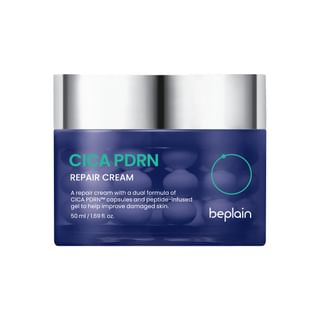
Cica PDRN Repair Cream
beplain
Minimalist cica cream with PDRN for sensitive skin repair, redness relief, and barrier restoration.
$20–28

DIVE-IN Low Molecular PDRN Serum
Torriden
Lightweight hydrating PDRN serum built around Torriden's signature 5D low-molecular hyaluronic acid complex for deep, layered hydration.
$22–30
Related Posts
Can PDRN Help Eczema? What the Research Shows
Eczema is driven by skin barrier dysfunction and chronic inflammation — two mechanisms that PDRN directly addresses. Emerging research suggests PDRN's adenosine A2A receptor activation can reduce inflammatory cytokines, support barrier repair, and calm the overactive immune response that fuels atopic dermatitis flares.
PDRN for Skin Barrier Repair: Rebuilding Your Moisture Barrier from Within
A damaged skin barrier leads to dehydration, sensitivity, and inflammation — but conventional barrier repair only patches the surface. PDRN supports barrier recovery at a deeper level by accelerating keratinocyte and fibroblast renewal, calming chronic inflammation, and strengthening the dermal-epidermal junction that underpins barrier integrity.
PDRN for Sensitive Skin: Why It's One of the Safest Active Ingredients
Sensitive skin limits which actives you can use — but PDRN is an exception. Learn why PDRN's anti-inflammatory mechanism makes it uniquely suited for reactive, rosacea-prone, and easily irritated skin.