 PDRN Care
PDRN for Tattoo Removal Recovery: Accelerating Skin Healing
Dr. Min-Ji Park
MD, Board-Certified Dermatologist
What Happens to Your Skin During Tattoo Removal
Laser tattoo removal is one of the most demanding procedures skin undergoes. Unlike cosmetic laser treatments that target aging or pigmentation with relatively controlled parameters, tattoo removal requires breaking apart ink particles embedded deep in the dermis using extremely high-energy laser pulses. Understanding this process explains why recovery support is so important .
How removal lasers work
Modern tattoo removal uses Q-switched or picosecond lasers that deliver ultra-short pulses of light at specific wavelengths matched to the ink colors being targeted. These pulses create a rapid thermal and photoacoustic expansion that shatters ink particles into fragments small enough for the immune system's macrophages to engulf and remove through the lymphatic system .
The laser energy does not distinguish perfectly between ink and surrounding tissue. The dermis, epidermis, and melanocytes in the treatment zone all absorb some energy, resulting in collateral thermal damage. This is why tattoo removal sessions cause blistering, swelling, redness, and sometimes pinpoint bleeding.
The immune response
After each session, macrophages flood the treated area to phagocytize (engulf) the shattered ink particles. This immune response involves significant inflammation, with elevated levels of TNF-alpha, IL-1beta, IL-6, and other pro-inflammatory cytokines. The inflammatory cascade is necessary for ink clearance but also damages surrounding healthy tissue and can lead to scarring if poorly managed .
The healing challenge
Complete healing between sessions typically takes 6 to 8 weeks, which is why most tattoo removal protocols space sessions 6 to 12 weeks apart. The skin must fully heal before the next treatment to avoid cumulative damage that leads to scarring. Anything that accelerates healing between sessions can potentially allow shorter intervals and faster overall completion.
Why PDRN Is Particularly Suited for Tattoo Removal Recovery
PDRN's multi-pathway mechanism of action addresses every major challenge of post-tattoo-removal healing.
Accelerated wound closure
The blisters, erosions, and surface disruption caused by tattoo removal lasers require re-epithelialization. PDRN provides nucleotide building blocks through the salvage pathway, enabling keratinocytes to proliferate faster and close the wound surface more quickly . Faster wound closure reduces the window of vulnerability to infection and minimizes the risk of scarring from prolonged open wounds.
Controlled inflammation
The inflammatory response after tattoo removal is intense but necessary. Complete suppression would impair ink clearance. PDRN modulates rather than suppresses inflammation through A2A receptor activation, reducing excessive cytokine production while allowing the constructive immune response to proceed . This is a critical distinction: PDRN helps prevent the over-inflammation that leads to scarring without interfering with the macrophage activity needed to remove ink particles.
Enhanced macrophage function
Macrophages are the primary cells responsible for clearing shattered ink particles. These immune cells require energy and nucleotides for their activity. PDRN supplementation supports macrophage function by providing the cellular building blocks needed for their proliferation and activity . Better macrophage function potentially means more efficient ink clearance per session.
Collagen quality improvement
Repeated laser sessions can leave the skin with disorganized collagen, even in the absence of obvious scarring. The texture change known as textural hypo- or hyper-trophic change is a common concern after multi-session tattoo removal. PDRN supports organized collagen production through fibroblast stimulation via the PKA-CREB pathway, promoting healthier tissue remodeling rather than scar-like collagen deposition .
Angiogenesis support
The vascular supply to tattoo removal sites is often compromised by the thermal damage of the laser. PDRN promotes new blood vessel formation through VEGF upregulation, restoring oxygen and nutrient delivery to the healing tissue . Better blood supply also supports more efficient immune-mediated ink clearance, as macrophages and lymphatic drainage require adequate circulation.
PDRN Recovery Protocol for Tattoo Removal
Immediately after treatment (Day 0)
Follow your tattoo removal specialist's immediate wound care instructions. The treated area typically shows whitening (frosting) immediately after laser application, followed by redness, swelling, and often blistering within hours. Do not apply any PDRN products until the initial acute response has stabilized, usually within 24 hours.
Phase 1: Acute healing (Days 1-5)
Once any blisters have formed and the skin is no longer actively oozing, begin PDRN application:
- Gently cleanse the area with a mild, fragrance-free cleanser and lukewarm water.
- Apply PDRN mist using a no-contact spray application. Anua PDRN Hydrating Mist is ideal for this phase because it delivers PDRN without requiring physical contact with the tender, blistered skin.
- Apply 2-3 times daily, allowing each application to absorb naturally.
- Cover with a non-adherent sterile bandage if the area is on a location subject to friction from clothing.
- Do not pop blisters. They protect the healing skin underneath.
Phase 2: Active recovery (Days 6-14)
As blisters resolve and new skin forms:
- Transition to PDRN serum applied with clean fingertips using gentle pressing motions. COSRX 5 PDRN Collagen Serum provides concentrated PDRN in a gentle formulation.
- Apply morning and evening to clean skin.
- Layer PDRN cream over the serum for added barrier support. Genabelle PDRN Rejuvenating Cream provides occlusion that maintains PDRN contact time.
- Begin sun protection of the area with SPF 50 mineral sunscreen once the skin surface has fully closed.
Phase 3: Remodeling (Weeks 3-8+)
- Continue twice-daily PDRN serum application through the entire healing period until the next session.
- Maintain sun protection. Post-laser skin is extremely susceptible to hyperpigmentation.
- Monitor for texture changes. If hypertrophic scarring begins to develop, consult your removal specialist immediately.
Can PDRN Reduce the Number of Sessions Needed?
This is a question many patients ask, and while definitive clinical trials have not been conducted specifically on PDRN plus tattoo removal, the theoretical basis is sound.
Tattoo removal requires multiple sessions because each session can only shatter a portion of the ink particles, and the immune system needs time to clear the debris before additional ink can be targeted effectively. If PDRN enhances macrophage efficiency and improves tissue healing between sessions, two benefits could follow:
- More efficient ink clearance per session due to better macrophage function and improved circulation for lymphatic drainage .
- Shorter intervals between sessions due to faster tissue healing, potentially reducing total treatment time from 12+ months to a shorter course .
These are plausible but unproven benefits. Do not adjust your treatment schedule without consulting your removal specialist, regardless of how well the recovery appears to be progressing.
PDRN for Specific Tattoo Removal Concerns
Preventing scarring
Scarring is the primary adverse outcome of tattoo removal. Risk factors include dark skin tones (Fitzpatrick IV-VI), aggressive laser parameters, inadequate healing between sessions, and infection. PDRN addresses several of these risk factors by reducing excessive inflammation, promoting organized collagen production, and accelerating wound closure .
For patients at higher scarring risk, combining daily topical PDRN with injectable PDRN administered by the removal specialist at each session provides the most comprehensive protection .
Managing hypopigmentation
Laser tattoo removal can destroy melanocytes, leaving lighter patches (hypopigmentation) in the treated area. PDRN cannot directly regenerate melanocytes, but by supporting overall skin health and reducing collateral tissue damage during the healing process, it may help preserve melanocyte function in the surrounding tissue .
Treating ghost images
Ghost images, the faint outline or shadow that remains after successful ink removal, result from dermal changes caused by the tattoo process and removal rather than residual ink. PDRN's collagen remodeling effects may help normalize the dermal structure over time, potentially improving the appearance of ghost images with sustained use .
Post-removal texture improvement
Even when ink is fully cleared, the skin may feel different in texture compared to surrounding untreated skin. PDRN applied consistently for 3 to 6 months after the final removal session supports ongoing collagen remodeling that can improve texture toward a more normal appearance .
What to Avoid During Tattoo Removal Recovery
During the PDRN recovery protocol, avoid the following:
- Retinoids and exfoliating acids: These accelerate cell turnover on already damaged skin and increase irritation risk. Avoid for at least 2 weeks after each session.
- Physical exfoliation: Do not scrub, pick, or use abrasive products on the treated area.
- Sun exposure: UV exposure dramatically increases hyperpigmentation risk on post-laser skin. Keep the area covered or apply SPF 50 sunscreen diligently.
- Swimming pools and hot tubs: Chlorinated and heated water introduces infection risk to compromised skin. Avoid until full surface healing.
- Tight clothing over the treated area: Friction impairs healing and can pop blisters prematurely.
- High-intensity exercise: Heavy sweating in the first 48 hours can irritate the treated area and increase blistering.
PDRN is safe to use throughout the recovery period and does not interfere with the tattoo removal process .
Choosing PDRN Products for Tattoo Removal Recovery
The ideal PDRN product for tattoo removal recovery shares characteristics with good post-laser skincare:
- Minimal irritants: No fragrance, essential oils, alcohol, or active acids.
- Appropriate format: Mist for the first days, serum for active healing, cream for the remodeling phase.
- High PDRN concentration: More PDRN means more biological activity at the wound site.
- Gentle vehicle: The formulation base should be soothing and hydrating, not stimulating.
Frequently Asked Questions
Can I apply PDRN directly on blisters from tattoo removal?
Apply PDRN mist around and over blisters without popping them. The mist can be sprayed without physical contact. Do not rub serum directly on intact blisters, as the friction could rupture them prematurely .
How long after tattoo removal should I keep using PDRN?
Continue PDRN application until your next session (typically 6-8 weeks). For the final session, continue for at least 3 months afterward to support complete collagen remodeling and textural normalization .
Will PDRN affect the laser's ability to target ink in future sessions?
No. PDRN does not interfere with laser-ink interaction. PDRN supports skin healing and does not create any barrier or interference with the photoacoustic mechanism that shatters ink particles .
Is PDRN suitable for all skin types undergoing tattoo removal?
Yes. PDRN is well-tolerated across all Fitzpatrick skin types. Its anti-inflammatory properties may be particularly valuable for darker skin tones, which carry higher risks of both scarring and post-inflammatory hyperpigmentation after tattoo removal .
References
- [1]Squadrito F, Bitto A, Irrera N, Pizzino G, Pallio G, Minutoli L, Altavilla D. Pharmacological Activity and Clinical Use of PDRN. Current Pharmaceutical Design. 2017;23(27):3948-3957. doi:10.2174/1381612823666170516153716
- [2]Galeano M, Bitto A, Altavilla D, Minutoli L, Polito F, Calo M. Polydeoxyribonucleotide stimulates angiogenesis and wound healing. Wound Repair and Regeneration. 2008;16(2):208-217. doi:10.1111/j.1524-475X.2008.00361.x
- [3]Colangelo MT, Galli C, Gentile P. Polydeoxyribonucleotide: A Promising Biological Platform for Dermal Regeneration. Current Pharmaceutical Design. 2020;26(17):2049-2056. doi:10.2174/1381612826666200210100726
- [4]Kim TH, Kim JY, Bae JH, Kim HM, Park ES. Biostimulatory effects of polydeoxyribonucleotide for facial skin rejuvenation. Journal of Cosmetic Dermatology. 2019;18(6):1767-1773. doi:10.1111/jocd.12958
- [5]Ho DD, London R, Zimmerman GB, Young DA. Laser-tattoo removal - a study of the mechanism and the optimal treatment strategy via computer simulations. Lasers in Surgery and Medicine. 2002;30(5):389-397. doi:10.1002/lsm.10065
Recommended Products

Rejuran Healer
Pharmaresearch Products
The original Korean PDRN skin booster — c-PDRN derived from salmon DNA for skin rejuvenation and barrier repair.

5 PDRN Collagen Intense Vitalizing Serum
COSRX
Multi-PDRN formula with 5 types of PDRN from salmon, centella, rice, lactobacillus, and sea grapes plus low-molecular collagen.
$30–40
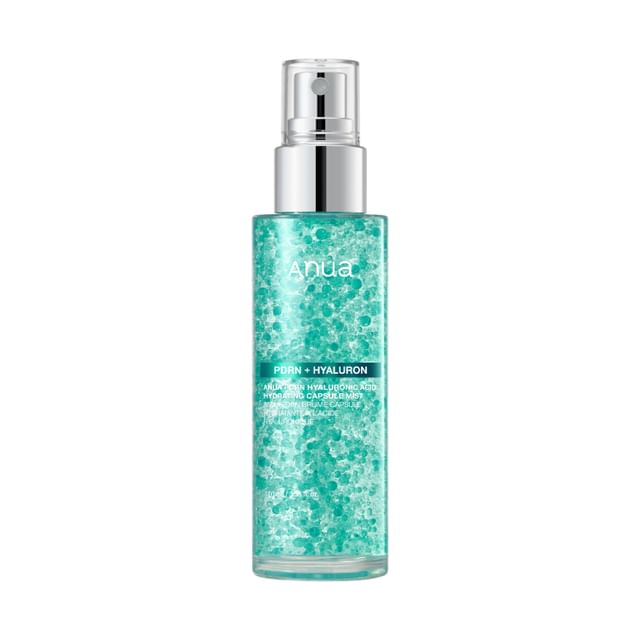
PDRN Hyaluronic Acid Hydrating Capsule Mist
Anua
Hydrating capsule mist with PDRN and hyaluronic acid for instant moisture boost throughout the day.
$19–26

PDRN Rejuvenating Cream
Genabelle
Lightweight moisturizer with PDRN, CICA, and triple-layer hyaluronic acid for deep hydration and soothing.
$25–35
Related Posts
PDRN After Laser Treatment: How It Speeds Recovery and Boosts Results
Using PDRN after laser treatments like fractional CO2, IPL, or picosecond lasers can dramatically speed healing and enhance results. Here is the science behind PDRN as a post-laser recovery tool.
PDRN for Post-Procedure Recovery: After Laser, Peels, and Microneedling
PDRN is used in Korean dermatology clinics as a go-to recovery agent after laser treatments, chemical peels, and microneedling. Learn why it accelerates healing, reduces redness, and improves treatment outcomes.
PDRN for Hyperpigmentation and Dark Spots: What the Evidence Shows
PDRN is not a traditional brightening agent — but its tissue repair and anti-inflammatory properties make it surprisingly effective for certain types of hyperpigmentation. Learn which dark spots respond to PDRN and which need different approaches.