 PDRN Care
PDRN Sheet Masks: Are They Worth It? Complete Guide
James Liu
MSc, Cosmetic Chemistry
The PDRN Sheet Mask Boom
Sheet masks have long been a cornerstone of Korean skincare routines, and the latest generation infused with PDRN (polydeoxyribonucleotide) has taken the market by storm. Nearly every major K-beauty brand now offers at least one PDRN sheet mask, promising skin regeneration, enhanced hydration, and anti-aging benefits in a convenient single-use format [2][3].
But are they actually worth it? Do sheet masks deliver enough PDRN to make a meaningful difference, or is this just marketing hype layered on top of a trending ingredient? The answer, as with most things in skincare, depends on understanding the science and managing expectations.
How PDRN Sheet Masks Work
The Sheet Mask Advantage
Sheet masks offer a unique delivery mechanism compared to serums and creams. The physical sheet acts as an occlusive barrier, trapping the essence against the skin and preventing evaporation [5]. This occlusion creates several benefits for PDRN delivery:
- Extended contact time: The essence remains in contact with skin for 15-30 minutes, far longer than a serum that absorbs within minutes
- Hydration-enhanced penetration: The moist environment under the sheet hydrates the stratum corneum, temporarily loosening the tightly packed corneocyte structure and improving ingredient penetration [5]
- Concentration delivery: A single sheet mask typically contains 20-30 mL of essence — equivalent to multiple applications of a serum — delivering a concentrated dose in one session
- Even distribution: The sheet ensures even coverage across the entire face, eliminating the patchy application that can occur with serums
PDRN Delivery Through the Sheet
When a PDRN-infused sheet mask sits on the skin, the polynucleotide fragments in the essence are driven into the stratum corneum by the hydration gradient created by occlusion [2][5]. Smaller PDRN fragments (oligonucleotides) can penetrate more deeply, while larger fragments act on the skin surface, improving barrier function and epidermal hydration.
The net result is a higher single-session PDRN dose compared to a quick serum application, though still significantly less than what an injectable treatment delivers [2][3].
What to Look For in a PDRN Sheet Mask
PDRN Concentration
The most important factor is how much PDRN the mask actually contains. Unfortunately, most sheet mask packaging does not disclose specific concentrations. Look for these indicators:
- PDRN listed in the first 5-10 ingredients — ingredient lists are ordered by concentration, so higher placement means more PDRN
- "PDRN" rather than "salmon DNA" — true PDRN is a purified, standardized extract; "salmon DNA" may refer to less processed forms with variable activity
- Concentration claims on packaging — some premium masks specify PDRN concentration (e.g., "1,000 ppm PDRN" or "0.1% PDRN")
Sheet Material
The sheet material affects how well the essence delivers ingredients to the skin:
- Microfiber/tencel — thin, conforming sheets that maximize skin contact and essence absorption
- Bio-cellulose — fermented coconut fiber sheets that are extremely thin and adhere tightly, providing superior occlusion
- Hydrogel — two-piece gel sheets that lock in more essence and provide better adhesion than standard fabric sheets
- Cotton/pulp — the most common and affordable material, adequate but less conforming than premium options
Bio-cellulose and hydrogel masks generally deliver ingredients more effectively than standard cotton masks due to tighter skin contact and better occlusion [5].
Supporting Ingredients
The best PDRN sheet masks include complementary ingredients that enhance the overall effect:
- Hyaluronic acid — amplifies the hydration benefits and creates a moisture-rich environment for PDRN activity
- Niacinamide — supports barrier function and brightening alongside PDRN's regenerative effects
- Centella asiatica — adds soothing and anti-inflammatory properties that complement PDRN's wound healing action
- Adenosine — a synergistic choice given PDRN's mechanism of action through the adenosine receptor pathway [1][4]
What to Avoid
- Fragrance — adds sensory appeal but contributes nothing to efficacy and can irritate sensitive skin
- Alcohol (ethanol) — may improve immediate feel but disrupts the barrier PDRN is trying to repair
- Excessive essential oils — potential sensitizers with no proven benefit for PDRN delivery
How to Get the Most Out of PDRN Sheet Masks
Before Application
- Double cleanse — remove all makeup, sunscreen, and surface debris to maximize ingredient absorption
- Apply toner to damp skin — pre-hydrating the stratum corneum improves penetration
- Optional: use a gentle chemical exfoliant earlier in the day — removing dead skin cells can improve PDRN absorption (but do not apply acids immediately before the mask)
During Application
- Smooth out all air bubbles — the sheet must make full contact with skin for even delivery
- Leave on for 15-20 minutes — this is the optimal window; longer is not necessarily better, as the sheet can begin reabsorbing moisture from the skin once it dries
- Do not let the mask dry on your face — remove while it is still moist. A dried-out mask pulls moisture away from the skin
- Lie down if possible — gravity helps the sheet stay in contact with the skin, particularly around the nose and chin
After Removal
- Pat remaining essence into skin — do not rinse; the residual essence continues to absorb
- Apply your regular moisturizer or sleeping mask — seal in the PDRN and other actives
- Skip additional active serums — the mask has already delivered a concentrated dose; adding more actives risks irritation
How Often Should You Use PDRN Sheet Masks?
For most people, 2-3 times per week provides a good balance between efficacy and practicality. Daily use is not harmful but may not be necessary if you are already using a PDRN serum in your regular routine.
Best use cases for PDRN sheet masks:
- Pre-event skin prep — 24-48 hours before an important event for a hydration and glow boost
- Post-procedure recovery — after laser treatments, chemical peels, or microneedling (once the skin has re-epithelialized)
- Weekly intensive treatment — supplementing daily PDRN serum use with a more concentrated mask session
- Travel recovery — counteracting the dehydration and stress of air travel
- Seasonal transition — supporting the skin during climate changes that stress the barrier
Are PDRN Sheet Masks Worth It?
The Case For
- Higher single-dose delivery than a quick serum application due to occlusion and extended contact time
- Immediate visible results — plumper, more hydrated, glowing skin after a single use
- Convenient — no special technique or knowledge required
- Combination benefits — well-formulated masks include complementary ingredients alongside PDRN
- Accessible entry point — a good way to experience PDRN benefits before committing to serums or injections
The Case Against
- Per-use cost — premium PDRN sheet masks cost $3-$8 each; over a year of regular use, a PDRN serum may be more cost-effective
- Single-use waste — environmental concerns about packaging and disposal
- Variable PDRN concentrations — without standardized labeling, it is difficult to know exactly how much PDRN you are getting
- Not a replacement for daily PDRN — sheet masks used 2-3 times per week cannot match the cumulative effect of daily serum application
The Verdict
PDRN sheet masks are worth it as a supplement to a daily PDRN routine, not a replacement for it. They provide a concentrated boost of PDRN and hydration that enhances results from regular serum use. For occasional users or those trying PDRN for the first time, sheet masks offer an accessible and immediate experience of the ingredient's benefits [2][3][4].
The most cost-effective approach is to use a PDRN serum daily and add sheet masks 1-2 times per week for an extra boost — particularly before events, after procedures, or whenever your skin needs extra support.
The Bottom Line
PDRN sheet masks leverage the occlusive delivery advantage of the sheet format to deliver a concentrated dose of polynucleotides to the skin in a single session [2][5]. They are not a substitute for daily topical PDRN use or clinical injections, but they are a valuable addition to a PDRN-focused skincare routine. Choose masks with PDRN listed high in the ingredient list, in bio-cellulose or hydrogel formats, with complementary ingredients and without unnecessary fragrances or irritants. Used consistently alongside daily PDRN products, sheet masks can meaningfully contribute to the cumulative regenerative benefits of polynucleotide skincare [1][3][4].
References
- [1]Squadrito F, Bitto A, Irrera N, et al.. Pharmacological Activity and Clinical Use of PDRN. Curr Pharm Des. 2017;23(27):3948-3957. doi:10.2174/1381612823666170516153716
- [2]Shin JU, Kang SW, Jeong JH, Kim KH. Effect of Salmon DNA Gel on the Skin Barrier Function and Hydration. Dermatol Ther. 2020;33(6):e14234. doi:10.1111/dth.14234
- [3]Kim JY, Song JY, Lee JH, Park JU. Biological and Clinical Effects of Polynucleotide (PN) on Skin Rejuvenation. Int J Mol Sci. 2021;22(21):11428. doi:10.3390/ijms222111428
- [4]Colangelo MT, Galli C, Giannelli M. Polydeoxyribonucleotide: A Promising Biological Platform for Dermal Regeneration. Curr Pharm Des. 2020;26(17):2049-2056. doi:10.2174/1381612826666200110091648
- [5]Lee HJ, Park KH, Park SR, Min BH. Delivery of Growth Factors Through Biomaterial Scaffolds for Skin Tissue Engineering. Biomater Res. 2018;22(1):17. doi:10.1186/s40824-018-0127-z
Recommended Products

PDRN Hyaluronic Acid Capsule 100 Serum Mask
Anua
Sheet mask supporting natural skin renewal with low-molecular PDRN and hyaluronic acid for luminous glow.
$25–35 (10-pack)

PDRN Rejuvenating Mask Sheet
Genabelle
Deeply hydrating sheet mask with PDRN, triple-layer hyaluronic acid, and niacinamide for visible plumping and cooling.
$22–30 (5-pack)

PDRN Collagen Overnight Face Mask Firming Jelly
Abib
Overnight jelly mask with plant-based PDRN and 300Da low-molecular collagen for plumping and firming while you sleep.
$30–40
PDRN V-Lifting Mask
Avajar
V-line lifting sheet mask infused with salmon PDRN and adenosine to firm jawline contours and tighten sagging skin.
$18–26
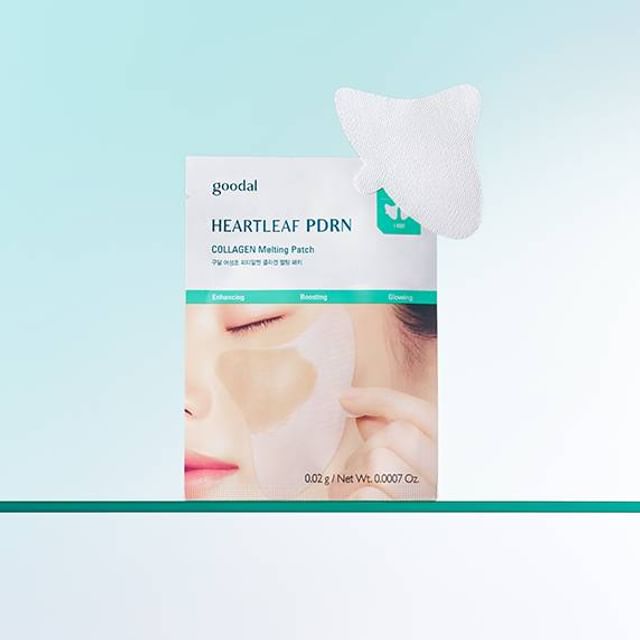
Heartleaf PDRN Collagen Melting Patch
Goodal
Dissolving collagen eye patches with heartleaf and PDRN for targeted under-eye repair and brightening.
$15–20
Related Posts
What is PDRN? The Complete Guide to Salmon DNA Skincare
PDRN (Polydeoxyribonucleotide) is a DNA-derived skincare ingredient extracted from salmon. Learn what PDRN means, how it works, its benefits for skin, and the different product types available.
How to Build a PDRN Skincare Routine: Morning & Night Guide
A step-by-step guide to building an effective PDRN skincare routine. Learn where PDRN fits in your morning and evening regimen, how to layer it with other actives, and which products to pair it with.
Best PDRN Masks in 2026: Sheet Masks, Overnight Masks & More
A dermatologist ranks the best PDRN masks of 2026, including sheet masks, overnight sleeping masks, gel masks, and eye patches. Find the best PDRN mask for hydration, brightening, anti-aging, and post-procedure recovery.