 PDRN Care
PDRN and Skin Cycling: How to Build the Perfect 4-Night Rotation
Dr. Sarah Chen
PhD, Molecular Biology
What Is Skin Cycling and Why Does It Work?
Skin cycling is a structured nighttime skincare approach that rotates active ingredients over a repeating 4-night cycle. Rather than layering potent actives every single night — which often leads to irritation, barrier damage, and diminishing returns — skin cycling gives each active its own dedicated night followed by deliberate recovery periods.
The standard 4-night rotation follows this pattern:
- Night 1: Chemical exfoliation (AHA, BHA, or PHA)
- Night 2: Retinoid (retinol, retinal, or tretinoin)
- Night 3: Recovery
- Night 4: Recovery
Then the cycle repeats. The logic is straightforward: actives work best on healthy, intact skin. By building in recovery nights, you prevent the cumulative irritation that makes actives less effective over time. The approach was popularized by board-certified dermatologists and has gained widespread adoption because it delivers visible results with less irritation than daily active use.
What has been missing from most skin cycling protocols is a recovery-phase ingredient with genuine biological activity. This is where PDRN changes the equation. Instead of passive recovery — simply moisturizing and waiting — PDRN turns recovery nights into active regeneration nights .
Night 1: Exfoliation — How PDRN Buffers Acid Irritation
Exfoliation night uses chemical acids to dissolve the bonds between dead skin cells, promoting cell turnover and clearing congestion. Common choices include glycolic acid (AHA), salicylic acid (BHA), lactic acid (AHA), or polyhydroxy acids (PHAs) for sensitive skin.
The challenge with exfoliation night is managing the inflammatory response that accompanies acid application. Even well-formulated exfoliants trigger a mild inflammatory cascade as they disrupt the stratum corneum. For many people, this manifests as redness, stinging, or tightness that persists into the following day.
Applying PDRN after your exfoliant (once the acid has completed its work, typically 20 to 30 minutes after application) provides immediate anti-inflammatory support. PDRN activates adenosine A2A receptors, which downregulate pro-inflammatory cytokines including TNF-alpha and IL-6 . This does not neutralize the exfoliant or reduce its efficacy — the acid has already done its work by the time PDRN is applied. Instead, PDRN modulates the inflammatory aftermath, allowing the beneficial exfoliation to proceed while reducing the uncomfortable side effects.
Night 1 protocol
- Cleanse with a gentle, pH-balanced cleanser
- Apply chemical exfoliant to dry skin and wait 20 to 30 minutes
- Apply PDRN serum (such as COSRX 5 PDRN Collagen Serum) to buffer post-acid inflammation
- Follow with a simple moisturizer
- No additional actives
Night 2: Retinoid — PDRN Supports Retinization and Reduces Peeling
Retinoid night is the most powerful step in the skin cycling rotation. Retinoids (retinol, retinaldehyde, adapalene, or tretinoin) accelerate cell turnover, stimulate collagen production, and regulate melanin synthesis. They are the most evidence-backed topical anti-aging ingredients available.
However, retinoids are also the most irritating step. The retinization process — the period during which skin adapts to retinoid use — often involves peeling, dryness, redness, and sensitivity that can last weeks to months. This is the primary reason people abandon retinoids before seeing results.
PDRN applied before or after a retinoid provides meaningful support during retinization. The mechanism is twofold. First, PDRN's anti-inflammatory action via A2A receptor activation reduces the retinoid-induced inflammatory response that causes visible peeling and redness . Second, PDRN supplies nucleotide building blocks through the salvage pathway, enabling faster cell division to replace the cells that retinoids are encouraging to shed .
A practical note: if you are using prescription-strength retinoids (tretinoin 0.025% or higher), apply the retinoid first and allow it to absorb for 15 to 20 minutes before applying PDRN. This ensures the retinoid makes full contact with the skin before the PDRN layer is applied. For over-the-counter retinol or retinal, you can apply PDRN first as a buffer layer (the "retinoid sandwich" technique) or after the retinoid.
Night 2 protocol
- Cleanse with a gentle cleanser
- Apply retinoid to dry skin (or apply PDRN first as a buffer for sensitive skin)
- Wait 15 to 20 minutes
- Apply PDRN serum to support retinization
- Follow with moisturizer if needed
- No additional actives
Nights 3 and 4: Recovery — PDRN as the Star Ingredient
Recovery nights are where PDRN truly shines. These nights exist to let the skin barrier rebuild after the controlled stress of exfoliation and retinoid application. Most skin cycling guides recommend nothing more than moisturizer on recovery nights. This is a missed opportunity.
PDRN transforms passive recovery into active regeneration through several simultaneous mechanisms :
Adenosine A2A receptor activation: PDRN binds to A2A receptors on fibroblasts and keratinocytes, triggering intracellular signaling cascades that promote cell proliferation and tissue repair. This is not a passive "soothing" effect — it is a direct biological signal to accelerate healing .
Anti-inflammatory modulation: After two consecutive nights of active ingredients, low-grade inflammation accumulates in the skin. PDRN downregulates TNF-alpha, IL-6, and other pro-inflammatory mediators, resolving this residual inflammation and creating optimal conditions for barrier repair .
Fibroblast stimulation: PDRN promotes fibroblast proliferation and collagen synthesis via the PKA-CREB pathway . Recovery nights with PDRN do not just restore the barrier — they actively build new collagen and structural proteins.
Nucleotide supply: PDRN provides DNA fragment building blocks through the purine salvage pathway, supplying raw materials for rapidly dividing keratinocytes that are rebuilding the stratum corneum .
Angiogenesis support: PDRN upregulates vascular endothelial growth factor (VEGF), promoting microcirculation that delivers oxygen and nutrients to the recovering tissue .
The result is that recovery nights become the most productive nights in the cycle — not downtime, but the period when the deepest regeneration occurs.
Night 3 protocol
- Cleanse gently
- Apply hydrating toner or essence (optional)
- Apply PDRN serum generously — this is the primary active for the night
- Follow with a PDRN-enriched cream (such as Anua PDRN Moisturizing Cream) for sustained delivery
- Consider a PDRN sleep mask (such as Isntree GIM PDRN Sleep Mask) for intensive overnight recovery
Night 4 protocol
- Repeat the Night 3 protocol
- This second recovery night ensures complete barrier restoration before the cycle restarts
- If your skin feels fully recovered, you can use a lighter PDRN application
The Complete PDRN Skin Cycling Protocol
Here is the full 4-night rotation with specific product recommendations and timing:
Night 1 — Exfoliation
- Cleanse: Gentle, pH-balanced cleanser
- Exfoliate: AHA (glycolic or lactic acid) or BHA (salicylic acid), leave on for 20 to 30 minutes or use a leave-on formulation
- Recover: Numbuzin No.2 Rose PDRN Serum — the rose extract provides additional soothing while PDRN begins anti-inflammatory action
- Seal: Simple fragrance-free moisturizer
Night 2 — Retinoid
- Cleanse: Gentle cleanser
- Treat: Retinoid of your choice (start with retinol 0.3% if new to retinoids)
- Support: Wait 15 to 20 minutes, then apply COSRX 5 PDRN Collagen Serum — the collagen peptides complement the retinoid's collagen-stimulating effects
- Seal: Moisturizer
Night 3 — Recovery
- Cleanse: Gentle cleanser (consider micellar water or oil cleanser only)
- Hydrate: Hydrating toner
- Regenerate: PDRN serum applied generously
- Protect: Anua PDRN Moisturizing Cream
- Boost (optional): Isntree GIM PDRN Sleep Mask as the final layer
Night 4 — Recovery
- Repeat Night 3 protocol
- Optional: Layer a facial oil over your PDRN products to create an occlusive seal that enhances overnight absorption
Modifying the Cycle for Sensitive Skin
Not everyone tolerates the standard 4-night cycle. If you experience persistent redness, stinging, or visible peeling that does not resolve during recovery nights, extend the cycle.
The 5-night sensitive skin cycle
- Night 1: Exfoliation (use a milder acid — PHA or low-concentration lactic acid)
- Night 2: Recovery with PDRN
- Night 3: Retinoid (use a lower-strength retinol or retinoid sandwich technique with PDRN)
- Night 4: Recovery with PDRN
- Night 5: Recovery with PDRN
The 6-night very sensitive skin cycle
- Night 1: Exfoliation (PHA or enzyme exfoliant only)
- Night 2: Recovery with PDRN
- Night 3: Recovery with PDRN
- Night 4: Retinoid (low-strength, buffered with PDRN)
- Night 5: Recovery with PDRN
- Night 6: Recovery with PDRN
The key principle: PDRN is used on every recovery night regardless of cycle length. As your skin builds tolerance, you can gradually shorten the cycle back toward the standard 4-night rotation. PDRN's gentle, non-irritating profile means it never contributes to the sensitivity you are managing — it only supports recovery .
Common Skin Cycling Mistakes
Over-exfoliating on Night 1
Using too strong an acid or leaving it on too long creates excessive barrier disruption that two recovery nights cannot fully repair. Start with lower concentrations and shorter contact times. If redness persists through both recovery nights, your exfoliant is too aggressive.
Skipping recovery nights
The temptation to use actives every night is strong, especially when results are visible. But skipping recovery nights leads to cumulative barrier damage, increased sensitivity, and paradoxically slower results. Recovery nights with PDRN are not wasted nights — they are when the deepest repair and collagen synthesis occurs .
Using the wrong PDRN product format
Not all PDRN products serve the same role in skin cycling. Lightweight PDRN serums are best for Nights 1 and 2, where they layer under other products without interference. Richer PDRN creams and sleep masks are ideal for recovery nights, where maximum hydration and sustained PDRN delivery matter most.
Adding too many actives on exfoliation or retinoid nights
Skin cycling works because each night has a single focused active. Do not add vitamin C, niacinamide, or other actives on Nights 1 or 2. PDRN is the exception because it functions as a recovery support, not an additional active that stresses the skin.
Not giving the cycle enough time
Meaningful results from skin cycling with PDRN typically appear after 3 to 4 complete cycles (12 to 16 nights). Collagen remodeling measured in clinical studies takes 8 to 12 weeks of consistent PDRN use . Be patient and consistent.
What About the Morning Routine?
Skin cycling is a nighttime protocol, but your morning routine matters too. A PDRN-inclusive morning routine complements the nighttime cycle:
- Gentle cleanser (or water-only rinse)
- PDRN serum (lightweight formula)
- Moisturizer
- Broad-spectrum SPF 50 sunscreen
Morning PDRN application provides continuous anti-inflammatory support throughout the day and protects against UV-induced and environmental inflammation. This is particularly valuable on the mornings after Nights 1 and 2, when the skin may still be mildly sensitized from the previous night's actives.
Frequently Asked Questions
Can I use PDRN on every night of the cycle, not just recovery nights?
Yes. PDRN is non-irritating and does not interfere with exfoliants or retinoids. Using it on all four nights provides consistent anti-inflammatory support and recovery building blocks. The recovery nights simply get a more intensive PDRN application (richer products, more layers) compared to the lighter application on active nights.
How long before I see results from PDRN skin cycling?
Most people notice improved skin texture and reduced post-active irritation within the first 2 cycles (8 nights). Visible improvements in skin tone, fine lines, and overall radiance typically emerge after 4 to 6 cycles (16 to 24 nights). Clinical studies show measurable collagen improvement after 8 to 12 weeks of consistent PDRN use .
Should I use the same PDRN product on all nights?
You can, but using different formats optimizes results. A lightweight PDRN serum works best on active nights (Nights 1 and 2) where it layers under exfoliants and retinoids. A richer PDRN cream or sleep mask is ideal for recovery nights (Nights 3 and 4) where maximum hydration and sustained delivery are the priority.
Can beginners start with PDRN skin cycling?
Beginners should start with a modified cycle. Use a mild exfoliant (lactic acid 5% or PHA), a low-strength retinol (0.2 to 0.3%), and extend recovery to 3 nights. PDRN is safe for beginners — it is one of the gentlest actives available and helps buffer the irritation from exfoliants and retinoids that can overwhelm new users .
Is PDRN skin cycling safe during pregnancy?
PDRN itself has a favorable safety profile, but standard skin cycling includes retinoids, which are contraindicated during pregnancy. If you are pregnant or planning pregnancy, remove the retinoid night entirely and replace it with an additional PDRN recovery night. Consult your dermatologist for a pregnancy-safe skin cycling protocol.
References
- [1]Squadrito F, Bitto A, Irrera N, Pizzino G, Pallio G, Minutoli L, Altavilla D. Pharmacological Activity and Clinical Use of PDRN. Current Pharmaceutical Design. 2017;23(27):3948-3957. doi:10.2174/1381612823666170516153716
- [2]Kim TH, Kim JY, Bae JH, Kim HM, Park ES. Biostimulatory effects of polydeoxyribonucleotide for facial skin rejuvenation. Journal of Cosmetic Dermatology. 2019;18(6):1767-1773. doi:10.1111/jocd.12958
- [3]Galeano M, Bitto A, Altavilla D, Minutoli L, Polito F, Calo M. Polydeoxyribonucleotide stimulates angiogenesis and wound healing. Wound Repair and Regeneration. 2008;16(2):208-217. doi:10.1111/j.1524-475X.2008.00361.x
- [4]Colangelo MT, Galli C, Gentile P. Polydeoxyribonucleotide: A Promising Biological Platform for Dermal Regeneration. Current Pharmaceutical Design. 2020;26(17):2049-2056. doi:10.2174/1381612826666200210100726
Recommended Products

5 PDRN Collagen Intense Vitalizing Serum
COSRX
Multi-PDRN formula with 5 types of PDRN from salmon, centella, rice, lactobacillus, and sea grapes plus low-molecular collagen.
$30–40

No.2 Rose PDRN Collagen Plumping Serum
Numbuzin
5% Rose PDRN combined with 6 peptides and 63% collagen water for smoothing fine lines and long-lasting plumping effects.
$20–28

PDRN Hyaluronic Acid 100 Moisturizing Cream
Anua
Lightweight yet deeply hydrating cream with low-molecular PDRN and hyaluronic acid for plumping and firming.
$25–35
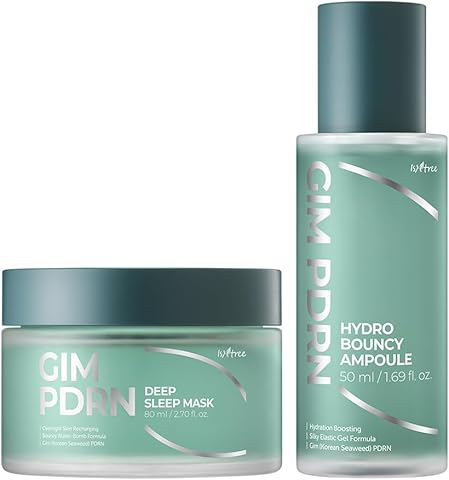
Gim PDRN Deep Sleep Mask
Isntree
Overnight mask with Wando-grown gim PDRN, 8 types of hyaluronic acid, and 8 types of peptides for intensive repair.
$20–28
Related Posts
How to Build a PDRN Skincare Routine: Morning & Night Guide
A step-by-step guide to building an effective PDRN skincare routine. Learn where PDRN fits in your morning and evening regimen, how to layer it with other actives, and which products to pair it with.
PDRN and Tretinoin: How to Combine Them Safely
Tretinoin is the gold standard for anti-aging but causes irritation. PDRN can reduce that irritation while boosting results. Learn how to layer them safely.
PDRN for Skin Barrier Repair: Rebuilding Your Moisture Barrier from Within
A damaged skin barrier leads to dehydration, sensitivity, and inflammation — but conventional barrier repair only patches the surface. PDRN supports barrier recovery at a deeper level by accelerating keratinocyte and fibroblast renewal, calming chronic inflammation, and strengthening the dermal-epidermal junction that underpins barrier integrity.