 PDRN Care
PDRN vs Ceramides: How They Differ and Why You Need Both
Dr. Sarah Chen
PhD, Molecular Biology
If you spend any time reading skincare labels, you have almost certainly encountered both PDRN and ceramides. Both are celebrated for improving skin health, and both appear in an increasingly wide range of products. But they are fundamentally different ingredients that operate on entirely different levels of skin biology. Understanding that distinction is the key to using them effectively — and to understanding why combining them produces results that neither can achieve alone.
This guide compares the two ingredients head to head: what each does at the molecular level, which skin concerns each addresses best, and how to build a routine that harnesses both.
What PDRN Does: Cellular Repair From the Inside
PDRN (polydeoxyribonucleotide) consists of DNA fragments derived from salmon cells, with molecular weights typically ranging from 50 to 1500 kDa. Its primary mechanism is activation of the adenosine A2A receptor on cell surfaces, which triggers a well-characterized intracellular signaling cascade .
When PDRN binds to A2A receptors, the downstream effects include increased cyclic AMP (cAMP) levels, fibroblast proliferation, upregulation of vascular endothelial growth factor (VEGF) for improved blood supply, and suppression of pro-inflammatory cytokines such as TNF-alpha and IL-6 . Additionally, PDRN activates the nucleotide salvage pathway, providing cells with raw DNA building blocks they can use for repair and replication .
In practical terms, PDRN works deep within the dermis. It tells fibroblasts to multiply and produce more collagen and elastin. It encourages angiogenesis so that skin receives better nutrient delivery. And it dials down chronic inflammation that accelerates aging. These are structural, long-term changes that operate below the surface .
What Ceramides Do: Lipid Barrier Repair From the Outside
Ceramides are a family of waxy lipid molecules that make up approximately 50% of the stratum corneum — the outermost layer of the epidermis . Together with cholesterol and free fatty acids, ceramides form the intercellular lipid matrix that acts as the skin's primary barrier against water loss and environmental aggression.
Think of the stratum corneum as a brick wall: the corneocytes (dead skin cells) are the bricks, and the ceramide-rich lipid matrix is the mortar that holds them together. When this mortar is intact, skin stays hydrated, smooth, and resistant to irritants. When ceramide levels are depleted — by aging, harsh cleansers, UV exposure, or conditions like eczema — the barrier breaks down, leading to transepidermal water loss, sensitivity, redness, and a rough texture .
Topically applied ceramides supplement the skin's natural lipid stores. They integrate into the stratum corneum's lipid lamellae, physically filling gaps in the barrier matrix. This is not a signaling process; it is a direct structural repair .
The Core Difference: Signaling vs Structure
This is the fundamental distinction between PDRN and ceramides:
- PDRN is a signaling molecule. It activates receptor pathways that instruct cells to behave differently — proliferate faster, produce more collagen, reduce inflammation .
- Ceramides are structural molecules. They physically become part of the skin's barrier, filling in the lipid matrix that prevents water loss .
PDRN works in the dermis (the living layer beneath the surface). Ceramides work in the stratum corneum (the outermost dead-cell layer). One repairs the factory; the other repairs the fence. Both are essential, but they are solving completely different problems.
When to Prioritize PDRN
PDRN should be your focus when the primary concern is cellular-level damage or degeneration:
- Aging and collagen loss — PDRN directly stimulates fibroblast activity and collagen synthesis
- Post-procedure recovery — after microneedling, laser, or chemical peels, PDRN accelerates tissue regeneration
- Chronic inflammation — conditions where low-grade persistent inflammation is degrading skin quality over time
- Dull, devitalized skin — when skin lacks vitality despite adequate surface hydration, the problem is likely at the cellular level
- Scarring — PDRN's promotion of angiogenesis and fibroblast proliferation supports scar tissue remodeling
When to Prioritize Ceramides
Ceramides should be your focus when the primary concern is barrier function:
- Dehydrated skin — high transepidermal water loss despite using hydrating products
- Sensitivity and reactivity — skin that stings, burns, or flushes in response to products or environmental changes
- Eczema and dermatitis — clinically demonstrated ceramide depletion in the stratum corneum
- Over-exfoliated or stripped skin — barrier damage from retinoids, acids, or aggressive cleansing
- Winter or low-humidity environments — environmental conditions that accelerate barrier disruption
Why You Should Use Both
In practice, most skin concerns involve both barrier damage and cellular-level issues. Aging skin, for example, simultaneously loses collagen in the dermis and ceramides in the stratum corneum. Treating only one layer leaves the other compromised.
Here is why the combination is particularly powerful:
Better Absorption for PDRN
An intact lipid barrier actually helps active ingredients that penetrate through intercellular pathways. When ceramides restore the organized lamellar structure of the stratum corneum, they create a more predictable and controlled environment for PDRN penetration . Paradoxically, a healthy barrier does not block actives — it channels them more effectively than a damaged, chaotic barrier.
Sustained Hydration Supports Cellular Repair
PDRN-stimulated fibroblasts work best in a well-hydrated environment. Collagen synthesis, DNA replication, and cell division all require adequate water availability. By reducing transepidermal water loss, ceramides help maintain the hydrated dermal environment that PDRN's cellular repair mechanisms need to function optimally .
Dual Anti-Inflammatory Action
PDRN reduces inflammation through A2A receptor-mediated cytokine suppression . An intact ceramide barrier reduces inflammation by preventing irritant penetration and reducing the immune triggers that come from barrier disruption . Together, they address inflammation from both inside and outside — a significantly more comprehensive approach.
Accelerated Recovery
After procedures or during barrier crises, combining PDRN (to speed up cellular repair) with ceramides (to seal the barrier while it heals) dramatically shortens recovery time. You are simultaneously rebuilding the foundation and protecting the surface.
How to Layer PDRN and Ceramides
The layering order is straightforward and follows the standard thin-to-thick principle:
Morning Routine:
- Gentle cleanser (ceramide-containing if possible)
- PDRN serum — apply to slightly damp skin, pat until absorbed
- Ceramide moisturizer — lock in the PDRN and seal the barrier
- Sunscreen (SPF 50+)
Evening Routine:
- Double cleanse (oil cleanser then water-based cleanser)
- Actives if using (retinoid, exfoliant — on designated nights)
- PDRN serum — apply and let absorb for 1-2 minutes
- Ceramide cream or sleeping mask — final occlusive layer
The key principle: PDRN goes on first as the lightweight, water-based active. Ceramides go on after as the heavier, lipid-based barrier support. This allows PDRN to contact skin directly for maximum receptor binding, while the ceramide layer on top locks in moisture and creates an optimal environment for overnight repair.
Product Recommendations
For a PDRN step, the COSRX 5% PDRN Collagen Serum offers a clean, clinically relevant concentration in a lightweight vehicle that layers well under ceramide creams.
For the ceramide step, the Beplain Cica PDRN Cream uniquely combines both PDRN and ceramide-supportive cica in a single moisturizer, simplifying the routine for those who prefer fewer steps.
Common Misconceptions
"Ceramides and PDRN do the same thing"
They do not. This is the most common misunderstanding. PDRN triggers biological signaling cascades through receptor activation . Ceramides physically integrate into the lipid barrier . Saying they do the same thing is like saying a phone call and a brick wall serve the same function because both are useful in building a house.
"I only need one or the other"
If your skin is young, healthy, and you live in a mild climate with no particular skin concerns, you might get by with one. But for anyone over 30, dealing with aging, environmental damage, or sensitivity, both layers of support produce meaningfully better results than either alone.
"Ceramides block PDRN absorption"
Applied in the correct order (PDRN first, ceramides second), there is no meaningful absorption interference. PDRN absorbs rapidly into skin upon direct contact . The ceramide layer applied afterward sits on top, sealing in moisture rather than blocking the already-absorbed PDRN.
The Bottom Line
PDRN and ceramides are not competitors — they are partners working on entirely different layers of skin health. PDRN handles the deep work: activating fibroblasts, producing collagen, suppressing inflammation, and promoting angiogenesis through A2A receptor signaling . Ceramides handle the surface work: rebuilding the lipid barrier, preventing water loss, and protecting the skin from environmental insults .
The most effective skincare routines address both layers. Apply a PDRN serum to deliver cellular-level repair signals, then follow with a ceramide-rich moisturizer to seal and protect. Together, they create a skin environment where regeneration happens efficiently beneath a strong, intact barrier — and that is the foundation of genuinely healthy skin.
References
- [1]Squadrito F, Bitto A, Irrera N, Pizzino G, Pallio G, Minutoli L, Altavilla D. Pharmacological Activity and Clinical Use of PDRN. Current Pharmaceutical Design. 2017;23(27):3948-3957. doi:10.2174/1381612823666170516153716
- [2]Coderch L, Lopez O, de la Maza A, Parra JL. Ceramides and Skin Function. American Journal of Clinical Dermatology. 2003;4(2):107-129. doi:10.2165/00128071-200304020-00004
- [3]Colangelo MT, Galli C, Gentile P. Polydeoxyribonucleotide: A Promising Biological Platform for Dermal Regeneration. Current Pharmaceutical Design. 2020;26(17):2049-2056. doi:10.2174/1381612826666200210100726
- [4]Meckfessel MH, Brandt S. The structure, function, and importance of ceramides in skin and their use as therapeutic agents in skin-care products. Journal of the American Academy of Dermatology. 2014;71(1):177-184. doi:10.1016/j.jaad.2014.01.891
- [5]Veronesi F, Dallari D, Sabbioni G, Carubbi C, Martini L, Fini M. Polydeoxyribonucleotides (PDRNs): From Physical Chemistry to Biological Activities and Clinical Applications. International Journal of Molecular Sciences. 2017;18(9):1927. doi:10.3390/ijms18091927
Recommended Products

5 PDRN Collagen Intense Vitalizing Serum
COSRX
Multi-PDRN formula with 5 types of PDRN from salmon, centella, rice, lactobacillus, and sea grapes plus low-molecular collagen.
$30–40
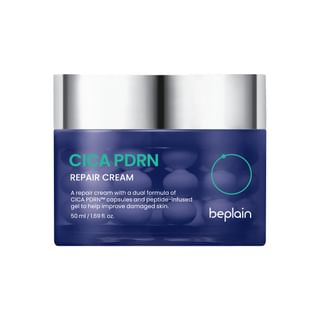
Cica PDRN Repair Cream
beplain
Minimalist cica cream with PDRN for sensitive skin repair, redness relief, and barrier restoration.
$20–28
Related Posts
What is PDRN? The Complete Guide to Salmon DNA Skincare
PDRN (Polydeoxyribonucleotide) is a DNA-derived skincare ingredient extracted from salmon. Learn what PDRN means, how it works, its benefits for skin, and the different product types available.
PDRN for Skin Barrier Repair: Rebuilding Your Moisture Barrier from Within
A damaged skin barrier leads to dehydration, sensitivity, and inflammation — but conventional barrier repair only patches the surface. PDRN supports barrier recovery at a deeper level by accelerating keratinocyte and fibroblast renewal, calming chronic inflammation, and strengthening the dermal-epidermal junction that underpins barrier integrity.