PDRN Care
Bakuchiol
How to Combine with PDRN
PDRN and bakuchiol are a zero-restriction combination — use together freely in both AM and PM routines with no waiting, no buffering, and no irritation risk.
Morning
Apply PDRN serum first, then bakuchiol serum or moisturizer. Both are non-photosensitizing, so safe under sunscreen.
Evening
Layer PDRN serum followed by bakuchiol product. The overnight repair window maximizes fibroblast stimulation from both pathways.
Intensive
Use a single product containing both PDRN and bakuchiol for a simplified one-step treatment.
Best For
Skin concerns where this combination performs particularly well.
Retinol-Intolerant Skin
Bakuchiol delivers retinol-like collagen stimulation without the irritation, while PDRN adds A2A receptor-mediated regeneration — together, they match retinol-level results for skin that cannot tolerate retinoids.
Pregnancy and Breastfeeding
Unlike retinol (which is contraindicated in pregnancy), bakuchiol is not a retinoid and carries no teratogenic risk. Combined with PDRN, it provides the safest evidence-backed anti-aging routine during pregnancy.
Preventative Anti-Aging (20s–30s)
For younger skin not yet ready for aggressive retinoids, PDRN + bakuchiol provides meaningful collagen stimulation that prevents visible aging before it starts.
What is it?
Bakuchiol is a meroterpene compound isolated from the seeds and leaves of Psoralea corylifolia (babchi plant), recognized as the most clinically validated plant-based alternative to retinol. Unlike retinoids, which bind to nuclear retinoid receptors (RAR/RXR) to modulate gene expression, bakuchiol achieves retinol-like anti-aging outcomes through antioxidant-mediated and anti-inflammatory signaling pathways that converge on similar transcriptional targets — upregulating collagen type I, III, and IV gene expression in dermal fibroblasts without triggering the irritation, peeling, photosensitivity, or adaptation period associated with retinoid use. A landmark 2019 double-blind comparative study published in the British Journal of Dermatology demonstrated that bakuchiol at 0.5% applied twice daily produced statistically comparable reductions in wrinkle surface area and hyperpigmentation to retinol at 0.5% applied once daily over 12 weeks, with significantly less scaling and stinging in the bakuchiol group. This positions bakuchiol as a genuine alternative for individuals who cannot tolerate retinol — including those with sensitive, rosacea-prone, or eczema-prone skin — as well as pregnant and breastfeeding women, for whom retinoids are contraindicated. Bakuchiol also demonstrates meaningful antioxidant activity, scavenging reactive oxygen species and protecting skin cells from UV-induced oxidative damage. This dual mechanism — collagen stimulation plus antioxidant protection — makes bakuchiol a versatile anti-aging active that pairs exceptionally well with PDRN's receptor-mediated regenerative pathway.
How It Works
- 1
Upregulates Collagen Genes
Bakuchiol increases transcription of collagen type I, III, and IV genes through antioxidant-mediated signaling independent of retinoid receptors.
- 2
Scavenges Reactive Oxygen Species
Strong antioxidant activity protects fibroblasts and collagen fibers from UV-induced and pollution-induced oxidative degradation.
- 3
Complements A2A Receptor Activation
While PDRN activates fibroblasts through adenosine A2A binding, bakuchiol stimulates the same cells through a separate antioxidant pathway — dual stimulation without dual irritation.
- 4
Inhibits MMPs
Bakuchiol suppresses matrix metalloproteinases that break down existing collagen, preserving the extracellular matrix that PDRN helps rebuild.
Role in PDRN
In PDRN-based skincare protocols, bakuchiol serves as the ideal retinol alternative for users who want multi-pathway collagen stimulation without irritation. While PDRN activates fibroblast proliferation and collagen synthesis through the adenosine A2A receptor pathway, bakuchiol upregulates collagen gene expression through its own antioxidant-mediated signaling. These two mechanisms are independent and complementary — combining them creates a dual-pathway anti-aging strategy that is gentler than PDRN + retinol yet potentially comparable in efficacy. The PDRN + bakuchiol combination is particularly valuable because it has zero timing restrictions: both ingredients can be used morning and evening, together or sequentially, with no waiting period, no photosensitivity risk, and no adaptation phase. This makes it the simplest effective anti-aging combination in regenerative skincare. Several Korean PDRN products now incorporate bakuchiol as a co-active ingredient, recognizing this synergy at the formulation level.
Clinical Data
The most cited clinical evidence for bakuchiol comes from Dhaliwal et al. (2019, British Journal of Dermatology), a prospective, randomized, double-blind study comparing bakuchiol 0.5% (twice daily) versus retinol 0.5% (once daily) over 12 weeks. Both groups showed significant and comparable improvements in wrinkle surface area, pigmentation, elasticity, firmness, and overall photodamage. The bakuchiol group reported significantly less facial skin scaling and stinging than the retinol group. A 2014 gene expression study by Chaudhuri and Bojanowski confirmed that bakuchiol upregulates type I, III, and IV collagen, fibronectin, and aquaporin-3 genes in human dermal fibroblasts — a gene expression profile remarkably similar to retinol. When combined with PDRN, the two actives stimulate collagen through complementary pathways, though dedicated clinical trials evaluating the PDRN + bakuchiol combination specifically are still needed.
Product Formats in the Wild
Common ways this ingredient is delivered in clinical and consumer products.
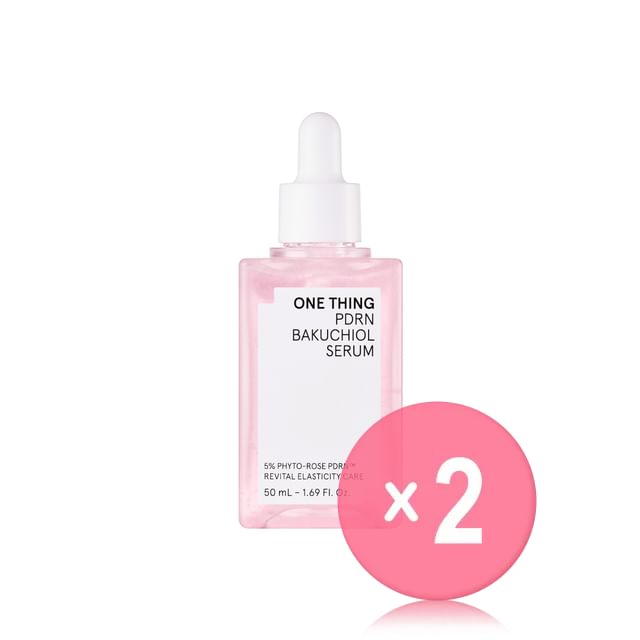
One Thing PDRN Bakuchiol Serum
Topical serum
Combines PDRN with bakuchiol in a single lightweight serum for simplified anti-aging.
Herbivore Bakuchiol Retinol Alternative Serum
Topical serum
Popular standalone bakuchiol serum that can be layered with any PDRN product.