 PDRN Care
Collagen
How to Combine with PDRN
PDRN stimulates your skin's own collagen production while topical collagen provides surface-level hydration. Use both daily for immediate and long-term benefits.
Morning
Apply PDRN serum first (collagen stimulation), then a collagen-containing moisturizer (surface hydration), then SPF.
Evening
PDRN serum layered with a collagen cream or sleeping mask for overnight collagen-stimulating and hydrating activity.
Oral supplement
Take 5–10g hydrolyzed collagen peptides daily alongside your topical PDRN routine for dual-pathway collagen support.
Best For
Skin concerns where this combination performs particularly well.
Loss of Firmness and Elasticity
PDRN reactivates fibroblast collagen production while topical collagen provides immediate plumping — a short-term + long-term firmness strategy.
Wrinkle Prevention and Reduction
Collagen loss is the primary cause of wrinkles. PDRN reverses the production decline while collagen peptides supply amino acid building blocks.
Post-Procedure Recovery
After collagen-damaging procedures (laser, microneedling), PDRN accelerates new collagen synthesis while collagen products support the healing matrix.
What is it?
Collagen is the most abundant protein in the human body, comprising approximately 75–80% of the skin's dry weight. It is the primary structural protein of the dermis, forming a dense network of fibers that provides tensile strength, firmness, and resilience to the skin. The human body produces at least 28 types of collagen, with types I, III, and VII being the most relevant to skin health: type I constitutes approximately 80% of dermal collagen and provides tensile strength, type III (approximately 15%) provides flexibility and is abundant in young skin, and type VII anchors the epidermis to the dermis at the dermal-epidermal junction. Collagen synthesis is a complex multi-step process that requires fibroblast activation, gene transcription, proline and lysine hydroxylation (requiring vitamin C as a cofactor), glycosylation, and extracellular cross-linking. The rate of collagen synthesis declines approximately 1–1.5% per year after age 25, while simultaneously, collagen degradation by matrix metalloproteinases (MMPs) increases with UV exposure, pollution, and chronic inflammation. This imbalance between production and breakdown is the primary molecular driver of visible skin aging — manifesting as wrinkles, loss of firmness, sagging, and thinning skin. In skincare, collagen appears in two fundamentally different forms with different mechanisms: topical collagen (applied to the skin surface) and collagen-stimulating treatments (which activate the skin's own collagen production machinery). Understanding this distinction is essential for making informed product choices.
How It Works
- 1
PDRN Activates Fibroblasts
PDRN binds A2A adenosine receptors on dermal fibroblasts, triggering increased transcription of collagen type I and III genes.
- 2
Fibroblasts Produce Procollagen
Activated fibroblasts synthesize procollagen molecules inside the cell, requiring vitamin C for proline hydroxylation.
- 3
Collagen Assembles in the Dermis
Procollagen is secreted extracellularly, cleaved into tropocollagen, and self-assembles into collagen fibrils and fibers.
- 4
Collagen Network Matures
Over weeks, cross-linked collagen fibers integrate into the existing dermal matrix, progressively improving firmness and elasticity.
Role in PDRN
PDRN is one of the most effective collagen-stimulating ingredients available because it activates fibroblasts — the cells responsible for collagen synthesis — through the adenosine A2A receptor pathway. Rather than delivering exogenous collagen to the skin surface (where large collagen molecules cannot penetrate the epidermis), PDRN triggers fibroblasts to increase their own production of type I and type III collagen from the inside out. This is a critical distinction: topical collagen products can provide surface-level hydration and film-forming benefits, but they cannot replace the collagen lost from the dermis due to aging. PDRN addresses the root cause of collagen loss by reactivating the cellular machinery that produces it. Clinical studies have demonstrated that PDRN treatment increases dermal collagen density measured by histological analysis and improves skin elasticity measured by cutometry — outcomes that surface-applied collagen cannot achieve. For consumers, this means PDRN products and collagen products serve complementary purposes: collagen-containing products provide immediate topical hydration and texture improvement, while PDRN provides the biological stimulation needed for genuine structural collagen rebuilding over weeks to months.
Clinical Data
The evidence for collagen in skincare depends heavily on the delivery method. Topical hydrolyzed collagen peptides (small fragments that can partially penetrate the stratum corneum) have shown modest improvements in skin hydration and fine line appearance in controlled studies, primarily through humectant effects rather than structural collagen rebuilding. Oral collagen peptide supplementation (2.5–10g daily) has stronger evidence, with multiple randomized controlled trials demonstrating improvements in skin elasticity, hydration, and wrinkle depth after 8–12 weeks — likely mediated by collagen peptide fragments stimulating fibroblast activity from the bloodstream. PDRN's collagen-stimulating effect has been demonstrated in both in vitro studies (increased type I collagen gene expression in cultured fibroblasts) and clinical studies showing increased dermal collagen density after treatment. The combination of PDRN topical treatment with oral collagen supplementation represents a logical dual-pathway approach: PDRN activates fibroblasts through A2A receptor signaling, while ingested collagen peptides provide additional stimulatory signals and building block amino acids (glycine, proline, hydroxyproline) for collagen synthesis.
Product Formats in the Wild
Common ways this ingredient is delivered in clinical and consumer products.
COSRX 5% PDRN Collagen Serum
Topical serum
Combines PDRN with hydrolyzed collagen for both stimulation and topical delivery in one product.
Mixsoon PDRN Collagen Serum
Topical serum
Lightweight PDRN + collagen formula suitable for daily use on all skin types.
Vital Proteins Collagen Peptides
Oral supplement
Hydrolyzed collagen powder (20g serving) to complement topical PDRN for systemic collagen support.
Found in These Products

5 PDRN Collagen Intense Vitalizing Serum
COSRX
Multi-PDRN formula with 5 types of PDRN from salmon, centella, rice, lactobacillus, and sea grapes plus low-molecular collagen.
$30–40
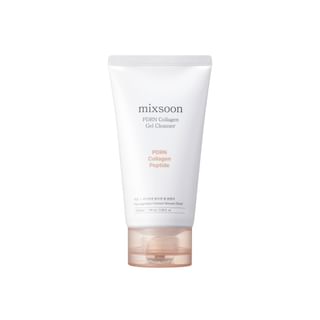
PDRN Collagen Gel Cleanser
Mixsoon
Gentle gel cleanser infused with PDRN and collagen that cleanses without stripping skin's moisture barrier.
$8–14

PDRN Collagen Serum
Mixsoon
Plant-based PDRN from rice combined with low-molecular collagen and peptides for deep hydration and elasticity restoration.
$22–30

PDRN Collagen Glow Up Serum
TIAM
Pink capsule serum with Camellia PDRN and peptides for visible plumping and firming effects.
$18–24