 PDRN Care
Panthenol
How to Combine with PDRN
Panthenol and PDRN are a highly compatible pair — both are non-irritating and non-sensitizing, making them safe to layer together in any order, at any time of day, with no restrictions.
Morning
Apply PDRN serum first for deep regeneration signaling, then follow with a panthenol-containing moisturizer to seal in hydration and support the barrier throughout the day.
Evening
Layer PDRN serum followed by a panthenol-rich cream or sleeping pack. The overnight repair window allows PDRN to drive fibroblast activity while panthenol rebuilds barrier lipids uninterrupted.
Intensive
After professional procedures, apply PDRN serum directly to treated skin, then layer a 5% dexpanthenol balm on top as an occlusive recovery shield that both heals and protects.
Best For
Skin concerns where this combination performs particularly well.
Compromised or Damaged Skin Barrier
Panthenol drives CoA-dependent ceramide and lipid synthesis to physically rebuild the stratum corneum barrier, while PDRN repairs the living tissue beneath — together they restore barrier integrity at every level of the skin.
Dehydrated Skin
Panthenol functions as a deep humectant, binding water within the epidermis rather than merely sitting on the surface. Combined with PDRN's cellular-level repair, it addresses dehydration at both the structural and functional level.
Post-Procedure Healing
After microneedling, peels, or laser treatments, panthenol rapidly restores the lipid barrier while PDRN drives fibroblast proliferation and tissue repair — the standard layered recovery approach used in Korean dermatological protocols.
What is it?
Panthenol (also known as dexpanthenol or provitamin B5) is one of the most established and extensively studied barrier-repair ingredients in dermatology. It is the alcohol analog of pantothenic acid (vitamin B5), and upon topical application, it is enzymatically converted to pantothenic acid within the skin. Pantothenic acid is an essential precursor of coenzyme A (CoA), which plays a central role in fatty acid synthesis — the biochemical process that produces the ceramides, cholesterol esters, and free fatty acids that constitute the lipid matrix of the stratum corneum. Without adequate CoA-driven lipid production, the skin barrier cannot maintain its structural integrity. Beyond its barrier-repair function, panthenol is a proven humectant that attracts and retains moisture in the epidermis, improving skin hydration from within rather than merely occluding the surface. Clinical dermatology has relied on dexpanthenol at 5% concentration for decades as a wound-healing standard — it is a first-line recommendation for post-surgical care, burn treatment, tattoo aftercare, and diaper dermatitis across European and Asian dermatological guidelines. Its wound-healing efficacy operates through multiple channels: accelerating fibroblast proliferation, stimulating epithelial migration, and upregulating genes involved in tissue repair. Panthenol also demonstrates meaningful anti-inflammatory activity, reducing erythema and pruritus in irritated or compromised skin. This combination of barrier restoration, deep hydration, wound healing, and anti-inflammatory action makes panthenol one of the most versatile and reliable support ingredients in any skincare regimen — and an ideal functional partner for PDRN's receptor-mediated regeneration.
How It Works
- 1
Converts to Pantothenic Acid
Upon penetrating the epidermis, panthenol is enzymatically oxidized to pantothenic acid (vitamin B5), the biologically active form required for coenzyme A synthesis.
- 2
Drives CoA-Dependent Ceramide Synthesis
Pantothenic acid feeds into CoA production, which is essential for fatty acid synthesis — the metabolic pathway that builds ceramides, cholesterol esters, and barrier lipids in the stratum corneum.
- 3
Humectant Water Binding
Panthenol binds water molecules in the upper epidermis, increasing stratum corneum hydration and reducing TEWL to maintain the moist environment that PDRN-driven repair requires.
- 4
Anti-Inflammatory Wound Healing
Panthenol accelerates fibroblast proliferation and epithelial migration while suppressing pro-inflammatory cytokines, creating conditions that parallel and enhance PDRN's A2A receptor-mediated tissue repair.
Role in PDRN
In PDRN-based skincare protocols, panthenol serves as the barrier-repair specialist that ensures PDRN's deeper cellular regeneration has maximum impact. While PDRN activates fibroblast proliferation and collagen synthesis through the adenosine A2A receptor pathway, panthenol restores the lipid barrier that keeps moisture locked in and irritants locked out. This creates a full-spectrum repair system: PDRN handles cellular regeneration at the dermal level while panthenol rebuilds the structural barrier at the epidermal level. Without a functional barrier, even the most potent regenerative actives lose efficacy to transepidermal water loss and environmental assault. The synergy is particularly pronounced in post-procedure recovery. After microneedling, laser treatments, or chemical peels, the skin barrier is severely compromised — precisely the moment when PDRN's repair signaling is most needed but also when the barrier must be restored rapidly to prevent complications. Panthenol's CoA-dependent ceramide synthesis rebuilds the lipid barrier while PDRN drives tissue repair underneath. Multiple Korean PDRN formulations include panthenol at 1%–5% specifically to create this layered repair system, recognizing that regeneration without barrier support is incomplete.
Clinical Data
Dexpanthenol (panthenol) has one of the deepest clinical evidence bases of any cosmetic ingredient. A meta-analysis of wound-healing studies confirmed that 5% dexpanthenol cream significantly accelerates epithelialization and reduces healing time in superficial wounds, partial-thickness burns, and post-surgical sites compared to standard emollient controls. Barrier function studies using TEWL measurements demonstrate that panthenol at 2%–5% restores stratum corneum lipid organization within 7 days of consistent application in barrier-compromised skin. A randomized controlled trial on irritant contact dermatitis found that pre-treatment with dexpanthenol reduced sodium lauryl sulfate-induced skin damage by 30% compared to untreated controls. In fibroblast culture studies, panthenol has been shown to stimulate proliferation and migration rates comparable to growth factor-supplemented media. While dedicated clinical trials pairing panthenol with PDRN have not yet been published, their complementary mechanisms — barrier restoration via CoA-mediated lipid synthesis (panthenol) plus cellular regeneration via A2A receptor signaling (PDRN) — represent a well-established rationale in dermatological repair strategy.
Product Formats in the Wild
Common ways this ingredient is delivered in clinical and consumer products.
Torriden Dive-In PDRN Serum
Topical serum
Combines low-molecular-weight hyaluronic acid with PDRN and panthenol for deep hydration paired with regenerative signaling.
Beplain Cica PDRN Cream
Topical cream
Features panthenol alongside PDRN and centella asiatica in a barrier-repair cream designed for sensitive and post-procedure skin.
Found in These Products
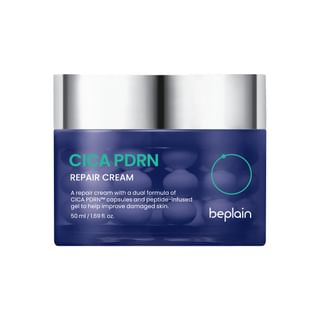
Cica PDRN Repair Cream
beplain
Minimalist cica cream with PDRN for sensitive skin repair, redness relief, and barrier restoration.
$20–28

DIVE-IN Low Molecular PDRN Serum
Torriden
Lightweight hydrating PDRN serum built around Torriden's signature 5D low-molecular hyaluronic acid complex for deep, layered hydration.
$22–30