 PDRN Care
How to Spot Fake PDRN: A Buyer's Guide to Counterfeit and Underdosed Products
Dr. Min-Ji Park
MD, Board-Certified Dermatologist
The Problem With a Popular Ingredient
When an ingredient gets popular, imitators arrive. PDRN has moved from clinics into the mainstream, prices for genuine product are non-trivial, and the raw material — purified salmon or trout DNA — is expensive to produce to a real standard . That combination is exactly what breeds counterfeits: high demand, high margins, and an ingredient most buyers can't verify by looking at it.
Fake PDRN comes in two broad flavors. The first is the underdosed product: it does contain some PDRN, but a trace amount added mostly so the marketing team can put it on the front of the box. The second is the counterfeit: it contains little or no real PDRN, relying on a plausible label and a low price. Both waste your money; the counterfeit injectable versions can also be a genuine health risk. Here's how to tell what you're buying.
Start With the Ingredient List
The single most useful habit is to ignore the front of the packaging and read the full INCI ingredient list on the back. Cosmetic ingredients are listed in descending order of concentration (down to about 1%, after which order is unregulated). Real PDRN goes by a specific set of names — most commonly Sodium DNA, Polydeoxyribonucleotide, or PDRN, and sometimes Sodium Deoxyribonucleotide .
Two things to check. First, is a genuine PDRN name actually present at all? A product marketed around "salmon DNA" or "regeneration" that never lists Sodium DNA or PDRN in the INCI is a red flag. Second, where does it sit in the list? If PDRN appears dead last, after the fragrance and preservatives, the product contains a token amount — technically not a fake, but not a meaningful dose either. On a serum built around PDRN, you'd expect it reasonably high in the list, not as an afterthought.
The Red Flags
A few patterns reliably separate suspect products from trustworthy ones:
- A price that's too good. Genuine PDRN raw material is costly. A "high-strength PDRN serum" priced like a basic drugstore lotion is either heavily underdosed or not real.
- No percentage, no source, no specifics. Reputable PDRN brands tend to state the concentration and often the source (salmon/trout DNA) and molecular character. Vague "contains PDRN complex" language with no numbers is a warning sign.
- PDRN missing from the actual INCI while the front of the box shouts about it.
- Impossible claims. Anything promising Botox-like wrinkle freezing or filler-like volume from a topical is misrepresenting what PDRN does — it's a biostimulator for hydration, repair, and elasticity, not a muscle relaxant .
- Grey-market sellers. Unbranded third-party listings, deep discounts on marketplace platforms, and sellers with no verifiable identity are where most counterfeits circulate.
None of these alone proves a fake, but two or three together should stop the purchase.
Verifying a Genuine Product
Positive verification is as important as spotting flags. Buy from the brand's official store or an authorized retailer rather than an anonymous marketplace listing — this is the most reliable protection against counterfeits, because the counterfeit supply chain depends on unauthorized sellers. Check that batch numbers and expiry dates are printed and legible, that packaging quality is consistent (counterfeits often have slightly off fonts, colors, or misspellings), and that the brand publishes real company information and ingredient transparency.
For established Korean PDRN brands, cross-reference the product name and packaging against the official brand website. If the serum is meaningfully cheaper than the brand's own listed price from an unknown seller, treat that as the counterfeit signal it usually is. Genuine sellers also tend to have consistent, verifiable reviews over time rather than a sudden burst of five-star reviews on a brand-new listing.
Injectable PDRN: A Different Level of Risk
Everything above concerns topical products, where the worst outcome of a fake is usually wasted money and an ineffective serum. Injectable PDRN is a different and far more serious matter. Counterfeit or improperly sourced injectables — sold for at-home use or administered at unlicensed pop-up clinics — carry real dangers: contamination and infection, unknown or impure contents, and the risks of a sterile medical procedure performed without medical standards .
The rule here is simple and non-negotiable: injectable PDRN and polynucleotide skin boosters are medical treatments, to be performed only by a qualified, licensed practitioner using genuine, regulated product obtained through proper channels. Do not buy injectable PDRN online to inject yourself, and do not accept treatment from anyone who cannot verify the product's source and their own credentials. No cosmetic result is worth the infection risk of a counterfeit injectable. If you want PDRN's benefits without that risk, a genuine topical serum is the safe, needle-free route.
The Takeaway
As PDRN has gone mainstream, fakes and underdosed products have followed, so buying well now takes a little diligence. Read the full INCI list and confirm a real PDRN name (Sodium DNA, Polydeoxyribonucleotide, or PDRN) is actually present and not buried at the bottom . Be suspicious of prices that are too good, vague claims with no concentration or source, impossible promises, and anonymous grey-market sellers. Buy from official or authorized retailers, verify batch numbers and packaging, and cross-check against the brand's own site. And treat injectable PDRN as the medical procedure it is — genuine product, licensed practitioner, no exceptions. A little label literacy is all it takes to make sure the PDRN you pay for is the PDRN you actually get.
Frequently Asked Questions
What names does real PDRN go by on an ingredient list?
Genuine PDRN appears in the INCI ingredient list under a specific set of names: most commonly Sodium DNA, Polydeoxyribonucleotide, or PDRN, and occasionally Sodium Deoxyribonucleotide . If a product markets itself heavily around "salmon DNA," "polynucleotides," or "regeneration" but none of these names appear anywhere in the actual ingredient list, that's a strong sign it contains no meaningful PDRN. Also check the position: ingredients are listed by descending concentration down to about 1%, so a PDRN serum should have it reasonably high in the list. PDRN sitting at the very bottom, after fragrance and preservatives, indicates a token amount included mainly for the label claim.
How can I tell if a PDRN product is underdosed rather than fake?
An underdosed product does contain real PDRN, just too little to do much. The tells are its position low in the ingredient list (near the bottom, after preservatives and fragrance) and the absence of any stated concentration. Reputable PDRN brands often publish the percentage and the source, because they have nothing to hide; vague "PDRN complex" wording with no numbers usually signals a trace amount . Price is another clue — genuine PDRN raw material is expensive, so a serum sold far below the going rate is likely underdosed or counterfeit. To get an effective product, favor brands that are transparent about concentration and where PDRN sits prominently in the formula.
Where should I buy PDRN to avoid counterfeits?
Buy from the brand's official online store or an authorized retailer rather than anonymous marketplace listings, because the counterfeit supply chain relies almost entirely on unauthorized third-party sellers. Cross-check the product name, packaging, and price against the brand's own website; a big discount from an unknown seller is a common counterfeit signal . Verify that batch numbers and expiry dates are printed and legible, inspect packaging for off fonts, colors, or misspellings, and be wary of brand-new listings with a sudden flood of perfect reviews. Genuine sellers have consistent history and verifiable company information. When in doubt, contact the brand directly to confirm a retailer is authorized.
Is it safe to buy injectable PDRN online?
No — this is the one area where a counterfeit isn't just a waste of money but a genuine health hazard. Injectable PDRN and polynucleotide skin boosters are medical products, and counterfeit or improperly sourced injectables can be contaminated, impure, or unsterile, risking infection and worse when injected . They should only ever be administered by a qualified, licensed practitioner using genuine, regulated product through proper medical channels — never bought online for self-injection or accepted at an unlicensed pop-up. If you want PDRN's regenerative and hydrating benefits without that risk, use a genuine topical serum, which is gentle, needle-free, and carries none of the dangers of an unverified injectable.
References
- [1]Squadrito F, Bitto A, Irrera N, Pizzino G, Pallio G, Minutoli L, Altavilla D. Pharmacological Activity and Clinical Use of PDRN. Current Pharmaceutical Design. 2017;23(27):3948-3957. doi:10.2174/1381612823666170516153716
- [2]Colangelo MT, Galli C, Guizzardi S. Polydeoxyribonucleotide: A Promising Biological Platform for Dermal Regeneration. Current Pharmaceutical Design. 2020;26(17):2049-2056. doi:10.2174/1381612826666200113091156
- [3]Kim TH, Kim JH, Lee SH, Park ES. Biostimulatory effects of polydeoxyribonucleotide for facial skin rejuvenation. Journal of Cosmetic Dermatology. 2019;18(6):1767-1773. doi:10.1111/jocd.12958
- [4]Picard F, Hersant B, La Padula S, Meningaud JP. Injectable products in aesthetic medicine: regulatory framework and counterfeit risks. Journal of Stomatology, Oral and Maxillofacial Surgery. 2019;120(5):469-473. doi:10.1016/j.jormas.2019.01.007
Recommended Products

Revive PDRN Serum
Beauty of Joseon
A traditional-medicine inspired PDRN serum from Beauty of Joseon, blending salmon PDRN with rice extract and ginseng for resilient, glowing skin.
$19–25

5 PDRN Collagen Intense Vitalizing Serum
COSRX
Multi-PDRN formula with 5 types of PDRN from salmon, centella, rice, lactobacillus, and sea grapes plus low-molecular collagen.
$30–40
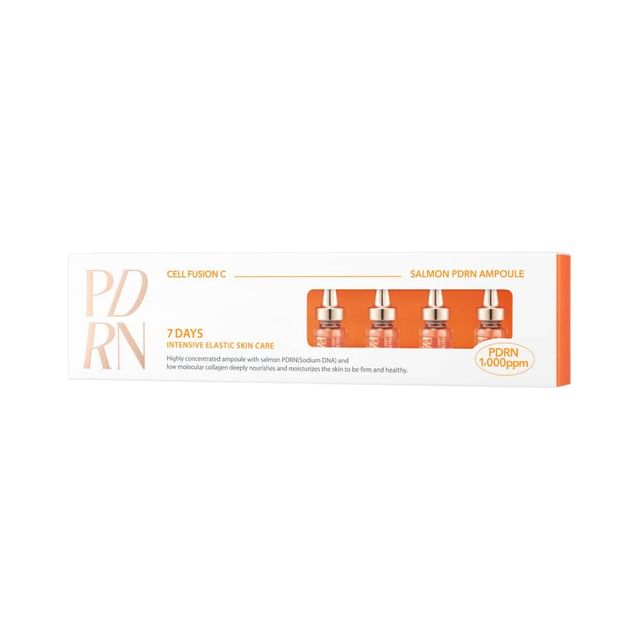
Salmon PDRN Ampoule Set
Cell Fusion C
Professional-grade individual PDRN ampoules from dermatologist-trusted Korean dermo-cosmetic brand.
$32–40
Related Posts
How to Read PDRN Product Labels: A Buyer's Decoding Guide
Not all PDRN products are created equal, and the label is where you find the proof. This guide teaches you how to decode PDRN product labels — understanding INCI names, concentration claims, molecular weight indicators, source organisms, and the red flags that reveal a product has more marketing than science behind it.
PDRN Concentration Levels Explained: How Much PDRN Do You Need?
Not all PDRN products contain the same concentration. From 1% topical serums to clinical-grade injectables, the amount of PDRN matters for results. Here's what the science says about optimal concentrations.
How to Choose the Right PDRN Product for Your Skin
Not all PDRN products are equal. Learn how to evaluate PDRN concentration, formulation type, supporting ingredients, and brand credibility to find the best PDRN product for your skin type and concerns.