 PDRN Care
How to Boost PDRN Absorption: Delivery Systems and Application Tips
James Liu
MSc, Cosmetic Chemistry
The PDRN Penetration Challenge
PDRN is a large molecule. With molecular weights ranging from 50 to 1500 kDa depending on the fragment size, PDRN faces a significant challenge passing through the skin's primary defense: the stratum corneum. This outermost layer of the epidermis consists of 15 to 20 layers of dead, flattened corneocytes embedded in a lipid matrix, functioning as a remarkably effective barrier against large hydrophilic molecules .
The general rule in transdermal delivery is that molecules under 500 Daltons with moderate lipophilicity have the easiest time crossing the skin barrier . PDRN fragments are orders of magnitude larger than this threshold. This does not mean topical PDRN is ineffective, but it does mean that formulation technology and application technique significantly influence how much PDRN reaches the dermis where it needs to act.
Understanding the delivery challenge is not cause for discouragement. Even partial penetration of PDRN delivers meaningful biological activity, and some of PDRN's effects occur at the epidermal level, where penetration is more readily achieved. Additionally, modern formulation technologies have developed increasingly effective solutions for delivering large molecules through the skin barrier .
Delivery Systems That Enhance PDRN Penetration
Liposomal encapsulation
Liposomes are spherical vesicles composed of phospholipid bilayers that mimic the structure of cell membranes. When PDRN is encapsulated within liposomes, the lipid vesicle acts as a carrier that can fuse with or pass through the lipid matrix of the stratum corneum, delivering its PDRN payload to deeper skin layers .
Products like Rire PDRN Liposomal Ampoule use this technology. The advantages of liposomal PDRN include improved penetration depth, sustained release as liposomes gradually break down, and protection of PDRN from degradation by surface enzymes. The lipid composition of liposomes is also inherently moisturizing, providing an additional benefit.
Exosome-based delivery
Exosomes are naturally occurring nanoscale vesicles (30 to 150 nm in diameter) that cells use to communicate with each other. In skincare, exosome-like delivery systems encapsulate active ingredients in vesicles that can penetrate the skin barrier more effectively than free molecules due to their small size and biological membrane composition.
Pestlo PDRN Exosome Ampoule represents this category. The exosome delivery system may offer superior penetration compared to standard liposomes because of the smaller particle size and the presence of surface proteins that facilitate cellular uptake .
Nanoparticle encapsulation
Various nanoparticle systems, including solid lipid nanoparticles and polymeric nanoparticles, can encapsulate PDRN and improve its delivery. These particles are engineered to a specific size range (typically 50 to 300 nm) that balances skin penetration with stability. Some formulations use chitosan-based nanoparticles, which have a positive charge that interacts favorably with the negatively charged skin surface .
Hyaluronic acid microspheres
Some PDRN products use hyaluronic acid as a delivery matrix. Hyaluronic acid can form microsphere structures that encapsulate PDRN and facilitate penetration. The dual benefit is that hyaluronic acid itself is a beneficial skincare ingredient, providing hydration while serving as a delivery vehicle for PDRN .
Low molecular weight PDRN fragments
Not all delivery enhancement requires encapsulation. Some manufacturers process PDRN into smaller fragments (lower molecular weight fractions) that can penetrate the skin barrier more readily on their own. Shorter DNA fragments maintain biological activity through the A2A receptor pathway while benefiting from improved penetration due to reduced size . The trade-off is that shorter fragments may be less effective at providing nucleotide building blocks for the salvage pathway, as they contain fewer nucleotide units per molecule.
Application Techniques That Maximize Absorption
Beyond formulation technology, how you apply PDRN products significantly affects how much reaches the dermis.
Apply to damp skin
Hydrating the stratum corneum temporarily increases its permeability. Applying PDRN serum to slightly damp skin, immediately after cleansing or using a hydrating toner, takes advantage of this window of enhanced absorption. The water content loosens the tight lipid packing between corneocytes, creating transient pathways for PDRN penetration .
Warm the product
Gently warming a PDRN serum between your palms before application increases the fluidity of both the product and the skin's lipid barrier. Higher skin surface temperature promotes vasodilation, which increases blood flow and may enhance transdermal absorption. This does not mean heating the product, but simply rubbing it between your hands for a few seconds before pressing it into the skin.
Press, don't rub
Pressing or patting PDRN serum into the skin is more effective than rubbing. Rubbing creates shear forces that can spread the product across the surface but do not enhance penetration. Pressing creates gentle positive pressure that helps push the product into follicular openings and micro-crevices in the stratum corneum. The Korean skincare technique of gentle patting motions aligns with this principle .
Use a micro-current or ionic device
Iontophoresis uses a low electrical current to drive charged molecules through the skin barrier. PDRN carries a negative charge due to its phosphate backbone, making it amenable to iontophoretic delivery. Some at-home skincare devices (galvanic facial devices) can enhance PDRN penetration by applying a mild electrical field that drives the negatively charged PDRN fragments deeper into the skin .
Layer strategically
The order of product application affects absorption. PDRN serum should be applied to clean, damp skin before heavier products (creams, oils) that create an occlusive layer. However, following PDRN serum with a cream creates an occlusive effect that prevents evaporation and maintains contact time, which is beneficial for sustained absorption.
The optimal layering sequence for PDRN:
- Water-based toner or essence (hydrate the stratum corneum)
- PDRN serum (deliver the active ingredient to hydrated, permeable skin)
- PDRN cream or moisturizer (seal and maintain contact time)
Microneedling as a penetration enhancer
Microneedling creates thousands of microscopic channels through the stratum corneum, bypassing the barrier entirely. When PDRN is applied immediately after microneedling, penetration increases dramatically. Studies show that microneedling can increase the absorption of large molecules by 10 to 100 fold depending on needle depth and density .
For home use, a 0.25 to 0.5 mm derma roller used before PDRN application can meaningfully enhance absorption without reaching depths that cause significant injury. Professional microneedling at 0.5 to 2.0 mm provides even greater enhancement and is commonly combined with PDRN in Korean dermatology clinics .
Important safety note: Microneedling should only be performed with sterile devices on clean skin. Do not microneedle over active acne, infections, or irritated skin.
Product Format and Absorption
The format of a PDRN product affects its absorption characteristics.
Serums
Water-based serums with low viscosity spread easily and make good contact with the skin surface. They are typically the best format for PDRN absorption because the thin, fluid consistency allows close contact with the stratum corneum. Most dedicated PDRN serums fall into this category.
Ampoules
Ampoules are highly concentrated versions of serums, often with a slightly more viscous texture. The higher concentration means more PDRN is available per application, which can compensate for any reduction in penetration percentage. Ampoules are particularly effective when combined with microneedling or used on damp skin .
Essences
Essences are lighter than serums and often contain more water. They penetrate quickly but may deliver lower concentrations of PDRN per application. Using an essence as a preliminary layer followed by a serum provides both hydration-enhanced penetration and concentrated PDRN delivery.
Creams
Creams have higher lipid content, which can enhance penetration of lipophilic ingredients but may slow the penetration of hydrophilic molecules like PDRN. However, creams provide extended contact time and occlusion, which benefits sustained absorption over hours. PDRN creams are best used as the final step in a routine, over a PDRN serum.
Masks and patches
Sheet masks and hydrogel patches hold PDRN-saturated material against the skin for 15 to 30 minutes under mild occlusion. The extended contact time and occlusive environment enhance absorption compared to a quickly applied and dried serum. Medicube PDRN Collagen Gel Mask and similar products leverage this principle.
Common Mistakes That Reduce PDRN Absorption
Applying to dry skin
Dry stratum corneum has tightly packed lipids that resist penetration. Always apply PDRN to damp, hydrated skin.
Using too much product
A thin, even layer absorbs better than a thick glob. Excess product sits on the surface and evaporates or transfers to clothing and pillows without reaching the dermis. One to two drops of serum for the full face is typically sufficient.
Applying over heavy products
Layering PDRN over thick creams, oils, or silicone-based primers creates a barrier that prevents PDRN from reaching the skin. Always apply PDRN early in your routine, directly onto clean, damp skin .
Inconsistent application
PDRN's benefits are cumulative. Sporadic use does not allow sustained fibroblast stimulation and collagen production. Consistent twice-daily application is significantly more effective than occasional use .
Mixing with low pH products simultaneously
Applying PDRN immediately after low-pH products (vitamin C serums at pH 2.5-3.5, AHA toners) can affect PDRN stability. If using acid-based products, allow them to absorb and the skin pH to normalize (5-10 minutes) before applying PDRN .
Frequently Asked Questions
Does PDRN actually penetrate the skin or just sit on the surface?
PDRN does penetrate the skin, though the degree of penetration depends on fragment size, formulation technology, and application technique. Smaller PDRN fragments penetrate more readily, and delivery systems like liposomes and exosomes significantly enhance penetration. Even partial penetration delivers biologically meaningful amounts to the epidermis and upper dermis .
Is injectable PDRN always better than topical?
Injectable PDRN delivers a higher concentration directly to the dermis, bypassing the skin barrier entirely. For targeted treatment of specific concerns (wrinkles, scars, post-procedure healing), injectables are more potent. However, topical PDRN provides daily, ongoing support that injectables cannot match. The ideal approach for many people is periodic injectable treatment supplemented by daily topical use .
Should I use a derma roller every time I apply PDRN?
No. Daily microneedling causes excessive trauma. Reserve microneedling for 1 to 2 times per week at most (with 0.25-0.5 mm needles for home use). On non-microneedling days, use proper application technique (damp skin, pressing motion, strategic layering) to optimize absorption .
Does the concentration of PDRN in a product matter for absorption?
Yes. Higher concentration means more PDRN is available at the skin surface, which increases the absolute amount that penetrates even if the percentage of penetration remains the same. However, concentration alone is not sufficient; the formulation technology and vehicle are equally important for effective delivery .
References
- [1]Squadrito F, Bitto A, Irrera N, Pizzino G, Pallio G, Minutoli L, Altavilla D. Pharmacological Activity and Clinical Use of PDRN. Current Pharmaceutical Design. 2017;23(27):3948-3957. doi:10.2174/1381612823666170516153716
- [2]Bouwstra JA, Ponec M. The skin barrier in healthy and diseased state. Biochimica et Biophysica Acta. 2006;1758(12):2080-2095. doi:10.1016/j.bbamem.2006.06.021
- [3]Colangelo MT, Galli C, Gentile P. Polydeoxyribonucleotide: A Promising Biological Platform for Dermal Regeneration. Current Pharmaceutical Design. 2020;26(17):2049-2056. doi:10.2174/1381612826666200210100726
- [4]Prausnitz MR, Langer R. Transdermal drug delivery. Nature Biotechnology. 2008;26(11):1261-1268. doi:10.1038/nbt.1504
- [5]Kim TH, Kim JY, Bae JH, Kim HM, Park ES. Biostimulatory effects of polydeoxyribonucleotide for facial skin rejuvenation. Journal of Cosmetic Dermatology. 2019;18(6):1767-1773. doi:10.1111/jocd.12958
Recommended Products
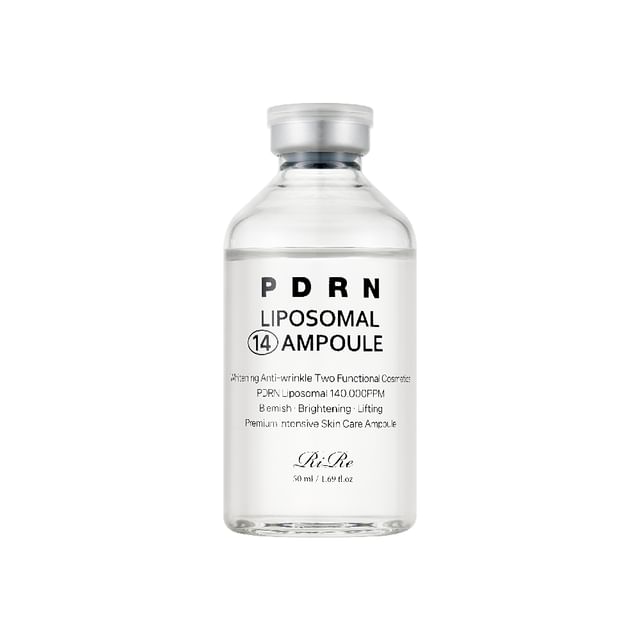
PDRN Liposomal 14 Ampoule
RiRe
Liposome-encapsulated PDRN ampoule with 14 active ingredients for comprehensive skin rejuvenation.
$14–18
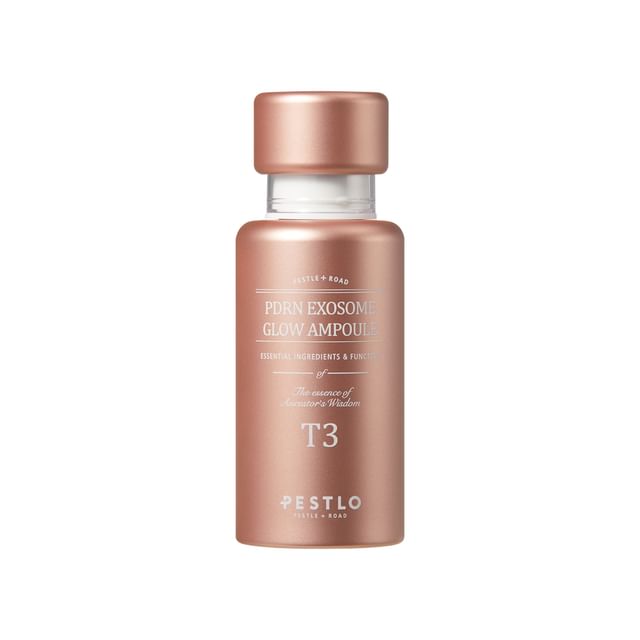
T3 PDRN Exosome Glow Ampoule
PESTLO
Triple-tech ampoule combining PDRN with exosome delivery for deep penetration and radiant glow.
$24–32

5 PDRN Collagen Intense Vitalizing Serum
COSRX
Multi-PDRN formula with 5 types of PDRN from salmon, centella, rice, lactobacillus, and sea grapes plus low-molecular collagen.
$30–40

PDRN Pink Peptide Serum
Medicube
Viral K-beauty serum with 99% purity salmon DNA PDRN and 5 peptides for instant glow and visible firming within a week.
$20–25
Related Posts
PDRN Layering Guide: How to Layer PDRN with Other Active Ingredients
Master the art of layering PDRN with other skincare actives. Learn which ingredients to pair with PDRN, the correct application order, timing rules, and which combinations to avoid.
How to Use PDRN Serum: A Step-by-Step Skincare Routine Guide
Learn exactly how to use PDRN serum in your skincare routine — when to apply it, how much to use, what to layer it with, and common mistakes to avoid.
PDRN Concentration Levels Explained: How Much PDRN Do You Need?
Not all PDRN products contain the same concentration. From 1% topical serums to clinical-grade injectables, the amount of PDRN matters for results. Here's what the science says about optimal concentrations.