 PDRN Care
PDRN and Cryotherapy: Pairing Cold Exposure with Regenerative Skincare
Dr. Sarah Chen
PhD, Molecular Biology
Cold Is Having a Moment
Cryotherapy has escaped the recovery clinic and landed in the bathroom routine. Cryo facials, stainless-steel ice globes, chilled rollers, and even whole-body cold chambers are marketed as instant de-puffers, pore-shrinkers, and glow-givers. The appeal is immediate and visible: cold makes skin look tighter, calmer, and more awake within minutes. The problem is that most people misunderstand what that effect actually is — and what it is not.
Cold does not build skin. It manipulates it, temporarily. Understanding that distinction is the key to using cryotherapy well, and it is exactly why cold exposure and PDRN turn out to be natural partners: each does the thing the other cannot.
What Cryotherapy Actually Does to Skin
Applying cold to the skin triggers vasoconstriction — blood vessels narrow, reducing blood flow to the surface . This is why a cold globe run under the eyes deflates puffiness so quickly: less fluid pools in the tissue. Vasoconstriction also reduces redness and calms the sensation of heat and irritation, which is why cryo feels so soothing on inflamed or reactive skin.
The tightening people love is largely this vascular effect plus a mild, transient contraction of the tissue. Pores look smaller because the surrounding skin is momentarily firmer and less swollen. There may also be a brief anti-inflammatory benefit as cold dampens the local inflammatory response .
All of this is real, and all of it is temporary. Once the skin rewarms, vessels dilate again — often with a rebound flush — fluid returns, and the tightened look relaxes over the following minutes to hours. Cryotherapy is a state, not a structural change. It is the skincare equivalent of a cold shower waking you up: genuinely useful, entirely momentary.
What Cryotherapy Cannot Do
Here is the honest limitation. Cold does not stimulate collagen synthesis in any meaningful, lasting way. It does not repair a damaged barrier, rebuild the dermal matrix, or fade a scar. In fact, aggressive or prolonged cold can transiently slow the metabolic activity of skin cells, because low temperature reduces enzymatic and cellular processes — the same reason cold slows healing if overused on a wound.
So the person doing daily cryo facials for "anti-aging" is chasing a look, not a change. The de-puffing and tightening are worth having, but nothing about routine cold exposure is remodeling the skin underneath. For that, you need an actual regenerative signal — and that is a different category of tool entirely.
Where PDRN Comes In
PDRN (polydeoxyribonucleotide) sits in exactly the category cold cannot reach. Rather than manipulating vascular tone, it delivers a biological instruction to rebuild. PDRN activates the adenosine A2A receptor, which stimulates fibroblasts to proliferate and synthesize new collagen . It supplies nucleotide fragments that serve as raw material for cellular repair , and it carries a well-documented anti-inflammatory action, suppressing pro-inflammatory cytokines such as TNF-alpha and IL-6 .
In other words, PDRN does the structural work — collagen, repair, barrier support — that cryotherapy skips entirely, while cryotherapy delivers the instant vascular payoff that PDRN, a slow-building regenerative active, never provides . They are not competing tools. They are complementary halves of the same goal: skin that both looks good right now and is genuinely stronger over time.
There is also a point of genuine overlap. Both cold and PDRN calm inflammation, just by different routes — cold through vasoconstriction, PDRN through A2A-receptor signaling . Stacked on reactive, flushed, or post-workout skin, the two anti-inflammatory mechanisms reinforce each other.
How to Combine Them Without Undermining Either
The sequencing matters, because cold affects absorption. Cold-constricted vessels and a chilled, tightened surface are not ideal for driving an active into the skin — you want the barrier receptive, not clamped shut. A simple, reliable order:
- Cleanse as usual.
- Do your cold step first — ice globes, a cryo roller, or a brief cryo facial. Use it as a de-puffing, calming primer.
- Let the skin rewarm for a few minutes until it returns to roughly normal temperature and the surface is no longer icy. This is the step most people skip.
- Apply your PDRN serum to rewarmed skin. Now vessels have re-dilated, circulation is restored, and the regenerative active can absorb and get to work.
- Finish with moisturizer and, in the morning, sunscreen.
Applying PDRN onto skin that is still cold and vasoconstricted works against you — reduced surface circulation and a tightened barrier blunt uptake. Let the cold do its cosmetic job, let the skin recover, then layer the repair active on top.
For whole-body cryo chambers, the logic is the same but looser: the exposure is brief and systemic, so simply do your PDRN routine afterward once you have rewarmed, not during the shivering aftermath.
A Note on Overdoing the Cold
Because cryotherapy feels productive, it is easy to overdo. Prolonged or very aggressive cold — extended ice application, repeated long cryo sessions on the same area — can cause rebound redness, broken capillaries in vessel-fragile or rosacea-prone skin, and even cold-induced irritation. Skin that is already compromised does not need daily cold stress on top of a weak barrier.
This is another reason the pairing works: PDRN's barrier-supporting, anti-inflammatory profile makes it a sensible recovery partner if you have been leaning hard on cold . Keep cold exposures brief and moderate, and let PDRN do the rebuilding that no amount of ice can.
The Takeaway
Cryotherapy and PDRN are a study in complementary strengths. Cold gives you the instant, visible payoff — de-puffed, tightened, calmed skin — but changes nothing structurally and can slow cell activity if overused. PDRN gives you the structural change — collagen stimulation, repair, barrier support — but none of the instant gratification. Use cold first as a cosmetic primer, let the skin rewarm, then apply PDRN to receptive skin so the regenerative work actually lands. Done this way, you get the best of both: a face that looks refreshed today and is measurably better supported over the months ahead.
Frequently Asked Questions
Should I apply PDRN before or after a cryo facial?
After, once your skin has rewarmed. Cold constricts surface blood vessels and tightens the skin, which reduces how well an active can absorb. If you apply PDRN onto still-cold, vasoconstricted skin, you blunt its uptake. Do the cold step first for its de-puffing and calming effect, give your skin a few minutes to return to normal temperature, then apply the PDRN serum so circulation is restored and the regenerative active can penetrate and get to work .
Does cryotherapy build collagen the way PDRN does?
No, and this is the key distinction. Cryotherapy's tightening and pore-refining effects come from vasoconstriction and transient tissue contraction — a temporary state that relaxes once the skin rewarms . It does not meaningfully stimulate collagen synthesis or remodel the dermis. PDRN does exactly that, activating fibroblasts through the adenosine A2A receptor to produce new collagen over weeks to months . Cold gives you the instant look; PDRN gives you the lasting structural change. They address different timelines and should be used together, not interchangeably.
Can I use PDRN and cold therapy on rosacea or reactive skin?
Both can calm inflammation, but be cautious with the cold. PDRN's anti-inflammatory action is gentle and barrier-supporting, making it well suited to reactive skin . Brief, gentle cold can also soothe flushing, but prolonged or aggressive cryotherapy risks rebound redness and can aggravate fragile capillaries in rosacea-prone skin. Keep cold exposures short and moderate, avoid repeated long sessions on the same area, and lean on PDRN as the daily repair step. If cold consistently triggers a rebound flush for you, reduce or skip it and keep the PDRN.
Is whole-body cryotherapy good for the skin?
Its skin benefits are mostly indirect and temporary. Whole-body cryo briefly reduces systemic inflammation and can leave skin looking refreshed, but the exposure is too short and general to remodel facial skin or build collagen . Treat it as a recovery and de-puffing tool rather than an anti-aging treatment. If you do it, run your PDRN routine afterward once you have rewarmed — that is where the actual regenerative, collagen-supporting work happens, layered on top of the temporary refresh the cold provides.
References
- [1]Squadrito F, Bitto A, Irrera N, Pizzino G, Pallio G, Minutoli L, Altavilla D. Pharmacological Activity and Clinical Use of PDRN. Current Pharmaceutical Design. 2017;23(27):3948-3957. doi:10.2174/1381612823666170516153716
- [2]Colangelo MT, Galli C, Guizzardi S. Polydeoxyribonucleotide: A Promising Biological Platform for Dermal Regeneration. Current Pharmaceutical Design. 2020;26(17):2049-2056. doi:10.2174/1381612826666200113091156
- [3]Kim TH, Kim JH, Lee SH, Park ES. Biostimulatory effects of polydeoxyribonucleotide for facial skin rejuvenation. Journal of Cosmetic Dermatology. 2019;18(6):1767-1773. doi:10.1111/jocd.12958
- [4]Bleakley CM, Davison GW. What is the biochemical and physiological rationale for using cold-water immersion in sports recovery? A systematic review. British Journal of Sports Medicine. 2010;44(3):179-187. doi:10.1136/bjsm.2009.065565
- [5]Bitto A, Polito F, Irrera N, D'Ascola A, Avenoso A, Nastasi G, Campo GM, Micali A, Squadrito F, Altavilla D. Polydeoxyribonucleotide reduces cytokine production and the severity of collagen-induced arthritis by stimulation of adenosine A2A receptor. Arthritis Research & Therapy. 2011;13(1):R28. doi:10.1186/ar3258
Recommended Products

DIVE-IN Low Molecular PDRN Serum
Torriden
Lightweight hydrating PDRN serum built around Torriden's signature 5D low-molecular hyaluronic acid complex for deep, layered hydration.
$22–30
PDRN Calming Serum
Isntree
Gentle, fast-absorbing PDRN serum formulated with centella and green tea to calm reactive skin while promoting cellular repair.
$25–35

Revive PDRN Serum
Beauty of Joseon
A traditional-medicine inspired PDRN serum from Beauty of Joseon, blending salmon PDRN with rice extract and ginseng for resilient, glowing skin.
$19–25
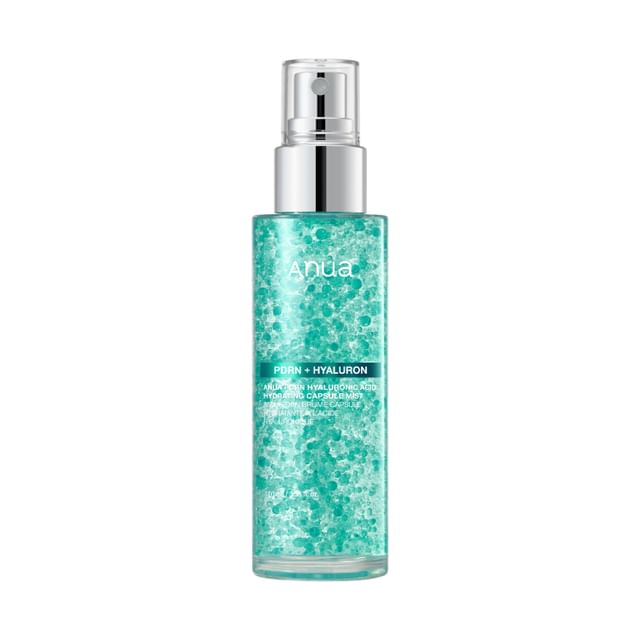
PDRN Hyaluronic Acid Hydrating Capsule Mist
Anua
Hydrating capsule mist with PDRN and hyaluronic acid for instant moisture boost throughout the day.
$19–26
Related Posts
PDRN and Ice Therapy: How Cryotherapy Enhances PDRN Absorption and Results
Cold treatments and PDRN make a surprisingly effective pairing. Learn how ice therapy, cryo facials, and ice globes enhance PDRN absorption through vasoconstriction-vasodilation cycles, and how to build a combined protocol at home or in the clinic.
PDRN for Large Pores: How It Tightens and Refines Skin Texture
Enlarged pores are one of the most common skincare frustrations. PDRN tackles pore size at the structural level by rebuilding collagen around each pore, tightening skin from the inside out. Here is how it works and how to use it.
PDRN for Stressed Skin: How Cortisol Damages Your Skin and How to Repair It
Chronic psychological stress elevates cortisol levels that directly degrade collagen, impair skin barrier function, trigger inflammation, and accelerate visible aging. PDRN counteracts stress-induced skin damage through A2A receptor activation, anti-inflammatory signaling, and fibroblast stimulation. Here is a complete protocol for high-stress periods and long-term skin resilience.