 PDRN Care
PDRN and Facial Cupping: Boosting Circulation Without Bruising Your Repair Routine
Dr. Sarah Chen
PhD, Molecular Biology
The Appeal of a Suction Cup
Facial cupping borrows a technique from traditional bodywork and shrinks it for the face. Small silicone or glass cups create gentle negative pressure, lifting the skin and the tissue just beneath it. Glide them across the cheeks, jaw, and forehead and you get a rush of blood to the surface, a temporary flush, and — fans say — a lifted, de-puffed, more sculpted look. It sits alongside gua sha, facial rollers, and microcurrent in the growing category of at-home "tools" people reach for between serums.
The honest version is that facial cupping does something real but modest and short-lived, and that it comes with a risk the other tools mostly don't: bruising. Understanding both the benefit and the risk is what lets you pair it sensibly with a regenerative active like PDRN rather than working against your own routine.
What Facial Cupping Actually Does
The core mechanism is suction-driven blood flow. Negative pressure pulls blood into the small vessels near the surface, increasing local circulation to the treated area . That temporary boost in circulation is why skin looks flushed and awake immediately after, and it is the plausible route to any real benefit: better delivery of oxygen and nutrients, and a nudge to lymphatic and fluid movement that can reduce the look of puffiness.
The gliding motion also provides a manual massage, which can relax facial muscles and move stagnant fluid — the same reasons a good gua sha session feels de-puffing. The "lift" people describe is largely this: reduced fluid retention plus temporarily plumped, well-perfused skin.
What cupping does not do is rebuild the skin. There is no strong evidence that suction meaningfully stimulates lasting collagen synthesis or repairs a compromised barrier. Like most circulation tools, it manipulates the skin's state for a few hours; it does not change its structure. That is not a criticism — it is simply the correct expectation, and it is exactly why cupping and PDRN occupy different, complementary lanes.
The Risk the Other Tools Don't Carry
Cupping's defining feature — negative pressure — is also its defining hazard. Too much suction, holding a cup in one spot instead of gliding, or working over delicate areas can rupture tiny capillaries and leave the small round bruises cupping is notorious for. Facial skin is thinner and more vascular than back or shoulder skin, so the margin for error is smaller.
This matters enormously when you are also using a regenerative routine. Skin that is healing, thinned, reactive, or recently treated with actives does not need suction trauma layered on top. And it matters most around professional PDRN procedures: applying suction over injection sites or freshly microneedled skin is a clear way to cause bruising and irritation exactly where you are trying to support repair.
Where PDRN Fits
PDRN (polydeoxyribonucleotide) works on the structural timeline cupping ignores. Rather than manipulating blood flow for an afternoon, it delivers a biological instruction to rebuild. PDRN activates the adenosine A2A receptor, prompting fibroblasts to proliferate and synthesize new collagen . It supplies nucleotide fragments that act as raw material for cellular repair , and it carries a well-documented anti-inflammatory action, suppressing pro-inflammatory cytokines such as TNF-alpha and IL-6 .
So the two tools address different questions. Cupping asks, "How do I make skin look more awake and lifted right now?" PDRN asks, "How do I make skin genuinely stronger over the coming months?" There is even a point of overlap worth using deliberately: cupping increases local circulation, and better-perfused skin is receptive skin. Applied to a face that has just been massaged and flushed, a water-based PDRN serum has an ideal surface to absorb into — provided the cupping was gentle and left no bruise.
How to Combine Them Safely
The sequence is simple, and the emphasis is on restraint:
- Cleanse as usual.
- Apply a slip layer first. Never cup on dry skin — you need glide to avoid pulling and bruising. A hydrating mist or a facial oil gives the cups something to slide on. A light PDRN mist or a few drops of serum works well here as the slip.
- Cup gently and keep moving. Use the lowest suction that lifts the skin, glide rather than park, and work outward along lymphatic lines. Avoid the delicate under-eye and never hold a cup stationary. A few minutes is plenty.
- Apply your PDRN serum to the flushed, freshly massaged skin. Circulation is up and the barrier is receptive, so the regenerative active absorbs well and gets to work .
- Finish with moisturizer and, in the morning, sunscreen.
Two rules keep this from backfiring. First, if cupping ever leaves marks, you are using too much suction — back off immediately; bruising is capillary damage, not a sign it "worked." Second, do not cup at all over recently treated skin: after PDRN injections or microneedling, skip cupping entirely until the skin has fully closed and calmed, generally at least a week, and defer to your provider's timeline.
Who Should Be Cautious
Cupping is not for everyone. If you have rosacea, visibly broken capillaries, very thin or fragile skin, or a tendency to bruise easily, suction is a poor fit — the circulation benefit is not worth the vascular risk, and you are better served by gentler massage like light gua sha or simply by PDRN alone. The same goes for active, inflamed acne, where suction can aggravate lesions and spread irritation.
For these skin types, PDRN's barrier-supporting, anti-inflammatory profile is the safer path to the same underlying goals — better resilience and a healthier-looking complexion — without any mechanical stress .
The Takeaway
Facial cupping is a circulation-and-fluid tool: it flushes blood to the surface, moves puffiness, and delivers a temporary lifted glow, but it changes nothing structurally and can bruise thin facial skin if used heavy-handedly. PDRN is a repair tool: slow, structural, and gentle, rebuilding collagen and barrier over weeks. Use cupping lightly, always with slip and never on treated or fragile skin, then layer PDRN onto the freshly flushed surface so the regenerative work actually lands. Treat the suction as the wake-up and PDRN as the rebuild, and the two complement each other cleanly.
Frequently Asked Questions
Should I apply PDRN before or after facial cupping?
Use a little PDRN — or a hydrating mist — as your slip layer before cupping so the cups glide without pulling the skin, then apply the bulk of your PDRN serum afterward onto the freshly massaged, flushed skin. Cupping increases local circulation, which leaves the barrier receptive, so a water-based regenerative active absorbs well once the massage is done . What you must avoid is cupping on dry skin, which causes dragging and bruising. So the practical answer is "a bit before as slip, most after as the treatment step."
Can facial cupping build collagen like PDRN does?
No. Facial cupping works by drawing blood to the surface with suction, which temporarily boosts circulation, reduces puffiness, and creates a short-lived lifted look . There is no strong evidence that it meaningfully stimulates lasting collagen synthesis or remodels the dermis. PDRN does exactly that, activating fibroblasts through the adenosine A2A receptor to build new collagen over weeks to months . Cupping gives you the instant flush and de-puff; PDRN gives you the structural change. They work on different timelines and are best used together, not as substitutes.
Is it safe to cup over skin that had PDRN injections or microneedling?
No — avoid cupping entirely over recently treated skin. Suction places negative pressure on the tissue and can easily bruise or irritate injection sites and freshly microneedled skin, working directly against the repair you are trying to support. Wait until the micro-wounds have fully closed and the skin has calmed, generally at least a week, and follow your provider's specific aftercare timeline, which takes priority. In the immediate post-procedure window, keep to a simple soothing routine — gentle PDRN serum and a bland moisturizer — and reintroduce mechanical tools only once the skin has settled.
Why does my skin bruise after facial cupping, and how do I prevent it?
Bruising happens when the suction ruptures tiny capillaries near the surface — a real risk on thin, vascular facial skin. It is a sign of too much pressure or of holding the cup in one place, not a sign the treatment worked. To prevent it, always apply a slip layer first (mist, oil, or serum), use the lowest suction that just lifts the skin, keep the cups gliding rather than stationary, avoid the delicate under-eye area, and stop at the first sign of a mark. If you have rosacea, fragile capillaries, or bruise easily, skip cupping and rely on gentler options — light gua sha or PDRN on its own — instead.
References
- [1]Squadrito F, Bitto A, Irrera N, Pizzino G, Pallio G, Minutoli L, Altavilla D. Pharmacological Activity and Clinical Use of PDRN. Current Pharmaceutical Design. 2017;23(27):3948-3957. doi:10.2174/1381612823666170516153716
- [2]Colangelo MT, Galli C, Guizzardi S. Polydeoxyribonucleotide: A Promising Biological Platform for Dermal Regeneration. Current Pharmaceutical Design. 2020;26(17):2049-2056. doi:10.2174/1381612826666200113091156
- [3]Kim TH, Kim JH, Lee SH, Park ES. Biostimulatory effects of polydeoxyribonucleotide for facial skin rejuvenation. Journal of Cosmetic Dermatology. 2019;18(6):1767-1773. doi:10.1111/jocd.12958
- [4]Rozenfeld E, Kalichman L. New is the well-forgotten old: The use of dry cupping in musculoskeletal medicine. Journal of Bodywork and Movement Therapies. 2016;20(1):173-178. doi:10.1016/j.jbmt.2015.11.009
- [5]Bitto A, Polito F, Irrera N, D'Ascola A, Avenoso A, Nastasi G, Campo GM, Micali A, Squadrito F, Altavilla D. Polydeoxyribonucleotide reduces cytokine production and the severity of collagen-induced arthritis by stimulation of adenosine A2A receptor. Arthritis Research & Therapy. 2011;13(1):R28. doi:10.1186/ar3258
Recommended Products

DIVE-IN Low Molecular PDRN Serum
Torriden
Lightweight hydrating PDRN serum built around Torriden's signature 5D low-molecular hyaluronic acid complex for deep, layered hydration.
$22–30
PDRN Calming Serum
Isntree
Gentle, fast-absorbing PDRN serum formulated with centella and green tea to calm reactive skin while promoting cellular repair.
$25–35

Revive PDRN Serum
Beauty of Joseon
A traditional-medicine inspired PDRN serum from Beauty of Joseon, blending salmon PDRN with rice extract and ginseng for resilient, glowing skin.
$19–25
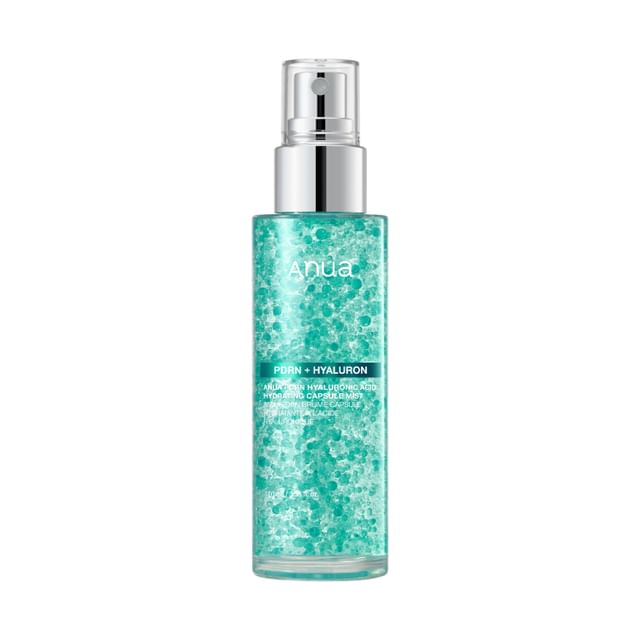
PDRN Hyaluronic Acid Hydrating Capsule Mist
Anua
Hydrating capsule mist with PDRN and hyaluronic acid for instant moisture boost throughout the day.
$19–26
Related Posts
PDRN and Facial Gua Sha: Combining Regeneration with Sculpting
Gua sha improves lymphatic drainage and microcirculation while PDRN stimulates collagen from within. Together, they create a synergy that enhances both absorption and visible sculpting results.
Combining PDRN with Microcurrent Devices
Microcurrent devices stimulate facial muscles and boost ATP production. When combined with PDRN, the synergy enhances product absorption, amplifies collagen synthesis, and delivers professional-level results at home.
PDRN for Stressed Skin: How Cortisol Damages Your Skin and How to Repair It
Chronic psychological stress elevates cortisol levels that directly degrade collagen, impair skin barrier function, trigger inflammation, and accelerate visible aging. PDRN counteracts stress-induced skin damage through A2A receptor activation, anti-inflammatory signaling, and fibroblast stimulation. Here is a complete protocol for high-stress periods and long-term skin resilience.