 PDRN Care
Best PDRN Products Under $30: Budget-Friendly Skincare That Actually Works
Dr. Sarah Chen
PhD, Molecular Biology
The Price-Quality Myth in PDRN Skincare
There is a persistent assumption in skincare that higher price equals better results. For many ingredients, this assumption has at least some basis — extraction methods, stabilization technology, and delivery systems can genuinely differ between a $15 serum and a $60 one. But PDRN is not most ingredients. It is a standardized biological material — a mixture of deoxyribonucleotide polymers derived from salmon (Oncorhynchus keta) DNA through a well-established purification process — and its pharmacological activity depends on its molecular identity, not on the brand name printed on the bottle [1][2].
The active molecule in a $12 PDRN serum is chemically identical to the active molecule in a $50 PDRN serum. Both consist of DNA fragments ranging from 50 to 2000 base pairs that activate the adenosine A2A receptor, supply nucleotides to the salvage pathway, and stimulate fibroblast proliferation [1][2]. The question is not whether budget PDRN works — the biology guarantees that it does — but rather whether a given budget product delivers enough of it, in a stable formulation, to produce meaningful results. That is what this guide helps you evaluate.
Why PDRN Is the Same Regardless of Price Point
The active ingredient is standardized
Unlike plant extracts that vary wildly in composition depending on source, season, and extraction method, PDRN is produced through a controlled industrial process. Salmon DNA is extracted, purified, fragmented to the target molecular weight range, sterilized, and quality-controlled before it enters any cosmetic formulation [1][2]. The resulting material — polydeoxyribonucleotide — has a defined chemical identity. Whether a Korean brand pays $X or $2X per kilogram of pharmaceutical-grade PDRN, the material they receive activates the same A2A receptor, enters the same nucleotide salvage pathway, and stimulates the same fibroblast responses [1][4][6].
The mechanism of action is concentration-dependent, not brand-dependent
PDRN works through two primary mechanisms: binding to the adenosine A2A receptor to trigger anti-inflammatory and tissue-repair signaling, and providing deoxyribonucleotide building blocks that cells use for DNA synthesis and repair [1][2][6]. Both mechanisms are dose-dependent — more PDRN in contact with skin cells produces a stronger biological response, up to a saturation point [1]. What matters, therefore, is the concentration of PDRN in the product and how effectively the formulation delivers it to the skin. Price is a proxy for neither of these factors.
What you actually pay extra for
When a PDRN product costs $40-60 instead of $15-25, the price premium typically reflects: brand marketing and positioning costs, premium packaging and design, additional active ingredients layered alongside PDRN (peptides, growth factors, rare botanical extracts), retail markup in department stores or specialty boutiques, and import/distribution costs for non-Korean markets [2]. None of these factors change the PDRN molecule itself. A beautifully packaged serum with PDRN and six additional peptides may justify its price for those extra ingredients — but the PDRN component is doing the same job it would do in a simpler, cheaper formulation.
Top Budget PDRN Products Under $30
The following products offer genuine PDRN efficacy at accessible price points. Each has been evaluated based on PDRN concentration, supporting ingredient quality, formulation stability, and overall value.
Torriden DIVE-IN Low Molecular Hyaluronic Acid PDRN Serum
This serum combines PDRN with five weights of hyaluronic acid, creating a hydration-and-repair dual approach that makes it particularly effective for dehydrated or barrier-compromised skin [2][4]. The lightweight, watery texture absorbs quickly and layers well under other products. PDRN appears early in the ingredient list, suggesting meaningful concentration. At typically $15-20 for 50ml, it offers exceptional value per milliliter — this is arguably the best entry point for anyone new to PDRN skincare.
Numbuzin No.2 Rose PDRN Serum
Numbuzin pairs PDRN with rose extract and adenosine, creating a formula that targets both cellular repair and visible signs of aging [1][2]. The rose component provides additional antioxidant support, while adenosine — a separate ingredient from the adenosine pathway that PDRN activates — provides supplementary anti-wrinkle effects. At $18-24, it delivers genuine multi-functional performance without the price tag of multi-active luxury serums.
Round Lab Birch Juice PDRN Serum
Round Lab's approach combines PDRN with birch juice, a traditional Korean ingredient rich in minerals and amino acids that supports skin hydration from a different angle than hyaluronic acid [2][4]. The formula is notably gentle — no fragrance, no essential oils, minimal potential irritants — making it a strong choice for sensitive skin types who want PDRN benefits without risking a reaction. Typically $16-22.
Mixsoon PDRN Collagen Serum
Mixsoon's minimalist approach extends to this PDRN-collagen hybrid, which keeps the ingredient list short and focused [2]. The combination of PDRN for cellular-level repair with hydrolyzed collagen for immediate skin-feel improvement creates a practical daily serum that addresses both long-term skin health and immediate cosmetic elegance. Usually $18-25.
COSRX 5% PDRN Collagen Serum
COSRX takes a concentration-forward approach, explicitly stating 5% PDRN content alongside collagen peptides [1][2]. This is one of the few budget products that communicates its PDRN percentage directly, giving consumers a concrete basis for comparison. The 5% concentration is clinically meaningful — studies on PDRN's topical effects have used concentrations in this range — and the product delivers it in a stable, well-formulated vehicle [1][3]. At $20-28, it represents a compelling option for consumers who prioritize knowing exactly what concentration they are applying.
How to Build a Full PDRN Routine Under $50
A complete PDRN-centered skincare routine does not require a large budget. Here is how to assemble an effective daily routine for under $50 total.
The essentials ($35-45 total)
- PDRN serum ($15-25) — Choose one of the serums listed above as your core PDRN delivery vehicle. Apply 2-3 drops morning and evening to clean, slightly damp skin. This is the non-negotiable centerpiece of the routine.
- Basic gentle cleanser ($8-12) — A simple, pH-balanced cleanser that removes sunscreen and daily grime without stripping the skin. The cleanser does not need to contain PDRN — its job is to create a clean surface for PDRN absorption. Budget options from COSRX, Torriden, or Round Lab all work well.
- Sunscreen ($10-15) — Any broad-spectrum SPF 50+ sunscreen. Sun protection is essential because UV radiation causes the exact types of damage — oxidative stress, collagen degradation, DNA damage — that PDRN works to repair [1][4]. Applying PDRN without sun protection is like mopping the floor while someone tracks mud through the house.
Optional additions (if budget allows)
- PDRN mist ($12-18) — A product like the Anua PDRN Hydrating Mist allows midday PDRN reapplication and hydration boosting. This is a luxury addition, not a necessity — but it extends PDRN contact time and is especially useful in dry office environments or during travel.
- Simple moisturizer ($8-15) — A basic ceramide or centella-based moisturizer to seal in the PDRN serum. Particularly important for dry skin types or during winter months. If your PDRN serum already contains hyaluronic acid (like Torriden's), you may not need additional moisturizer during humid months.
The principle: concentrate your budget on the PDRN step
The most important insight for budget PDRN routines is this: spend the majority of your budget on the PDRN serum, and economize on supporting products. A $22 PDRN serum paired with a $6 cleanser and a $10 sunscreen will outperform a routine where you spread $50 evenly across five products, none of which contain meaningful PDRN concentrations [1][2]. The PDRN serum is the active treatment; everything else is infrastructure.
What to Avoid: Red Flags in Cheap PDRN Products
Not all budget PDRN products are created equal. While price alone does not determine quality, there are specific warning signs that a product may not deliver genuine PDRN benefits.
PDRN listed near the bottom of the ingredient list
Ingredient lists are ordered by concentration (descending) under INCI regulations. If PDRN appears after fragrance, colorants, or preservatives, it is present at trace levels — likely below 0.1% — which is insufficient for meaningful biological activity [1][2]. Look for products where PDRN appears in the top third of the ingredient list.
Vague terminology instead of PDRN
Some products use terms like "salmon DNA extract," "salmon milt extract," or "DNA sodium" instead of polydeoxyribonucleotide (PDRN). These are not the same thing. Crude salmon DNA extract contains a mixture of proteins, lipids, and nucleic acids that has not been purified and fragmented to the specific molecular weight range that defines PDRN [1][2]. The active biological properties of PDRN — A2A receptor activation, nucleotide salvage pathway entry — depend on its specific molecular characteristics [1][6]. Unpurified extracts may provide some hydration, but they lack the defined mechanism of action that makes PDRN scientifically interesting.
Unrealistic claims paired with very low prices
A $5 "PDRN serum" claiming to contain "pure PDRN" at high concentrations should raise skepticism. Pharmaceutical-grade PDRN raw material has a floor cost that makes products below approximately $10-12 (for standard 30-50ml sizes) difficult to formulate profitably with meaningful PDRN content [2]. Products below this threshold may contain only token amounts, or may substitute cheaper salmon-derived ingredients while using PDRN in their marketing.
No clear manufacturer information
Reputable budget brands (COSRX, Torriden, Numbuzin, Round Lab, Mixsoon) have transparent manufacturing operations, clear regulatory registrations with Korea's MFDS, and consistent product quality across batches [2]. Products from unknown manufacturers, particularly those sold exclusively through third-party marketplace sellers with no brand website, carry higher risk of inconsistent or mislabeled formulations.
Unstable packaging
PDRN is a biological material — DNA fragments — that can degrade with prolonged exposure to light, heat, and oxygen [2][5]. Products in clear glass or plastic with no UV protection, products without airless pump dispensers or sealed droppers, and products with very long stated shelf lives (3+ years) may not maintain PDRN stability throughout their use period. Look for opaque or UV-protected packaging with sealed dispensing systems.
What to Expect from Budget PDRN
Setting realistic expectations is essential. Budget PDRN products contain the same active molecule as premium products, so the biological effects are the same — but no PDRN product, regardless of price, produces overnight miracles [1][2][3].
Weeks 1-3: hydration and texture improvement
The most immediate benefit is improved skin hydration and smoother texture. PDRN supports barrier function and water retention, and accompanying ingredients like hyaluronic acid amplify this effect [2][4]. Many users notice a reduction in surface dryness and a subtle improvement in skin "feel" within the first two weeks.
Weeks 3-6: inflammation reduction and tone evening
PDRN's anti-inflammatory effects through A2A receptor activation begin to produce visible results — reduced background redness, calmer reactive skin, and more even skin tone [1][4]. Post-inflammatory marks may begin to fade more quickly than they would without PDRN support.
Weeks 6-12: collagen and repair effects
The deeper repair benefits — improved firmness, reduction in fine lines, better skin resilience — require consistent use over 6-12 weeks as fibroblast stimulation translates into actual collagen deposition [1][2][3]. This timeline is identical for budget and premium PDRN products because the biology does not accelerate based on price paid.
Months 3+: cumulative structural improvement
Long-term, consistent PDRN use supports ongoing collagen remodeling and cellular repair [1][2][7]. The compounding benefits become more apparent with time, which is why PDRN is best understood as a long-term skincare investment rather than a quick fix — and why its affordability matters. A product you can repurchase monthly without financial stress is a product you will actually use consistently enough to see results.
The Bottom Line
The democratization of PDRN skincare through affordable Korean beauty products is one of the most significant developments in evidence-based skincare in recent years. The science is clear: PDRN's biological activity depends on its molecular identity, not its retail price [1][2]. A $15 serum delivering genuine PDRN at meaningful concentration activates the same A2A receptors, feeds the same nucleotide salvage pathways, and stimulates the same fibroblast responses as a product costing three times as much [1][4][6]. The key is choosing products from reputable manufacturers, verifying that PDRN appears at meaningful concentrations in the ingredient list, and using them consistently over time. Budget PDRN is not a compromise — it is an opportunity to access genuinely effective regenerative skincare without the arbitrary markup that the beauty industry has conditioned consumers to accept as normal [2][5][7].
References
- [1]Squadrito F, Bitto A, Irrera N, et al.. Pharmacological Activity and Clinical Use of PDRN. Curr Pharm Des. 2017;23(27):3948-3957. doi:10.2174/1381612823666170516153716
- [2]Colangelo MT, Galli C, Giannelli M. Polydeoxyribonucleotide: A Promising Biological Platform for Dermal Regeneration. Curr Pharm Des. 2020;26(17):2049-2056.
- [3]Kim SK, Huh CK, Lee JH, et al.. Histological study of the effect of PDRN on wound healing. J Cosmet Dermatol. 2020;19(8):2068-2072. doi:10.1111/jocd.13266
- [4]Galeano M, Bitto A, Altavilla D, et al.. Polydeoxyribonucleotide stimulates angiogenesis and wound healing in the genetically diabetic mouse. Wound Repair Regen. 2008;16(2):208-217. doi:10.1111/j.1524-475X.2008.00361.x
- [5]Shin DY, Park JU, Choi MH, et al.. Polydeoxyribonucleotide-delivering therapeutic hydrogel for diabetic wound healing. Sci Rep. 2020;10(1):16811. doi:10.1038/s41598-020-74004-0
- [6]Magnani M, Balestra E, Bhatt DK, et al.. Nucleotide salvage pathway and its role in cellular metabolism. Nucleosides Nucleotides Nucleic Acids. 2020;39(10-12):1349-1361. doi:10.1080/15257770.2020.1815770
- [7]Lee DW, Hong HJ, Roh H, Lee WJ. The effect of polydeoxyribonucleotide on ischemic rat skin flap survival. Ann Plast Surg. 2015;75(1):84-90. doi:10.1097/SAP.0000000000000053
Recommended Products

DIVE-IN Low Molecular PDRN Serum
Torriden
Lightweight hydrating PDRN serum built around Torriden's signature 5D low-molecular hyaluronic acid complex for deep, layered hydration.
$22–30

No.2 Rose PDRN Collagen Plumping Serum
Numbuzin
5% Rose PDRN combined with 6 peptides and 63% collagen water for smoothing fine lines and long-lasting plumping effects.
$20–28
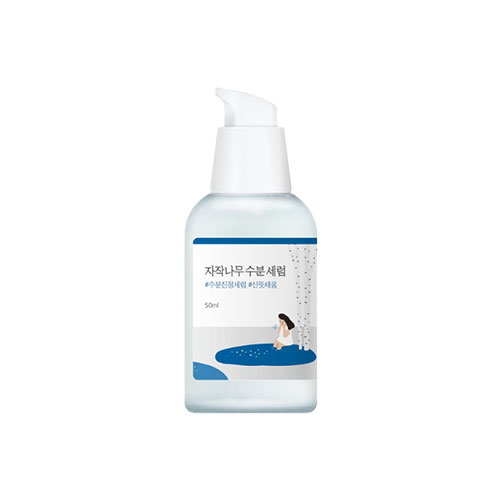
Birch Juice PDRN Moisture Serum
Round Lab
Hydrating PDRN serum combining Round Lab's signature birch juice with salmon PDRN for deep moisture and skin repair.
$20–28

PDRN Collagen Serum
Mixsoon
Plant-based PDRN from rice combined with low-molecular collagen and peptides for deep hydration and elasticity restoration.
$22–30

5 PDRN Collagen Intense Vitalizing Serum
COSRX
Multi-PDRN formula with 5 types of PDRN from salmon, centella, rice, lactobacillus, and sea grapes plus low-molecular collagen.
$30–40
Related Posts
How to Choose the Right PDRN Product for Your Skin
Not all PDRN products are equal. Learn how to evaluate PDRN concentration, formulation type, supporting ingredients, and brand credibility to find the best PDRN product for your skin type and concerns.
PDRN Serum vs Cream vs Ampoule: Which Format Delivers the Best Results?
PDRN comes in serums, creams, ampoules, essences, and masks — but which format actually delivers the most PDRN to your skin? This guide compares penetration depth, bioavailability, and practical performance to help you choose the right product type.
PDRN Concentration Levels Explained: How Much PDRN Do You Need?
Not all PDRN products contain the same concentration. From 1% topical serums to clinical-grade injectables, the amount of PDRN matters for results. Here's what the science says about optimal concentrations.