 PDRN Care
PDRN for Back Acne Scars: Treatment Options and Expected Results
Dr. Min-Ji Park
MD, Board-Certified Dermatologist
Understanding Back Acne Scars
Back acne, or truncal acne, frequently leaves scars that are more severe and more resistant to treatment than facial acne scars. The back has thicker dermis, higher sebaceous gland density, and a more robust inflammatory response to acne lesions, all of which contribute to more aggressive scarring .
Types of back acne scars
Back acne scars fall into several categories, and identifying the type is essential for choosing the right treatment approach:
- Atrophic scars: Depressed scars resulting from loss of dermal tissue during the inflammatory process. These include ice pick scars (narrow and deep), boxcar scars (broad with defined edges), and rolling scars (wide with undulating borders). Atrophic scars are the most common type on the back.
- Hypertrophic scars: Raised, firm scars that remain within the boundaries of the original acne lesion. They result from excess collagen production during wound healing.
- Keloid scars: Raised scars that extend beyond the original lesion boundaries. The back is one of the most common sites for keloid formation, particularly in individuals with darker skin tones.
- Post-inflammatory hyperpigmentation (PIH): Dark marks left after acne heals. While not true scars, PIH is extremely common on the back and can persist for months or years .
Why back scars are harder to treat
Several factors make back acne scars more challenging than their facial counterparts. The dorsal skin is 2 to 3 times thicker than facial skin, which limits the penetration of topical treatments and requires more aggressive parameters for laser and energy-based devices. The back is difficult to reach for self-application of products, reducing treatment consistency. Additionally, the skin of the back is subject to constant friction from clothing, bedding, and movement, which can interfere with healing.
How PDRN Targets Scar Tissue
PDRN addresses the fundamental biological processes that determine scar quality and remodeling. Its mechanism of action is particularly relevant for acne scar treatment because it works at the cellular level where scar tissue differs from normal skin .
Fibroblast regulation in scar tissue
In atrophic scars, fibroblasts are underactive, producing insufficient collagen to fill the depressed area. PDRN activates the A2A adenosine receptor on fibroblasts, stimulating proliferation and increasing collagen synthesis through the PKA-CREB pathway . This is precisely the response needed to rebuild tissue volume in atrophic scars.
In hypertrophic and keloid scars, the problem is dysregulated collagen production rather than insufficient production. PDRN's anti-inflammatory effects help normalize the inflammatory milieu that drives excessive collagen deposition. By reducing TNF-alpha and IL-6 levels, PDRN may help shift the balance from pathological scarring toward more organized collagen remodeling .
Angiogenesis and tissue remodeling
Scar tissue typically has poor vascular supply, which limits nutrient delivery and slows remodeling. PDRN promotes angiogenesis by upregulating VEGF, increasing capillary density in the treated area . Better blood supply supports ongoing collagen turnover and gradual scar improvement over time. Studies demonstrate significantly increased neovascularization in PDRN-treated wounds compared to controls .
Anti-inflammatory normalization
The chronic inflammatory state in and around acne scars perpetuates tissue damage and prevents normal remodeling. PDRN's A2A receptor-mediated anti-inflammatory action creates a more favorable environment for constructive tissue repair rather than ongoing destruction and disorganized healing .
Injectable PDRN for Back Acne Scars
Injectable PDRN represents the most effective approach for back acne scars, particularly for atrophic scarring where dermal volume needs to be rebuilt.
Treatment approach
A dermatologist administers PDRN via intradermal injection directly into and around individual scars or across scarred areas. For the back, this typically involves:
- Technique: Serial micropuncture injections at 5 to 10 mm intervals across the scarred area. For individual deep scars, direct injection into the scar base may be performed.
- Volume: 2 to 4 mL per session for localized scarring, up to 8 to 10 mL for extensive back involvement.
- Sessions: 4 to 6 sessions at 2 to 4 week intervals for an initial treatment course .
- Combination approach: Many clinicians combine PDRN injection with subcision (breaking fibrous bands beneath rolling scars) or microneedling for enhanced results.
What to expect
Improvement from injectable PDRN for back acne scars is gradual. Patients typically begin to see textural improvement after the third session, with continued collagen remodeling for 3 to 6 months after the final treatment. The thick skin of the back responds more slowly than facial skin, so patience and consistent treatment are important .
Topical PDRN for Back Acne Scars
Topical PDRN provides a more accessible, daily treatment option for back acne scars, though its effectiveness is limited by the thickness of dorsal skin.
Enhancing penetration
The thick stratum corneum of the back significantly limits absorption of topical PDRN. Several strategies can improve penetration:
- Post-shower application: Applying PDRN serum immediately after a warm shower, when the stratum corneum is hydrated and softened, improves absorption.
- After exfoliation: Gentle chemical exfoliation with AHA body wash helps thin the stratum corneum, allowing better product penetration. Use a body wash containing 8 to 10 percent glycolic acid 2 to 3 times per week.
- Microneedling combination: Using a derma roller (0.5 to 1.0 mm needle length) on the scarred area before applying PDRN serum dramatically increases penetration into the dermis. This should be done carefully and hygienically, ideally under professional guidance .
- Occlusion: Covering the PDRN-treated area with a thin, breathable bandage or wearing a fitted undershirt after application helps prevent product transfer to clothing and maintains contact with the skin.
Recommended products
Body-specific PDRN products like Plinest Body or Rejuran Body Lotion are formulated with penetration enhancers designed for thicker body skin. For scarred areas, applying a concentrated PDRN serum first and then layering a PDRN body lotion over it provides both targeted treatment and broader skin quality improvement.
Application routine
- Shower or bathe with a gentle AHA body wash on the scarred area.
- Pat the back dry, leaving skin slightly damp.
- Apply PDRN serum to scarred areas. Use a long-handled applicator or ask someone to help with hard-to-reach areas.
- Allow 2 to 3 minutes for absorption.
- Apply PDRN body lotion over the entire back.
- Dress in a clean, soft-fabric shirt to minimize friction.
Perform this routine daily, ideally in the evening when the product can remain on the skin undisturbed overnight.
Combining PDRN with Other Back Scar Treatments
PDRN works most effectively as part of a comprehensive scar treatment plan rather than as a standalone therapy.
PDRN plus microneedling
Microneedling creates controlled micro-injuries that trigger collagen production while simultaneously creating channels for PDRN penetration. For back acne scars, professional microneedling at 1.5 to 2.5 mm depth, followed by PDRN application, combines the collagen-inductive injury with PDRN's regenerative support . This combination is particularly effective for rolling and boxcar scars.
PDRN plus fractional laser
Fractional CO2 or erbium laser resurfacing is one of the most effective treatments for back acne scars. Adding PDRN to the post-laser recovery protocol accelerates healing and enhances collagen remodeling, potentially improving final outcomes beyond what laser alone achieves .
PDRN plus subcision
Subcision uses a needle to break the fibrous bands that tether rolling scars to deeper tissue. Injecting PDRN into the subcised area provides regenerative support and helps prevent re-tethering as new, healthier tissue forms in the released space .
PDRN plus silicone for hypertrophic scars
For raised hypertrophic scars, combining topical PDRN with silicone sheeting addresses both the inflammatory component (PDRN) and the mechanical pressure that helps flatten raised tissue (silicone). Apply PDRN serum first, allow absorption, then apply the silicone sheet.
Realistic Expectations and Timeline
Back acne scar treatment requires realistic expectations. No single treatment eliminates scars completely, and the back responds more slowly than the face due to its thicker skin and different healing dynamics.
| Scar Type | Treatment Approach | Expected Improvement | Timeline |
|---|---|---|---|
| Shallow atrophic | Topical PDRN + exfoliation | 20-40% improvement | 3-6 months |
| Deep atrophic | Injectable PDRN + microneedling | 40-60% improvement | 6-12 months |
| Rolling scars | Injectable PDRN + subcision | 50-70% improvement | 6-12 months |
| Hypertrophic | Topical PDRN + silicone | 30-50% improvement | 6-12 months |
| PIH (dark marks) | Topical PDRN + sunscreen | 60-80% improvement | 3-6 months |
These figures represent general expectations based on clinical experience and published data . Individual results depend on scar severity, skin type, treatment consistency, and whether multiple modalities are combined.
Preventing New Back Acne Scars with PDRN
If you still have active back acne, preventing new scars is as important as treating existing ones. PDRN can help on both fronts.
- During active breakouts: PDRN's anti-inflammatory properties help reduce the severity of the inflammatory response that leads to scarring . Applying PDRN to active lesions may help minimize scar formation.
- Post-breakout: Once a lesion has healed, early PDRN application during the remodeling phase can influence collagen deposition toward normal organized tissue rather than scar tissue .
- Ongoing maintenance: Consistent PDRN use on the back maintains skin quality and supports the ongoing slow remodeling process that gradually improves existing scars over months and years.
Frequently Asked Questions
Can PDRN alone eliminate back acne scars?
PDRN alone can improve back acne scars, particularly shallow atrophic scars and post-inflammatory hyperpigmentation, but significant improvement of deep or extensive scarring typically requires a combination approach that may include injectable PDRN, microneedling, laser treatment, or subcision .
How long should I use topical PDRN on back scars?
Plan for a minimum of 6 months of consistent daily use. Scar remodeling is a slow process, especially on body skin, and premature discontinuation may limit results. Many patients continue long-term maintenance application after seeing initial improvement .
Is injectable PDRN painful on the back?
Most patients report mild to moderate discomfort during back injections. Topical anesthetic cream applied 30 to 45 minutes before the procedure significantly reduces pain. The back is generally less sensitive than the face, so many patients tolerate the procedure well .
References
- [1]Squadrito F, Bitto A, Irrera N, Pizzino G, Pallio G, Minutoli L, Altavilla D. Pharmacological Activity and Clinical Use of PDRN. Current Pharmaceutical Design. 2017;23(27):3948-3957. doi:10.2174/1381612823666170516153716
- [2]Galeano M, Bitto A, Altavilla D, Minutoli L, Polito F, Calo M. Polydeoxyribonucleotide stimulates angiogenesis and wound healing. Wound Repair and Regeneration. 2008;16(2):208-217. doi:10.1111/j.1524-475X.2008.00361.x
- [3]Kim TH, Kim JY, Bae JH, Kim HM, Park ES. Biostimulatory effects of polydeoxyribonucleotide for facial skin rejuvenation. Journal of Cosmetic Dermatology. 2019;18(6):1767-1773. doi:10.1111/jocd.12958
- [4]Colangelo MT, Galli C, Gentile P. Polydeoxyribonucleotide: A Promising Biological Platform for Dermal Regeneration. Current Pharmaceutical Design. 2020;26(17):2049-2056. doi:10.2174/1381612826666200210100726
- [5]Jacob CI, Dover JS, Kaminer MS. Acne scarring: a classification system and review of treatment options. Journal of the American Academy of Dermatology. 2001;45(1):109-117. doi:10.1067/mjd.2001.113451
Recommended Products

Rejuran Healer
Pharmaresearch Products
The original Korean PDRN skin booster — c-PDRN derived from salmon DNA for skin rejuvenation and barrier repair.
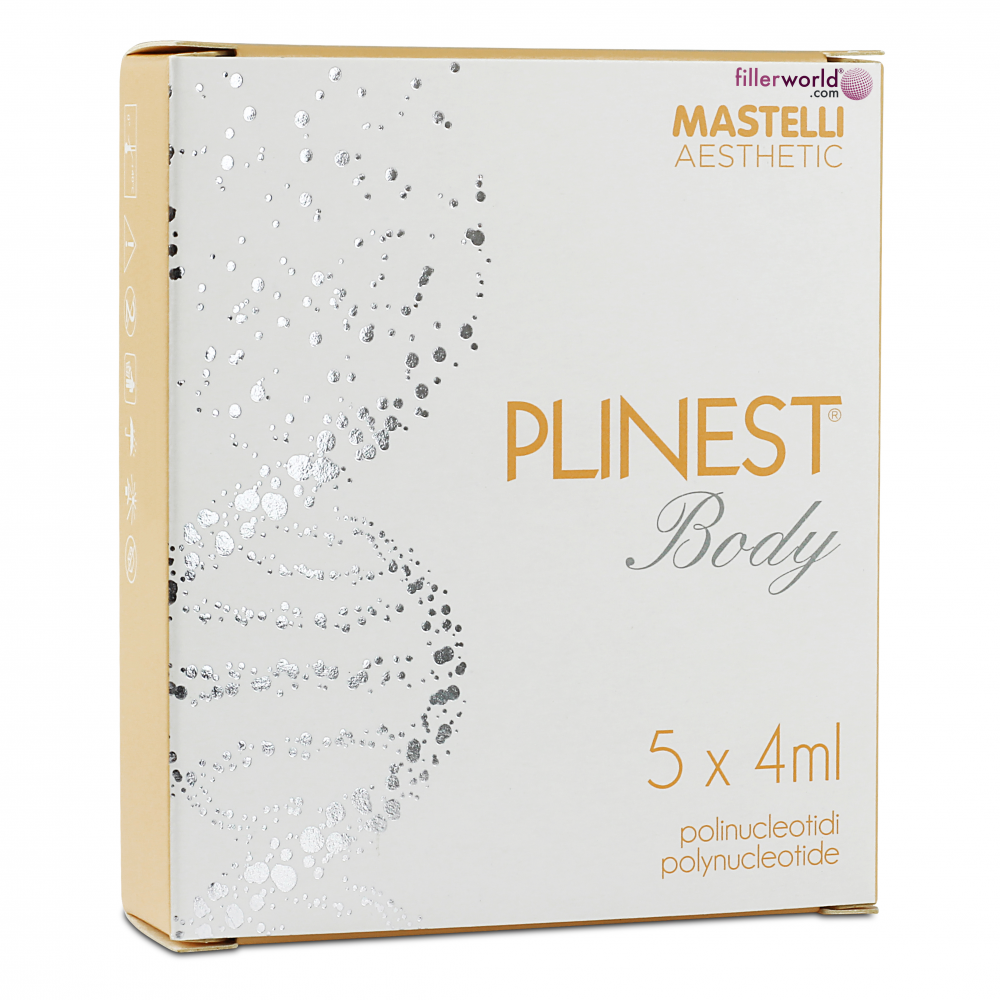
Plinest Body
Mastelli
PDRN injectable specifically formulated for body areas — neck, décolletage, hands, and arms rejuvenation.
$250–500 per session

Body Lotion c-PDRN
Rejuran
Full-body PDRN care with c-PDRN technology in a lightweight, fast-absorbing lotion for skin quality improvement.
$40–60

5 PDRN Collagen Intense Vitalizing Serum
COSRX
Multi-PDRN formula with 5 types of PDRN from salmon, centella, rice, lactobacillus, and sea grapes plus low-molecular collagen.
$30–40
Related Posts
PDRN for Acne Scars: A Regenerative Approach to Scar Treatment
Acne scars are notoriously difficult to treat. Learn how PDRN uses cellular regeneration to improve scar texture, stimulate collagen remodeling, and complement other scar treatments.
PDRN for Body Skin: Rejuvenating Your Neck, Hands, and Beyond
PDRN is not just for your face. Discover how polydeoxyribonucleotide therapy can rejuvenate the neck, decolletage, hands, and body skin — areas that often reveal aging first but receive the least attention.
PDRN for Post-Acne Marks: Fading PIE and PIH Naturally
Post-acne marks — whether red (PIE) or brown (PIH) — can linger for months or years. Learn how PDRN targets the underlying inflammation, vascular damage, and melanin overproduction that keep acne marks visible.