 PDRN Care
PDRN for Cellulite: Can It Improve Skin Texture on Thighs and Body?
Dr. Sarah Chen
PhD, Molecular Biology
Cellulite is one of the most common and least understood body skin concerns. It appears in an estimated 80 to 90 percent of post-pubertal women regardless of body weight, fitness level, or ethnicity . Despite decades of creams, devices, and procedures marketed as solutions, cellulite remains stubbornly persistent because it is not a surface problem. It is a structural condition rooted in the architecture of the dermis, the fibrous connective tissue septae, and the subcutaneous fat layer beneath them. PDRN (polydeoxyribonucleotide) does not promise to erase cellulite, but its well-documented effects on collagen remodeling, microcirculation, and dermal regeneration make it one of the more biologically credible ingredients for improving the skin quality that overlays cellulite-affected tissue.
What Actually Causes Cellulite
Cellulite is not excess fat, poor circulation, or "toxins" trapped in the skin. It is a visible consequence of normal female anatomy interacting with age-related dermal changes .
The structural anatomy of cellulite
Three layers of tissue determine whether cellulite is visible:
- Fibrous septae. Bands of connective tissue run perpendicular to the skin surface, anchoring the dermis to the underlying muscle fascia. In women, these septae are arranged vertically, creating columnar compartments. In men, they form a criss-cross lattice. The vertical female architecture allows fat lobules to push upward between the bands, creating the characteristic dimpled surface. When septae lose elasticity or become fibrotic, they pull the skin downward at their anchor points while surrounding fat pushes upward, amplifying the quilted appearance .
- Subcutaneous fat lobules. Fat cells within the compartments defined by the septae expand with weight gain, hormonal changes, and aging. As these lobules enlarge, they herniate upward through weakened septae, creating the bumps visible at the surface. This happens independently of overall body fat percentage — even lean women can have prominent fat lobules in cellulite-prone areas.
- The dermis. This is the layer most relevant to PDRN. A thick, collagen-dense dermis acts as a structural barrier that masks the uneven fat layer below. As the dermis thins with age, sun damage, and declining collagen production, the underlying fat architecture becomes increasingly visible. Dermal thinning is one of the primary reasons cellulite worsens with age even when body weight remains stable .
Why cellulite is almost universal in women
The near-universality of cellulite in women is driven by biology, not lifestyle:
- Anatomical predisposition. The vertical arrangement of fibrous septae in female subcutaneous tissue is the fundamental structural difference. Men rarely develop cellulite because their criss-cross septae pattern distributes fat pressure more evenly.
- Hormonal factors. Estrogen influences fat distribution, fat cell size, and connective tissue structure. During puberty, pregnancy, and perimenopause, hormonal shifts promote fat storage in the thighs and hips while affecting collagen metabolism in these areas.
- Genetic contribution. Dermal thickness, septae architecture, and fat distribution patterns are all heritable. Family history is one of the strongest predictors of cellulite severity.
- Age-related dermal thinning. Collagen production declines approximately 1 percent per year after age 30. As the dermis thins, the structural camouflage it provides diminishes, revealing the fat-and-septae architecture beneath. This is why cellulite often worsens in women who have maintained a stable weight for decades.
Why PDRN Is Relevant for Cellulite
PDRN does not act on fat cells or fibrous septae directly. Its relevance to cellulite lies in its effects on the dermis — the layer that determines how much of the underlying structural irregularity is visible at the skin surface .
Collagen remodeling and dermal thickening
PDRN activates the adenosine A2A receptor on dermal fibroblasts, stimulating production of type I and type III procollagen . This increased collagen synthesis contributes to dermal thickening over time. A thicker dermis provides greater mechanical resistance to the upward pressure of fat lobules, reducing the visible dimpling effect. Collagen remodeling operates on a timeline of weeks to months, but it addresses a root contributor to cellulite visibility rather than merely masking it .
Improved microcirculation
Poor microcirculation in cellulite-affected tissue is both a contributor to and a consequence of the condition. Compressed capillaries within fibrotic septae lead to localized hypoxia, which promotes further fibrosis and impairs the tissue's ability to remodel. PDRN upregulates vascular endothelial growth factor (VEGF), promoting angiogenesis and new microvascular networks in treated tissue . Improved blood flow delivers oxygen and nutrients more effectively, supports waste removal, and creates a tissue environment more conducive to ongoing collagen turnover.
Anti-inflammatory effects
Chronic low-grade inflammation in cellulite-affected tissue contributes to fibrotic remodeling of septae and degradation of existing collagen. PDRN's activation of the A2A receptor suppresses pro-inflammatory cytokines — including TNF-alpha and IL-6 — and modulates the NF-kB signaling pathway . By shifting the tissue environment from pro-inflammatory to pro-reparative, PDRN supports healthier connective tissue turnover in the dermis overlying cellulite-affected areas.
Extracellular matrix support
Beyond collagen, PDRN stimulates fibroblasts to produce glycosaminoglycans and proteoglycans that contribute to dermal hydration and structural integrity . A well-hydrated, structurally supported dermis is more resilient and better able to maintain a smooth surface appearance over the irregular fat-and-septae architecture below.
Realistic Expectations: What PDRN Can and Cannot Do for Cellulite
Intellectual honesty is important here. Cellulite is a multifactorial structural condition, and no single ingredient — applied topically or injected — can fully resolve it.
What PDRN can realistically achieve:
- Gradual improvement in skin texture and smoothness over cellulite-affected areas
- Increased dermal thickness that reduces the visibility of underlying fat lobule herniation
- Improved skin quality including better hydration, elasticity, and tone
- Reduction in cellulite severity by approximately one grade on the Hexsel photonumeric scale over a full treatment course
- Better skin quality that makes cellulite less visually prominent without eliminating the underlying structural cause
What PDRN cannot do:
- Eliminate cellulite entirely — the septae architecture and fat compartment structure remain
- Reduce localized fat — PDRN has no lipolytic activity
- Replace procedures that directly address septae (such as subcision) or fat volume (such as liposuction)
- Produce visible results in days or weeks — dermal remodeling requires consistent use over 8 to 12 weeks minimum
The appropriate framing is this: PDRN improves the quality and thickness of the skin that overlays cellulite, making the condition less visible and the skin smoother to the touch. It works on the dermis, not on the fat or the septae.
Topical PDRN Body Care Protocol
For daily home care targeting cellulite-affected areas, a consistent topical PDRN routine can support ongoing dermal remodeling.
Daily application method
Apply a PDRN body product (such as Rejuran Body Lotion or a dedicated PDRN body serum) to clean, slightly damp skin on the thighs, buttocks, and other affected areas. Use firm, upward strokes to promote lymphatic drainage while working the product into the skin. Spend 2 to 3 minutes per area to ensure thorough coverage and absorption.
Massage techniques
Manual massage during product application serves a dual purpose: it enhances the penetration of active ingredients and temporarily improves local circulation. Use a kneading motion — grasping and lifting the skin between thumb and fingers, then releasing — to stimulate blood flow and encourage lymphatic movement. This technique, performed consistently, can improve the superficial appearance of cellulite independently of the product applied.
Pairing with dry brushing
Dry brushing before applying PDRN products can enhance their effectiveness. Using a natural-bristle body brush on dry skin before showering, brush in long strokes toward the heart. This removes dead surface cells that impede product absorption and stimulates local circulation. Follow with your shower, then apply your PDRN body product to damp skin immediately after.
Consistency matters
Topical PDRN for cellulite is not an acute treatment — it is a maintenance strategy. Expect a minimum of 8 to 12 weeks of daily application before assessing results. The collagen remodeling and dermal thickening that reduce cellulite visibility are cumulative processes that build gradually with sustained fibroblast stimulation .
Professional PDRN Treatments for Cellulite
For more significant improvement, professional PDRN delivery methods bypass the penetration limitations of topical application.
Mesotherapy with PDRN
Mesotherapy involves multiple superficial microinjections of PDRN directly into the dermis of cellulite-affected areas, delivering therapeutic concentrations precisely where collagen remodeling occurs.
- Protocol: 4 to 6 sessions spaced 2 to 4 weeks apart, with maintenance sessions every 2 to 3 months
- Coverage: Multiple injection points across the affected area, typically spaced 1 to 2 centimeters apart
- Advantage: Direct dermal delivery achieves PDRN concentrations that topical application cannot match, producing faster and more pronounced collagen remodeling effects
Skin boosters in affected areas
PDRN-based skin boosters (such as Rejuran or Plinest Body) can be administered in the thighs, buttocks, and other cellulite-prone areas. The product is injected into the superficial-to-mid dermis in a grid pattern across the treatment area.
- Protocol: 3 to 4 sessions spaced 3 to 4 weeks apart, followed by maintenance every 4 to 6 months
- Advantage: Provides a sustained depot of PDRN that continues to stimulate fibroblasts for weeks after injection
- Consideration: Body areas require larger total volumes than facial treatments due to the greater surface area involved
Both professional approaches can be combined with topical PDRN maintenance between sessions for optimal ongoing dermal support.
Ingredients to Combine with PDRN for Cellulite
PDRN works on the dermal remodeling axis of cellulite. Combining it with ingredients that address other contributing factors creates a more comprehensive approach.
Caffeine for drainage
Caffeine is one of the few topical ingredients with evidence supporting its use for cellulite. It acts as a phosphodiesterase inhibitor, promoting lipolysis in adipocytes, and has decongestant properties that can temporarily reduce fluid retention in cellulite-affected areas. When combined with PDRN, caffeine addresses the fluid and fat components while PDRN works on dermal structural quality. Look for body products that pair PDRN with caffeine at concentrations of 1 to 3 percent.
Retinol for collagen
Retinol (vitamin A) works through a different mechanism than PDRN — binding to retinoic acid receptors to upregulate collagen gene expression and increase epidermal thickness . The two pathways are complementary rather than redundant. Apply retinol body products in the evening and PDRN products in the morning, or alternate days if sensitivity occurs. Start with a retinol concentration of 0.1 to 0.3 percent for body skin and increase gradually.
Centella asiatica for tissue repair
Centella asiatica (cica) contains triterpenoid compounds — asiaticoside, madecassoside, asiatic acid, and madecassic acid — that stimulate collagen synthesis through pathways distinct from both PDRN and retinol. Centella also has anti-inflammatory properties that complement PDRN's tissue repair effects. Products that combine PDRN with centella extracts offer a multi-pathway approach to dermal strengthening.
What Does Not Work: Common Cellulite Myths
The cellulite treatment market is saturated with products and claims that are not supported by evidence. Understanding what does not work is as important as knowing what does.
- Cellulite is not caused by toxins. No amount of detox tea, juice cleansing, or special wraps will remove cellulite. The condition has nothing to do with toxin accumulation .
- Spot reduction of fat does not eliminate cellulite. Even significant fat loss in cellulite-prone areas often fails to resolve dimpling because the septae architecture and dermal thinning remain. In some cases, weight loss can actually make cellulite more visible by reducing the fat layer that filled out the skin surface.
- Compression garments do not treat cellulite. They may temporarily smooth the surface while worn, but they produce no lasting structural change in the dermis, septae, or fat compartments.
- Vigorous massage alone will not eliminate cellulite. Massage improves local circulation and can temporarily reduce the appearance of dimpling, but the structural changes responsible are not altered by surface manipulation.
- Most "anti-cellulite" creams are cosmetic only. Many products rely on ingredients that tighten or swell the skin temporarily without producing any structural dermal change. The effect disappears within hours.
The distinction between genuinely regenerative ingredients like PDRN — which stimulate measurable collagen synthesis and dermal remodeling — and cosmetic ingredients that create a temporary surface effect is critical. Cellulite improvement requires actual structural change in the dermis, and that takes time, consistency, and biologically active ingredients.
Building a PDRN Body Care Routine for Cellulite
A practical, evidence-informed approach to incorporating PDRN into your cellulite management strategy:
- Morning: Apply a PDRN body lotion or serum to cellulite-affected areas after showering, using upward massage strokes for 2 to 3 minutes per area.
- Evening: Apply a retinol body product to the same areas on alternate nights, or use a combined PDRN-and-caffeine product if retinol sensitivity is a concern.
- 2 to 3 times per week: Dry brush before your morning shower to exfoliate, stimulate circulation, and prepare the skin for better product absorption.
- Monthly (professional): Consider PDRN mesotherapy or skin booster treatments for accelerated dermal remodeling, maintaining the topical routine between sessions.
- Ongoing: Maintain the routine for a minimum of 12 weeks before evaluating results. Continue indefinitely for sustained dermal support — cellulite management is a long-term commitment, not a one-time treatment.
Cellulite is a normal anatomical feature that does not require treatment. But for those who choose to address it, PDRN represents one of the more scientifically grounded options available — not because it eliminates cellulite, but because it genuinely improves the structural quality of the skin that determines how visible cellulite is.
References
- [1]Squadrito F, Bitto A, Irrera N, Pizzino G, Pallio G, Minutoli L, Altavilla D. Pharmacological Activity and Clinical Use of PDRN. Current Pharmaceutical Design. 2017;23(27):3948-3957. doi:10.2174/1381612823666170516153716
- [2]Galeano M, Bitto A, Altavilla D, et al.. Polydeoxyribonucleotide stimulates angiogenesis and wound healing in the genetically diabetic mouse. Wound Repair and Regeneration. 2008;16(2):208-217. doi:10.1111/j.1524-475X.2008.00361.x
- [3]Colangelo MT, Galli C, Gentile P. Polydeoxyribonucleotide: A Promising Biological Platform for Dermal Regeneration. Current Pharmaceutical Design. 2020;26(17):2049-2056. doi:10.2174/1381612826666200113152555
- [4]Hexsel DM, Dal'forno T, Hexsel CL. A validated photonumeric cellulite severity scale. Journal of the European Academy of Dermatology and Venereology. 2009;23(5):523-528. doi:10.1111/j.1468-3083.2009.03101.x
- [5]Rossi AB, Vergnanini AL. Cellulite: a review. Journal of the European Academy of Dermatology and Venereology. 2000;14(4):251-262. doi:10.1046/j.1468-3083.2000.00016.x
- [6]Bitto A, Polito F, Irrera N, et al.. Polydeoxyribonucleotide reduces cytokine production and the severity of collagen-induced arthritis by stimulation of adenosine A2A receptor. Arthritis Research & Therapy. 2011;13(1):R28. doi:10.1186/ar3258
- [7]Kim TH, Kim JY, Bae JH, et al.. Biostimulatory effects of polydeoxyribonucleotide for facial skin rejuvenation. Journal of Cosmetic Dermatology. 2019;18(6):1767-1773. doi:10.1111/jocd.12958
Recommended Products

Body Lotion c-PDRN
Rejuran
Full-body PDRN care with c-PDRN technology in a lightweight, fast-absorbing lotion for skin quality improvement.
$40–60
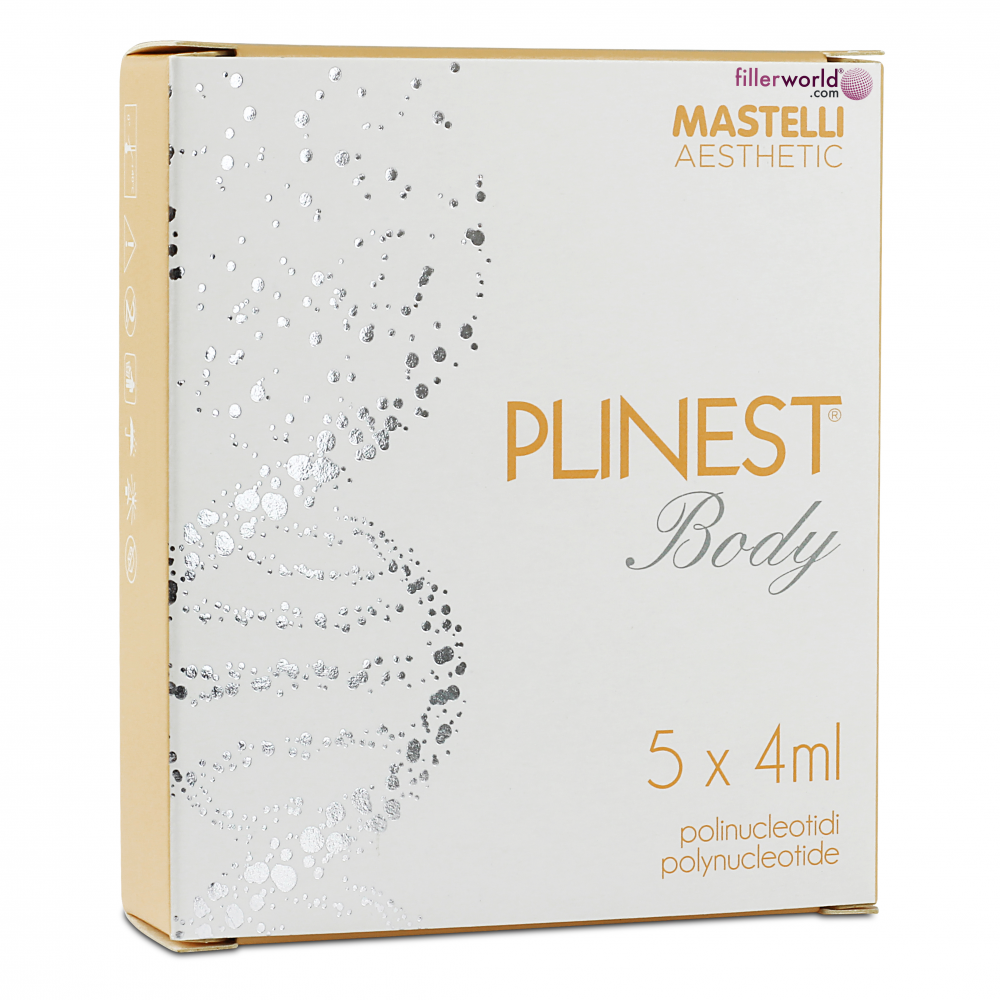
Plinest Body
Mastelli
PDRN injectable specifically formulated for body areas — neck, décolletage, hands, and arms rejuvenation.
$250–500 per session

5 PDRN Collagen Intense Vitalizing Serum
COSRX
Multi-PDRN formula with 5 types of PDRN from salmon, centella, rice, lactobacillus, and sea grapes plus low-molecular collagen.
$30–40

PDRN Pink Peptide Serum
Medicube
Viral K-beauty serum with 99% purity salmon DNA PDRN and 5 peptides for instant glow and visible firming within a week.
$20–25
Related Posts
PDRN for Body Skin: Rejuvenating Your Neck, Hands, and Beyond
PDRN is not just for your face. Discover how polydeoxyribonucleotide therapy can rejuvenate the neck, decolletage, hands, and body skin — areas that often reveal aging first but receive the least attention.
PDRN for Stretch Marks: A Regenerative Approach to Striae Treatment
Stretch marks result from dermal rupture and collagen fragmentation. Learn how PDRN's ability to stimulate fibroblast proliferation, collagen synthesis, and extracellular matrix restoration offers a regenerative approach to improving striae.
Best PDRN Body Care Products in 2026: Lotions, Treatments & Results
PDRN is not just for your face. Body skin — thicker, drier, and more prone to crepiness — benefits enormously from polydeoxyribonucleotide therapy. From clinical injectables like Plinest Body to daily K-beauty body lotions, this is the complete guide to PDRN body care in 2026.