 PDRN Care
PDRN for Eye Wrinkles: Crow's Feet, Under-Eye Lines, and Periorbital Rejuvenation
Dr. Min-Ji Park
MD, Board-Certified Dermatologist
Why the Eye Area Ages First
If you have ever noticed that fine lines around your eyes appeared years before wrinkles anywhere else on your face, you are not imagining things. The periorbital region ages faster than any other facial zone, and the reasons are purely anatomical.
The skin surrounding the eyes is remarkably thin — approximately 0.5 mm thick, compared to 2 mm on the cheeks and forehead . This extreme thinness means there is less collagen and elastin to begin with, so even modest degradation becomes immediately visible as creases and folds.
Adding to the vulnerability, the periorbital area has fewer sebaceous glands than the rest of the face. Less natural oil production means less inherent moisture retention, leaving the skin more prone to dehydration lines that progressively deepen into permanent wrinkles.
Perhaps most significantly, the orbicularis oculi muscle contracts an estimated 10,000 times per day — every blink, squint, smile, and expression creates repetitive mechanical stress on the overlying skin . Over years, this constant folding breaks down collagen fibers along predictable crease lines, forming the characteristic patterns we recognize as crow's feet and under-eye lines.
Understanding Periorbital Wrinkle Types
Crow's Feet (Lateral Canthal Lines)
These fan-shaped lines radiate outward from the outer corners of the eyes. They form perpendicular to the direction of the orbicularis oculi muscle fibers and are among the first dynamic wrinkles to appear — often visible during smiling in the late twenties before becoming static lines at rest by the mid-thirties.
Under-Eye Lines (Infraorbital Creases)
Fine horizontal lines that run beneath the lower lash line, often accompanied by crepey texture. These result from the combined effects of collagen loss, volume depletion, and the constant micro-movements of blinking. The extremely thin skin here is particularly susceptible to photo-aging.
Lid Laxity and Hooding
While less commonly discussed as wrinkles, the progressive loss of collagen and elastin in the upper eyelid skin leads to hooding and creasing. This structural change makes the eyes appear smaller and more fatigued over time.
How PDRN Targets Periorbital Aging
PDRN (Polydeoxyribonucleotide) is uniquely suited to the challenges of eye-area aging because it works through biological mechanisms that address the root causes rather than simply filling or paralyzing .
Collagen Rebuilding in Thin Skin
PDRN activates the adenosine A2A receptor on dermal fibroblasts, triggering increased synthesis of type I and type III collagen . In the periorbital area, where the dermis is already thin, even modest increases in collagen density translate to visible improvements in skin thickness and resilience. Clinical studies using periorbital PDRN treatments have documented measurable increases in dermal thickness within eight weeks .
Unlike retinoids, which can cause significant irritation and peeling in the delicate eye zone, PDRN stimulates collagen production without disrupting the epidermal barrier . This makes it suitable for consistent, long-term use around the eyes without the adjustment period or sensitivity issues that often limit retinol use in this area.
Elastin Fiber Restoration
Crow's feet form when elastin fibers — the spring-like proteins that allow skin to bounce back after stretching — become fragmented and disorganized. PDRN promotes fibroblast proliferation and extracellular matrix remodeling, supporting the production of new elastin alongside collagen . This improved elasticity helps the skin resist creasing from repetitive muscle movements.
Microcirculation Enhancement
The periorbital area relies on a dense capillary network for nutrient delivery and waste removal. Age-related decline in microcirculation starves fibroblasts of the oxygen and nutrients they need for collagen synthesis. PDRN stimulates vascular endothelial growth factor (VEGF) expression, promoting healthier blood flow to the treated area . Better circulation means more efficient collagen production and improved overall skin quality.
Anti-Inflammatory Protection
Chronic low-grade inflammation — often called "inflammaging" — accelerates collagen breakdown through matrix metalloproteinase (MMP) activity. PDRN suppresses inflammatory cytokines including TNF-alpha and IL-6 through the A2A receptor pathway . By reducing this inflammatory burden, PDRN helps protect existing collagen from enzymatic degradation while new collagen is being formed.
Clinical Evidence for Periorbital PDRN
Research specifically examining PDRN in the periorbital area has produced encouraging results:
A 2020 study by Jeong et al. evaluated PDRN injections for periorbital rejuvenation and found statistically significant improvements in skin elasticity, hydration, and wrinkle depth after a series of three treatments. Ultrasound measurements confirmed increased dermal thickness in the treated areas .
Roh et al. (2022) conducted a prospective clinical study of polynucleotide filler in the periorbital region, documenting improvements in fine wrinkle scores, skin texture, and patient satisfaction that persisted for up to six months following the treatment course .
A comprehensive evaluation by Cavallini et al. (2021) examining long-chain polynucleotides across multiple target areas found that the periocular region responded particularly well to treatment, with investigators noting significant reduction in fine lines and improved skin quality at the twelve-week follow-up .
Kim et al. (2019) demonstrated that PDRN biostimulation produces measurable increases in collagen density and skin elasticity in facial skin, with improvements correlating with the duration of treatment .
PDRN Eye Patches vs. Eye Creams
Eye Patches: Concentrated Delivery
Hydrogel eye patches infused with PDRN offer several advantages for treating periorbital wrinkles. The occlusive hydrogel material prevents evaporation and creates a humid microenvironment that enhances ingredient penetration into the thin periorbital skin. Patches deliver a concentrated dose over a sustained period — typically 15 to 30 minutes — allowing deeper absorption than a quickly-applied cream.
Best used: Three to four times per week as a targeted treatment session. Particularly effective in the evening when you can remain still and allow the patch to work undisturbed. Look for patches that combine PDRN with peptides or adenosine for synergistic wrinkle-smoothing effects.
Eye Creams: Daily Maintenance
PDRN eye creams provide lower concentrations for consistent daily use. Their value lies in creating a sustained baseline level of PDRN delivery to the periorbital skin, maintaining the results achieved through more intensive treatments. Quality eye creams also provide occlusive and emollient benefits that address the chronic dryness contributing to periorbital wrinkle formation.
Best used: Twice daily — morning and evening — as the final step in your eye-area routine. Apply with the ring finger using gentle tapping motions to avoid pulling the delicate skin.
The Optimal Approach: Combining Both
For the most comprehensive results, use PDRN eye patches as your intensive treatment three to four evenings per week, and apply a PDRN eye cream daily for continuous maintenance. This provides both concentrated periodic doses and sustained daily delivery.
Application Tips for the Eye Area
The periorbital zone requires specific application techniques to maximize PDRN efficacy without causing irritation or mechanical damage:
Use your ring finger. It naturally applies the least pressure of all your fingers, protecting the thin periorbital skin from stretching and micro-trauma that can worsen wrinkles.
Tap, never rub. Use gentle pressing or patting motions to deposit product onto the skin. Dragging or rubbing creates repetitive stretching that contributes to the very wrinkles you are trying to treat.
Apply to the orbital bone. For under-eye products, follow the contour of the orbital bone rather than applying directly to the mobile lower lid. Product will naturally migrate upward to cover the area without risking irritation to the eye itself.
Start from the inner corner. Work product from the inner canthus outward toward the temple. For crow's feet specifically, ensure you extend product application to the outer orbital area where these lines radiate.
Apply to slightly damp skin. PDRN absorbs more effectively into hydrated skin. Apply immediately after your toner or essence, while the periorbital area still retains some moisture.
Combining PDRN with Retinol for Eye Wrinkles
Retinol remains one of the most evidence-based anti-wrinkle ingredients, but its use around the eyes is limited by irritation potential. PDRN and retinol can work synergistically when combined thoughtfully:
Alternate evenings. Use a low-concentration retinol eye product (0.025 to 0.05 percent) on three evenings per week, and PDRN eye patches or intensive PDRN treatment on the remaining evenings. This provides retinol's collagen-stimulating benefits without overwhelming the delicate periorbital barrier.
Layer strategically. On retinol evenings, apply your retinol product first, wait five minutes, then apply a PDRN eye cream over the top. PDRN's anti-inflammatory properties help buffer retinol irritation while both ingredients work on collagen synthesis through complementary pathways .
Use PDRN as recovery support. If retinol causes mild irritation around the eyes — redness, flaking, or sensitivity — switch to PDRN-only application for several days. PDRN's tissue-repair and anti-inflammatory actions support barrier recovery without sacrificing regenerative activity .
Combining PDRN with Peptides
Peptides are another powerful ally for periorbital wrinkles, and they pair exceptionally well with PDRN:
Argireline (acetyl hexapeptide-3) works by reducing the intensity of muscle contractions that form dynamic wrinkles. Combined with PDRN's collagen rebuilding, you address both the cause (muscle movement) and the consequence (collagen damage) of crow's feet.
Matrixyl (palmitoyl pentapeptide-4) directly stimulates collagen and fibronectin production. Layered with PDRN, the two ingredients activate collagen synthesis through independent signaling pathways, potentially amplifying the total regenerative response.
Copper peptides (GHK-Cu) promote wound healing and matrix remodeling. Used alongside PDRN, they support the complete cycle of collagen turnover — breaking down damaged fibers while PDRN drives the production of new ones.
Building a Complete PDRN Eye Wrinkle Protocol
Morning Routine
- Cleanse the face with a gentle, non-stripping cleanser
- Apply a hydrating toner or essence to damp skin, including the eye area
- Tap a PDRN eye serum or cream around the orbital bone using your ring finger
- Apply broad-spectrum SPF 30 or higher sunscreen, extending to the periorbital area — UV protection is the single most important step for preventing further collagen loss
Evening Routine (Patch Nights — 3 to 4 times per week)
- Double cleanse to remove sunscreen and makeup thoroughly
- Apply toner or essence
- Place PDRN hydrogel eye patches and leave for 20 to 30 minutes
- Remove patches and tap any remaining essence into the skin
- Apply a PDRN eye cream to seal in the treatment
Evening Routine (Retinol Nights — 2 to 3 times per week)
- Double cleanse
- Apply toner or essence
- Apply low-concentration retinol to the periorbital area
- Wait five minutes, then apply PDRN eye cream over the top
Realistic Expectations and Timeline
PDRN works through biological remodeling rather than superficial filling, so results develop gradually:
Weeks 1 to 2: Improved hydration and smoother texture around the eyes. Dehydration lines (which are not true wrinkles) may diminish noticeably.
Weeks 3 to 6: Early collagen synthesis begins to increase skin density. Fine lines appear softer and less pronounced, particularly under direct lighting .
Weeks 6 to 12: Measurable improvements in skin thickness and elasticity. Crow's feet become shallower, and the overall periorbital skin quality improves visibly. This is the timeframe where clinical studies document statistically significant improvements .
Months 3 to 6: Continued collagen accumulation and matrix remodeling. Maximum results from a consistent topical protocol are typically visible by month four to five. Injectable PDRN treatments show peak results within this window .
Deep, etched wrinkles that have been present for many years may soften significantly but are unlikely to disappear completely with topical PDRN alone. For deeply established crow's feet, professional injectable PDRN treatments like Rejuran I can deliver more dramatic improvement .
Frequently Asked Questions
Can I use PDRN eye products if I have sensitive eyes?
Yes. PDRN is well-tolerated in the periorbital area because it works through the body's own adenosine receptor pathway rather than through exfoliation or irritant-dependent mechanisms . However, always patch test a new product on the inner wrist before applying near the eyes, and avoid getting product directly into the eyes.
How does PDRN compare to Botox for crow's feet?
Botox and PDRN work through completely different mechanisms and are complementary rather than competitive. Botox temporarily paralyzes the muscles that create dynamic wrinkles, providing immediate smoothing that lasts three to four months. PDRN rebuilds the collagen structure damaged by years of muscle movement, providing progressive improvement that grows over time . Many dermatologists recommend both — Botox for immediate wrinkle relaxation and PDRN for underlying skin quality improvement.
Is PDRN safe to use with under-eye filler?
PDRN is safe to use alongside hyaluronic acid fillers. In fact, PDRN can enhance filler results by improving the quality of the skin overlying the filler, creating a smoother, more natural appearance. Wait at least two weeks after filler injections before resuming topical PDRN application to the treated area.
How early should I start using PDRN around the eyes?
Prevention is always easier than correction. Starting a PDRN eye product in your mid-to-late twenties — when the earliest signs of periorbital aging are just beginning — supports collagen maintenance before significant degradation occurs . However, PDRN delivers measurable benefits at any age, and it is never too late to begin strengthening periorbital skin.
Can PDRN help with expression lines that only show when I smile?
Dynamic wrinkles — those that appear only during facial expressions — indicate that collagen along the crease lines has not yet permanently broken down. PDRN can help prevent these dynamic lines from becoming static wrinkles by maintaining collagen density and elastin resilience in the areas of repeated folding . This is one of the most effective preventive applications of periorbital PDRN.
References
- [1]Squadrito F, Bitto A, Irrera N, Pizzino G, Pallio G, Minutoli L, Altavilla D. Pharmacological Activity and Clinical Use of PDRN. Current Pharmaceutical Design. 2017;23(27):3948-3957. doi:10.2174/1381612823666170516153716
- [2]Galeano M, Bitto A, Altavilla D, Minutoli L, Polito F, Calò M, Lo Cascio P, Stagno d'Alcontres F, Squadrito F. Polydeoxyribonucleotide stimulates angiogenesis and wound healing in the genetically diabetic mouse. Wound Repair and Regeneration. 2008;16(2):208-217. doi:10.1111/j.1524-475X.2008.00361.x
- [3]Colangelo MT, Galli C, Gentile P. Polydeoxyribonucleotide: A Promising Biological Platform for Dermal Regeneration. Current Pharmaceutical Design. 2020;26(17):2049-2056. doi:10.2174/1381612826666200113152555
- [4]Kim TH, Kim JH, Lee SH, Park ES. Biostimulatory effects of polydeoxyribonucleotide for facial skin rejuvenation. Journal of Cosmetic Dermatology. 2019;18(6):1767-1773. doi:10.1111/jocd.12958
- [5]Jeong WS, Shin SC, Park MC. Periorbital rejuvenation with polydeoxyribonucleotide. Aesthetic Plastic Surgery. 2020;44(5):1829-1837. doi:10.1007/s00266-020-01783-4
- [6]Roh NK, Yoon ES, Kim YS, Lee BI, Park ES. Periorbital rejuvenation using a polynucleotide filler: a prospective clinical study. Journal of Cosmetic Dermatology. 2022;21(12):6797-6803. doi:10.1111/jocd.15439
- [7]Cavallini M, Papagni M, Trocchi G. Long-chain polynucleotides gel and target areas: periocular, perioral, neck, and hands. Journal of Cosmetic Dermatology. 2021;20(10):3301-3309. doi:10.1111/jocd.14349
Recommended Products

PDRN Retinal Eye Patches
Abib
Eye patches with PDRN, retinol, and niacinamide in a glow jelly formula — 60 patches per container.
$28–36
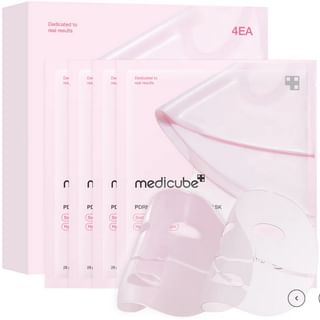
PDRN Pink Collagen Gel Mask
Medicube
Collagen-infused gel mask with PDRN for intensive hydration, firming, and visible plumping.
$18–24

5 PDRN Collagen Intense Vitalizing Serum
COSRX
Multi-PDRN formula with 5 types of PDRN from salmon, centella, rice, lactobacillus, and sea grapes plus low-molecular collagen.
$30–40
Related Posts
PDRN for Dark Circles: Does It Really Work?
Dark circles are one of the most stubborn skincare concerns. Learn how PDRN targets under-eye darkness through microcirculation, collagen support, and inflammation reduction, plus the best products to try.
PDRN for Wrinkles: How DNA Fragments Rebuild Aging Skin
Wrinkles form when collagen breaks down faster than your skin can replace it. PDRN reverses this imbalance by activating your skin's own regenerative machinery — stimulating fibroblasts, building new collagen, and restoring dermal thickness. Here is how it works and what results to expect.
PDRN for Under-Eye Hollows: Topical & Injectable Options
Under-eye hollows and tear troughs age the face faster than wrinkles. PDRN offers a regenerative approach — stimulating collagen and thickening the delicate periorbital skin rather than simply filling volume. Here is what the science says about topical and injectable options.