 PDRN Care
PDRN Morning vs Night: When to Apply for Best Results
Dr. Sarah Chen
PhD, Molecular Biology
"Should I use PDRN in the morning or at night?" is one of the most common questions we get — and the short answer is both. But the reasoning matters, because your skin does genuinely different things at different times of day, and understanding this helps you get more from the same product.
Your Skin Has a Clock
Skin is not a static barrier. It operates on a circadian rhythm — a 24-hour biological cycle that changes what your skin prioritizes throughout the day .
During the Day
- Barrier defense mode. Your skin ramps up its protective functions: antimicrobial peptide production, sebum secretion, and UV-responsive repair mechanisms.
- Higher transepidermal water loss (TEWL). You lose more water through the skin during the day, which is why morning hydration matters.
- Lower cell proliferation. Skin cells divide more slowly during daylight hours.
At Night
- Repair and regeneration mode. Cell division peaks between 11 PM and 4 AM. This is when your skin is most actively producing new cells, synthesizing collagen, and repairing DNA damage accumulated during the day .
- Higher blood flow. Microcirculation increases at night, delivering more nutrients and oxygen to skin cells.
- Greater permeability. The skin barrier is slightly more permeable at night, which means topical actives penetrate more easily.
What This Means for PDRN
PDRN works through the adenosine A2A receptor to stimulate fibroblast activity, promote collagen synthesis, reduce inflammation, and improve microcirculation . These are processes that happen continuously but peak at different times:
Morning PDRN: Protection and Hydration
When you apply PDRN in the morning, you are primarily:
- Hydrating the skin with nucleotide-based moisture that persists longer than standalone humectants.
- Pre-loading anti-inflammatory protection. PDRN's suppression of TNF-α and IL-6 helps buffer the skin against inflammatory triggers you will encounter during the day: UV, pollution, friction from masks, and stress.
- Supporting the barrier. PDRN supports keratinocyte function, reinforcing the barrier that is working hardest during the day.
Morning PDRN is about defense and preparation.
Night PDRN: Repair and Building
When you apply PDRN at night, you are:
- Feeding the repair cycle. Night is when fibroblasts are most active. Delivering PDRN during this window means the building blocks for collagen and elastin synthesis arrive exactly when fibroblasts need them most .
- Taking advantage of higher permeability. The slightly more permeable nighttime barrier allows PDRN to penetrate deeper into the dermis.
- Stacking with the body's own regenerative signals. Growth hormone, which peaks during deep sleep, drives cell proliferation. PDRN's A2A receptor activation works synergistically with this natural repair cascade .
Night PDRN is about structural rebuilding.
Why Twice Daily Beats Once
If you had to pick one time, night is marginally better because of the repair-cycle alignment. But twice-daily application is meaningfully superior for three reasons:
1. Sustained A2A Receptor Activation
PDRN's effects are mediated through receptor binding, and receptors respond to sustained stimulation. Applying once provides a pulse of activation; applying twice maintains a more consistent signal throughout the 24-hour cycle .
2. Different Biological Windows
Morning and night target different skin functions. You are not getting a redundant dose — you are covering two distinct biological needs (protection during the day, repair at night).
3. Compounding Hydration
Each application refreshes the nucleotide-based hydration layer. Skin that is well-hydrated throughout the entire day-night cycle maintains its barrier function better, which allows all active ingredients (including PDRN itself) to work more effectively.
The Optimal Morning PDRN Routine
Step 1: Gentle cleanser. Rinse away overnight sebum and product residue without stripping the barrier.
Step 2: Hydrating PDRN toner. Apply to damp skin. The Anua PDRN Booster Toner is designed for this step — it delivers PDRN in a watery, fast-absorbing format that layers well under sunscreen.
Step 3: PDRN serum. 3–4 drops, patted gently into skin that is still slightly damp from toner. The COSRX 5% PDRN Collagen Serum works well here because of its lightweight texture.
Step 4: Lightweight moisturizer. A gel-cream or light emulsion to seal in the previous layers.
Step 5: SPF 50+ sunscreen. Always. PDRN helps build collagen, but UV destroys it faster than any serum can build it.
The Optimal Night PDRN Routine
Step 1: Double cleanse. Oil cleanser first to remove sunscreen and makeup, then a gentle water-based cleanser.
Step 2: PDRN toner. Same as morning.
Step 3: Active treatment (optional, 2–3 nights/week). This is where you slot in retinol, retinal, or a stronger niacinamide if you use them. Apply before PDRN and wait 1–2 minutes for absorption.
Step 4: PDRN serum. Same product as morning. Apply after any treatment step has absorbed.
Step 5: Sleeping mask or rich moisturizer. Night is the time for heavier occlusion. A PDRN sleeping mask like the Isntree GIM PDRN Sleep Mask or Numbuzin Rose PDRN Overnight Mask doubles down on the active while creating an occlusive layer that locks in everything.
How to Layer PDRN with Other Actives by Time of Day
| Active | Morning | Night | Notes |
|---|---|---|---|
| Vitamin C (L-ascorbic acid) | Before PDRN | Skip | Vitamin C is an antioxidant best used in AM for UV protection. Apply before PDRN. |
| Niacinamide | Before or with PDRN | Before or with PDRN | Compatible at any time. Pairs well with PDRN for pore and barrier benefits. |
| Retinol/Retinal | Skip | Before PDRN | Retinoids are photosensitizing. Night only. Apply, wait 1–2 min, then PDRN. |
| AHA/BHA | Skip | Before PDRN (alternate nights) | Exfoliants are best at night. Don't stack with retinol on the same night. |
| Hyaluronic acid | With PDRN | With PDRN | Apply HA to damp skin, then PDRN on top. They complement each other perfectly. |
| Peptides | Either order | Either order | Order isn't critical for two light serums — apply the thinner one first. A heavier peptide cream goes last. |
For a deep dive into layering, see our PDRN ingredient interactions guide.
What If I Can Only Use PDRN Once?
If your schedule or budget limits you to one application per day, choose night. The alignment with your skin's natural repair cycle, higher permeability, and deeper penetration make the nighttime application more impactful for long-term structural benefits like collagen synthesis and pore refinement.
However, if your primary concern is hydration, sensitivity, or daytime protection, a morning-only application is still valuable. PDRN is not wasted at any time of day — it simply hits different biological targets depending on when you use it.
Does PDRN Make Skin Photosensitive?
No. Unlike retinoids, AHAs, and certain forms of vitamin C, PDRN does not increase your skin's sensitivity to UV light. It is safe to use in the morning without any additional photosensitivity risk. You should still wear sunscreen (everyone should, with any routine), but PDRN itself is not the reason.
Frequently Asked Questions
Can I use a PDRN toner in the morning and a PDRN serum at night?
Yes, this is a great approach. The toner provides lighter PDRN delivery for daytime hydration, while the serum delivers a more concentrated dose during the night repair window.
Should I use more PDRN at night than in the morning?
You do not need to increase the amount, but you can use a higher-concentration product at night or add a PDRN sleeping mask as your final step to extend the exposure time.
Is there any time I should NOT use PDRN?
PDRN is safe for twice-daily, year-round use. There are no cycling requirements, no seasonal restrictions, and no contraindications with time of day. The only time to pause is if you are experiencing acute irritation from another product — resolve that first, then resume.
How quickly does PDRN absorb?
Most PDRN serums absorb within 30–60 seconds on damp skin. Wait until the serum feels tacky-dry before applying the next layer. There is no need to wait 10–20 minutes like with some actives (e.g., vitamin C at low pH).
Can I mix PDRN serum with my moisturizer to save time?
You can, but applying it directly to bare, damp skin (after toner) is more effective because it maximizes contact with the epidermis before any occlusive barrier from the moisturizer.
The Bottom Line
PDRN works around the clock, but it works differently at different times. Morning application focuses on hydration, barrier protection, and anti-inflammatory defense. Night application aligns with your skin's natural repair cycle for deeper collagen synthesis and structural rebuilding. Using PDRN twice daily covers both biological windows and produces compounding benefits that neither application alone can match. If you must pick one, choose night — but both is better.
References
- [1]Squadrito F, Bitto A, Irrera N, Pizzino G, Pallio G, Minutoli L, Altavilla D. Pharmacological Activity and Clinical Use of PDRN. Current Pharmaceutical Design. 2017;23(27):3948-3957. doi:10.2174/1381612823666170516153716
- [2]Kim TH, Kim JY, Bae JH, Kim HM, Park ES. Biostimulatory effects of polydeoxyribonucleotide for facial skin rejuvenation. Journal of Cosmetic Dermatology. 2019;18(6):1767-1773. doi:10.1111/jocd.12958
- [3]Matsui MS, Pelle E, Dong K, Pernodet N. Biological Rhythms in the Skin. International Journal of Molecular Sciences. 2016;17(6):801. doi:10.3390/ijms17060801
- [4]Colangelo MT, Galli C, Gentile P. Polydeoxyribonucleotide: A Promising Biological Platform for Dermal Regeneration. Current Pharmaceutical Design. 2020;26(17):2049-2056. doi:10.2174/1381612826666200210100726
Recommended Products

5 PDRN Collagen Intense Vitalizing Serum
COSRX
Multi-PDRN formula with 5 types of PDRN from salmon, centella, rice, lactobacillus, and sea grapes plus low-molecular collagen.
$30–40

PDRN 100 Hyaluronic Acid Booster Toner
Anua
Non-sticky booster toner with PDRN and 11 types of hyaluronic acid for plumping dull, tired skin.
$25–35

No.2 Rose PDRN Overnight Collagen Mask
Numbuzin
Transforms from opaque to transparent overnight — 69% collagen water with 9 peptides and Rose PDRN for visible plumping.
$22–30 (4-pack)
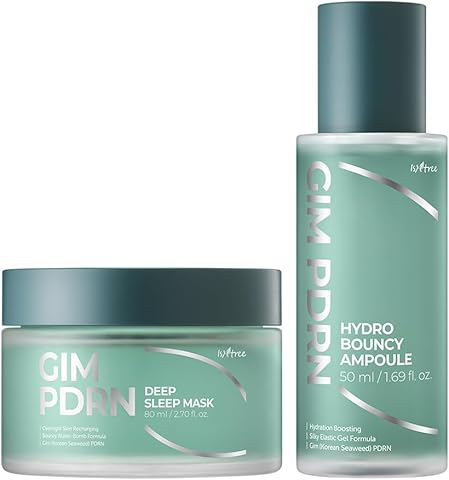
Gim PDRN Deep Sleep Mask
Isntree
Overnight mask with Wando-grown gim PDRN, 8 types of hyaluronic acid, and 8 types of peptides for intensive repair.
$20–28
Related Posts
How to Build a PDRN Skincare Routine: Morning & Night Guide
A step-by-step guide to building an effective PDRN skincare routine. Learn where PDRN fits in your morning and evening regimen, how to layer it with other actives, and which products to pair it with.
How to Use PDRN Serum: A Step-by-Step Skincare Routine Guide
Learn exactly how to use PDRN serum in your skincare routine — when to apply it, how much to use, what to layer it with, and common mistakes to avoid.
PDRN for Beginners: Everything You Need to Know Before Your First Product
New to PDRN skincare? This beginner's guide covers what PDRN is, how it works, which product to start with, how to use it, what results to expect, and common mistakes to avoid.