 PDRN Care
PDRN Skin Boosters: Everything You Need to Know Before Your First Treatment
PDRN Care Editorial
Regenerative Dermatology Research
PDRN skin boosters have become one of the most sought-after aesthetic treatments globally, particularly in South Korea, where they originated, and increasingly across Europe, Southeast Asia, and the Middle East. Unlike traditional dermal fillers that add volume, skin boosters improve the intrinsic quality of the skin itself — its hydration, elasticity, texture, and luminosity. PDRN skin boosters take this concept further by delivering biologically active DNA fragments that trigger genuine cellular regeneration.
What Is a PDRN Skin Booster?
A PDRN skin booster is an injectable treatment that delivers polydeoxyribonucleotide — fragmented DNA derived from salmon (Oncorhynchus keta) — directly into the dermis. Once injected, these DNA fragments activate the adenosine A2A receptor on dermal fibroblasts, triggering a cascade of regenerative processes: increased collagen and elastin production, enhanced hyaluronic acid synthesis, improved microcirculation through VEGF upregulation, and suppressed inflammatory signaling [2].
The key distinction between PDRN skin boosters and hyaluronic acid (HA) skin boosters is mechanism. HA skin boosters work passively — they hold water in the dermis to hydrate the skin from the outside in. PDRN skin boosters work actively — they stimulate the skin's own cells to produce more collagen, HA, and elastin from the inside out [3]. This means PDRN results build progressively and last longer, as the improvements reflect actual biological changes in the tissue rather than the temporary presence of an injected hydrating agent.
How PDRN Skin Boosters Work: The Science
When PDRN is injected into the dermis, two primary mechanisms activate simultaneously [2][5]:
Receptor-mediated signaling. PDRN fragments bind to the adenosine A2A receptor (ADORA2A), a G-protein coupled receptor expressed on fibroblasts, endothelial cells, and immune cells. This binding elevates intracellular cAMP through adenylyl cyclase activation, which activates protein kinase A (PKA) and CREB transcription factors. The downstream effects include fibroblast proliferation, upregulated type I and type III collagen synthesis, increased VEGF expression for better microcirculation, and suppressed NF-κB inflammatory signaling.
Salvage pathway nutrition. The DNA fragments are broken down into deoxyribonucleotides and deoxyribonucleosides that enter the pyrimidine salvage pathway. This provides metabolic building blocks for DNA replication in actively dividing fibroblasts and keratinocytes, bypassing the energy-expensive de novo nucleotide synthesis route and accelerating tissue repair at the cellular level [2][8].
This dual mechanism — receptor-mediated regenerative signaling plus metabolic substrate supply — is what distinguishes PDRN from single-mechanism treatments and explains its broad range of skin quality improvements.
PDRN Skin Booster vs. HA Skin Booster
| Feature | PDRN Skin Booster | HA Skin Booster |
|---|---|---|
| Primary mechanism | A2A receptor activation + DNA repair | Water binding and passive hydration |
| Collagen stimulation | Direct, through fibroblast activation | Minimal (injection stimulus only) |
| Hydration | Long-term (stimulates endogenous HA) | Immediate but temporary |
| Anti-inflammatory | Yes (NF-κB suppression) | No |
| DNA repair | Yes (salvage pathway) | No |
| Result onset | Gradual (2–4 weeks) | Immediate |
| Result duration | 6–12 months | 3–6 months |
| Best for | Overall skin quality, aging, scars | Quick hydration boost |
Many practitioners now combine PDRN and HA skin boosters — either in the same session or alternating between them — to get the immediate hydration of HA plus the long-term regeneration of PDRN [3].
The Treatment Process
Before treatment
Your practitioner will assess your skin, discuss your goals, and review your medical history. The primary contraindication is a known allergy to fish or salmon products, since PDRN is derived from salmon DNA. You should avoid blood-thinning medications and supplements (aspirin, ibuprofen, fish oil, vitamin E) for 3–7 days before treatment to minimize bruising.
During treatment
- Cleansing and preparation. The treatment area is cleansed with antiseptic solution. Clinical photographs are typically taken for documentation.
- Numbing. A topical anesthetic cream (lidocaine-based) is applied and left for 20–30 minutes. Some PDRN products include lidocaine in the formulation for added comfort.
- Injection. Using a fine 30–32 gauge needle, the practitioner places micro-deposits (0.02–0.05 mL each) of PDRN at regular 1–2 cm intervals across the treatment area. The injection depth is 1–2 mm into the superficial to mid-dermis. The nappage technique (multiple rapid superficial injections) is the most common approach.
- Post-treatment. Gentle pressure is applied to minimize bleeding. A soothing serum or cream is applied. The entire procedure takes 20–40 minutes.
After treatment
Mild redness, small bumps at injection points, and occasional bruising are normal and resolve within 1–3 days. Avoid touching the face, applying makeup, or exercising for 24 hours. Avoid saunas, swimming pools, and excessive sun exposure for 48 hours.
Treatment Protocol and Results
The standard PDRN skin booster protocol involves 3–5 sessions spaced 2–4 weeks apart. Results are cumulative — each session builds on the regenerative changes initiated by the previous one [1][4].
What to expect by timeline:
- Week 1–2: Improved hydration and subtle glow as the initial inflammatory response subsides and HA synthesis begins
- Week 3–4: Noticeable improvement in skin texture, smoothness, and firmness as collagen remodeling begins
- Month 2–3: Peak collagen and elastin production; visible reduction in fine lines, improved elasticity
- Month 3–6: Continued dermal remodeling; best results for skin density and quality
- Month 6–12: Gradual decline; maintenance sessions recommended every 3–4 months
Who Is the Ideal Candidate?
PDRN skin boosters are suitable for virtually any adult seeking improved skin quality. The best candidates include:
- Adults 30+ experiencing early signs of aging (fine lines, loss of firmness, dullness)
- Post-acne patients wanting to improve residual texture irregularities and scarring
- Pre- or post-laser patients seeking enhanced recovery and results amplification
- Patients with thin, dehydrated skin wanting to improve skin density and resilience
- Anyone seeking the "glass skin" effect — the luminous, translucent quality of healthy, well-hydrated skin
PDRN skin boosters are not suitable for patients with fish allergies, active skin infections in the treatment area, or those who are pregnant or breastfeeding.
Top PDRN Skin Booster Products
The most clinically established PDRN skin boosters include:
- Rejuran Healer — The original and most widely used PDRN skin booster, containing concentrated c-PDRN from salmon DNA. The gold standard with the largest body of clinical evidence.
- Rejuran S — A thicker formulation from the same manufacturer, designed specifically for acne scar treatment.
- Nucleofill Medium — An Italian PDRN gel with medium viscosity, popular in European aesthetic practices for facial rejuvenation.
- Plinest Fast — A highly purified polynucleotide gel for skin revitalization, noted for its biocompatibility and rapid integration.
Combining PDRN Skin Boosters with Other Treatments
PDRN skin boosters pair well with many aesthetic treatments [4]:
- Botox: PDRN improves skin quality while Botox relaxes dynamic wrinkles. Space at least 2 weeks apart.
- Dermal fillers: PDRN enhances the skin around filled areas. Space at least 2 weeks apart.
- Laser/RF treatments: PDRN accelerates post-treatment healing and enhances results. Can be administered during the recovery phase.
- Microneedling: PDRN can be applied topically during microneedling for enhanced penetration.
- Chemical peels: PDRN supports post-peel recovery and collagen stimulation.
Frequently Asked Questions
How much do PDRN skin boosters cost?
Pricing varies significantly by region and practitioner. In South Korea, expect $150–300 per session. In the US and Europe, $300–600 per session. A complete course of 3–5 sessions typically costs $900–2,500.
Do PDRN skin boosters hurt?
With topical numbing, most patients describe the sensation as a series of tiny pinpricks — uncomfortable but tolerable. Products containing lidocaine further reduce discomfort. Pain tolerance varies, but most patients rate the experience 3–4 out of 10.
How long do results last?
After a complete treatment course, results typically last 6–12 months. Maintenance sessions every 3–4 months help sustain improvements indefinitely. The longevity of results depends on age, sun exposure, lifestyle factors, and individual biology.
Can I use topical PDRN instead of injections?
Topical PDRN products (serums, creams) provide benefits but deliver lower concentrations to the dermis due to the barrier function of the stratum corneum. Injectable PDRN delivers therapeutic concentrations directly to the target tissue. For best results, use both — professional injections for intensive treatment, plus daily topical PDRN for maintenance.
The Bottom Line
PDRN skin boosters represent a genuine advancement in aesthetic dermatology — moving beyond temporary fixes to achieve lasting improvements in skin quality through cellular regeneration. Whether you are looking to prevent early signs of aging, recover from acne scarring, or achieve that coveted glass-skin glow, PDRN skin boosters offer a clinically validated, evidence-based approach to better skin from the inside out.
References
- [1]Cavallini M, Papagni M. Long chain polynucleotide gels as dermal fillers: safety and efficacy. Journal of Biological Regulators and Homeostatic Agents. 2020;34(3 Suppl 2):45-53.
- [2]Squadrito F, Bitto A, Irrera N, Pizzino G, Pallio G, Minutoli L, Altavilla D. Pharmacological Activity and Clinical Use of PDRN. Current Pharmaceutical Design. 2017;23(27):3948-3957. doi:10.2174/1381612823666170516153716
- [3]Kim JH, Kwon TR, Lee SE, et al.. Comparative evaluation of the effectiveness of novel hyaluronic acid-polynucleotide complex dermal filler. Skin Research and Technology. 2020;26(3):396-402. doi:10.1111/srt.12819
- [4]Giarratana LS, Virdis J, Uras G, Ferreli C, Atzori L. Polynucleotides and skin rejuvenation. International Journal of Dermatology. 2024;63(2):133-141.
- [5]Colangelo MT, Galli C, Muscari A. Polydeoxyribonucleotide (PDRN) for skin regeneration: mechanisms and clinical applications. Journal of Cosmetic Dermatology. 2023;22(4):1112-1119.
- [6]Lee SH, Zheng Z, Kang JS, Kim DY, Oh SH, Cho SB. Therapeutic efficacy of autologous platelet-rich plasma and polydeoxyribonucleotide on female pattern hair loss. Wound Repair and Regeneration. 2015;23(1):27-36. doi:10.1111/wrr.12250
- [7]Valdatta L, Thione A, Mortarino C, Buoro M, Turati F. Evaluation of the efficacy of polynucleotides in the healing of diabetic foot ulcers. International Wound Journal. 2004;1(2):133-137.
- [8]Veronesi F, Dallari D, Sabbioni G, Carubbi C, Martini L, Fini M. Polydeoxyribonucleotides: current evidence and future perspectives for tissue repair. Journal of Biological Regulators and Homeostatic Agents. 2017;31(4 Suppl 2):1-9.
Recommended Products

Rejuran Healer
Pharmaresearch Products
The original Korean PDRN skin booster — c-PDRN derived from salmon DNA for skin rejuvenation and barrier repair.

Rejuran S
Pharmaresearch Products
Targeted PDRN scar treatment injectable — higher viscosity c-PDRN formulation designed for atrophic acne scars and surgical scar remodeling.

Nucleofill Medium
Promoitalia
High-concentration polynucleotide gel for deep skin biorestructuring — Italian-engineered PN technology for tissue regeneration.

Plinest Fast
Mastelli
Italian PDRN mesotherapy solution by Mastelli — low-molecular-weight formulation for rapid tissue repair and wound healing applications.
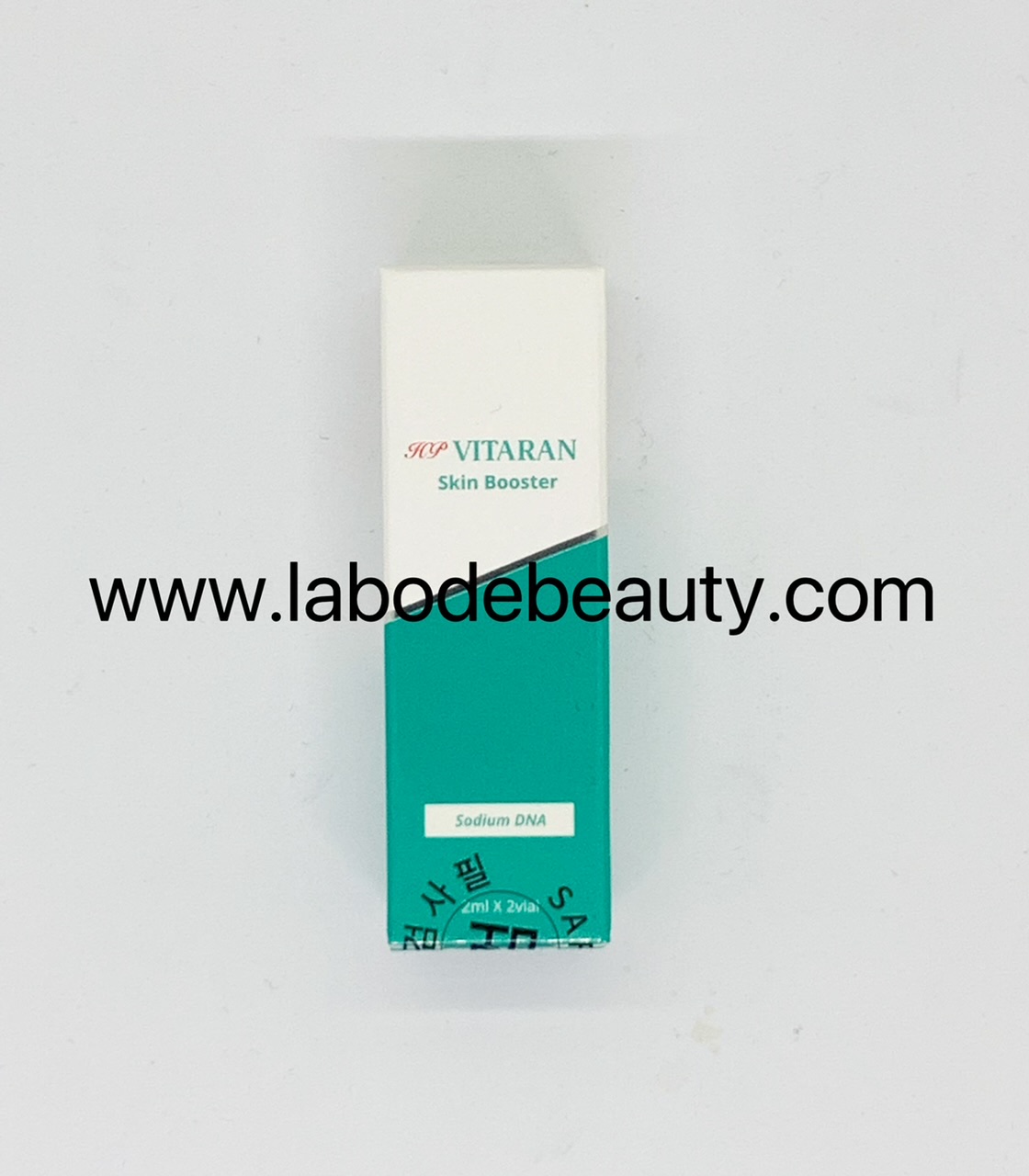
Vitaran PDRN Skinbooster
HP Cell
CE-approved polynucleotide skin booster medical device for professional skin rejuvenation treatments.
$180–400 per session
Related Posts
What is PDRN? The Complete Guide to Salmon DNA Skincare
PDRN (Polydeoxyribonucleotide) is a DNA-derived skincare ingredient extracted from salmon. Learn what PDRN means, how it works, its benefits for skin, and the different product types available.
PDRN vs Polynucleotides: What's the Difference?
PDRN and polynucleotides (PN) are both DNA-derived biopolymers, but they differ in molecular weight, source, and clinical behavior. This guide breaks down the science and compares popular products.
PDRN and Microneedling: The Ultimate Combination Guide
Combining PDRN with microneedling dramatically enhances absorption and results. Learn about protocols, at-home vs clinic options, PDRN dermapen treatments, and proper aftercare.