 PDRN Care
PDRN Summer Skincare Routine: Lightweight Repair Meets UV Defense
Dr. Sarah Chen
PhD, Molecular Biology
Why Summer Changes Everything About Your PDRN Routine
If you have built a PDRN skincare routine that works beautifully in cooler months, summer will test it. Higher temperatures, increased humidity, stronger UV radiation, and more time outdoors create a different set of skin challenges that require adjusting how you use PDRN — not whether you use it.
In fact, summer is arguably when your skin needs PDRN most. UV exposure is the single greatest source of skin damage for most people, driving photoaging, collagen breakdown, inflammation, and DNA damage in skin cells [4]. PDRN directly counteracts several of these effects: it stimulates collagen production to replace what UV destroys, activates anti-inflammatory pathways through A2A receptors to calm UV-induced inflammation, and supplies nucleotides through the salvage pathway to support DNA repair in UV-damaged cells [1][3][5].
The challenge is delivering these benefits in formulations and routines that work with summer conditions — not against them. Heavy creams that were comfortable in winter become suffocating in humid heat. Thick layering that worked in dry cold weather leads to congestion and breakouts. The solution is not to abandon PDRN but to adapt your approach.
Morning Routine: Lightweight Protection
Your summer morning routine should prioritize two things: efficient PDRN delivery in minimal layers and robust UV protection. Here is a streamlined summer morning routine:
Step 1: Gentle water-based cleanser
Summer mornings call for a light cleanse — gel or foam texture. You are removing overnight sebum and sweat, not heavy products. Avoid stripping cleansers that compromise the barrier, especially if your skin is already dealing with UV exposure.
Step 2: PDRN toner (replaces serum in summer)
In summer, consider shifting your primary PDRN delivery to the toner step. Products like the Anua PDRN Booster Toner deliver PDRN in a lightweight, watery format that absorbs rapidly without adding heaviness.
Apply to damp skin immediately after cleansing. The thin consistency allows PDRN to penetrate efficiently while the water base evaporates quickly, leaving no residue under sunscreen. For a more generous application, soak a cotton pad and press it onto the skin for 30 seconds — this gives a sheet-mask-like dose of PDRN in a fraction of the time.
Step 3: Lightweight moisturizer (optional)
If your skin is oily or combination, you may skip this step entirely in summer, going directly from PDRN toner to sunscreen. If you need moisturizer, choose a gel-cream or water-gel texture that hydrates without occluding.
Summer tip: if you typically use a heavier PDRN cream, switch to a PDRN serum or toner for the morning and reserve the cream for evenings only.
Step 4: Sunscreen (SPF 50+ PA++++)
Sunscreen is non-negotiable, and this is where the synergy with PDRN becomes powerful. PDRN repairs; sunscreen prevents. Using PDRN without sunscreen is like mopping the floor while leaving the tap running — you are repairing UV damage while simultaneously accumulating more of it [4].
Choose a sunscreen that complements your lightweight summer routine:
- Chemical/organic sunscreens — Lighter textures, no white cast, absorb quickly. Look for newer-generation filters like Tinosorb S, Tinosorb M, or Uvinul A Plus.
- Physical/mineral sunscreens — Zinc oxide and titanium dioxide offer broad-spectrum protection but can feel heavier. Micronized versions are better for summer.
- Hybrid sunscreens — Combine chemical and physical filters for broad protection with improved texture.
Korean sunscreens are particularly well-suited for PDRN routines because they are formulated to layer well over treatment products, with elegant textures that do not pill or feel greasy.
Reapply every 2 hours during direct sun exposure. This is where a PDRN mist becomes invaluable — more on that below.
Midday Refresh: The PDRN Mist Strategy
Summer introduces an opportunity that does not exist in other seasons: midday PDRN application via mist. The heat and humidity of summer mean your skin can absorb a mist effectively, and the cooling sensation is genuinely welcome.
A PDRN-infused mist like the Anua PDRN Hydrating Mist or Biodance Caviar PDRN Jelly Mist serves multiple functions:
- PDRN top-up — An additional dose of PDRN during the day, increasing total daily exposure to the ingredient
- Hydration refresh — Combats the dehydrating effects of air conditioning, which is as damaging to skin hydration as dry winter air
- Cooling relief — Provides immediate comfort for sun-warmed skin
- Sunscreen preparation — Refreshes the skin surface before sunscreen reapplication
How to use: Hold the mist 15-20 cm from your face, spray 2-3 times, and let it absorb for 30 seconds before applying sunscreen. If you are not reapplying sunscreen, gently press the mist into your skin with your palms.
Evening Routine: Repair and Recovery
Summer evenings are your repair window. The UV exposure accumulated during the day has triggered inflammatory cascades, generated free radicals, and caused DNA damage in epidermal and dermal cells. Your evening routine should maximize PDRN's regenerative potential to address this damage.
Step 1: Double cleanse
Essential in summer. An oil-based first cleanser removes sunscreen (which must be fully removed — residual sunscreen clogs pores and impairs overnight skin function). A water-based second cleanser removes sweat, sebum, and environmental pollutants that accumulate during summer days.
Step 2: Exfoliant (2-3 times per week)
Summer's increased sebum production and sweating can lead to clogged pores. A gentle chemical exfoliant (BHA for oily/acne-prone skin, PHA for sensitive skin) keeps pores clear and improves PDRN absorption by removing the thicker layer of dead cells that builds up in humid weather.
Do not over-exfoliate. Compromised barrier + sun exposure = hyperpigmentation risk. Two to three times per week is sufficient.
Step 3: PDRN serum or ampoule
The evening is when you use your highest-concentration PDRN product. Without sunscreen on top and with the full overnight contact time ahead, your skin can maximize absorption and utilization of PDRN.
The COSRX 5% PDRN Collagen Serum is an excellent choice for summer evenings — it delivers a meaningful PDRN concentration with collagen peptides in a texture that is not excessively heavy for warm-weather use.
Apply to clean, slightly damp skin. Use 2-3 drops for the face and gently press into the skin. Allow 30-60 seconds for absorption before the next step.
Step 4: Lightweight moisturizer or sleeping mask
In summer, you can often use a lighter moisturizer than in winter, or swap your heavy night cream for a gel-textured sleeping mask. The goal is to lock in the PDRN serum without creating an occlusive layer that traps heat and causes sweating overnight.
If you are in a humid climate, a thin gel moisturizer may be all you need. In air-conditioned environments (which dehydrate the air significantly), you may need a slightly richer texture to compensate.
Post-Sun Exposure Protocol
Had a day at the beach, a long outdoor workout, or simply more sun exposure than planned? Here is a targeted post-sun PDRN protocol:
Immediate (within 1 hour of coming indoors)
- Cool shower — Bring skin temperature down without shocking it
- Gentle cleanser — Remove sunscreen, sweat, and salt/chlorine
- PDRN mist — Generously spray a PDRN mist on the face and any exposed skin. The anti-inflammatory properties of PDRN begin working immediately through A2A receptor activation [1]
- Aloe or cooling gel — If skin feels hot or irritated, a simple aloe vera gel provides immediate soothing
Evening of sun exposure
- Follow your standard evening routine (above) but skip any exfoliants
- Double the PDRN serum application — Use 4-5 drops instead of 2-3, applying in two thin layers rather than one thick one
- Add a hydrating sleeping mask — Sun-exposed skin loses significant moisture. A sleeping mask creates a protective cocoon that supports overnight repair
- Skip any retinoids or active acids — These can further irritate UV-stressed skin. Let PDRN handle the repair work; save your actives for non-sun-exposure days
Following days
Continue your PDRN routine as normal but prioritize hydration and barrier support for 2-3 days after significant sun exposure. PDRN's anti-inflammatory effects through the A2A pathway help resolve the UV-induced inflammatory response, while its nucleotide salvage function supports DNA repair in UV-damaged cells [1][3][5].
Summer-Specific PDRN Tips
Texture swaps for warm weather
| Winter Product | Summer Alternative |
|---|---|
| PDRN cream | PDRN serum or toner |
| Heavy sleeping pack | Gel sleeping mask |
| Rich moisturizer + PDRN serum | PDRN toner + lightweight gel cream |
| Sheet mask (weekly) | PDRN mist (daily) |
Climate-specific adjustments
Hot and humid (tropical, coastal):
- Minimize layers — PDRN toner + sunscreen may be sufficient for mornings
- Focus PDRN serum use in the evening
- Use mist throughout the day for PDRN top-ups
- Consider a mattifying primer between PDRN toner and sunscreen if oil is a concern
Hot and dry (desert, continental summers):
- Keep hyaluronic acid in your routine alongside PDRN — dry heat demands humectants
- Apply PDRN serum to damp skin (spritz with mist first)
- Use a slightly richer moisturizer than the humidity recommendations suggest
- Mist frequently but always follow with an occlusive step to prevent evaporation
Moderate with strong UV (high altitude, Mediterranean):
- UV intensity can be extreme despite comfortable temperatures — do not let pleasant weather trick you into inadequate sun protection
- Full PDRN routine is appropriate given lower humidity
- Prioritize sunscreen reapplication religiously
The air conditioning factor
Air-conditioned environments create a paradox: your body is cool but your skin is dehydrating. The low humidity in air-conditioned spaces can be as drying as winter air.
If you spend significant time in air conditioning during summer:
- Carry a PDRN mist and use it every 2-3 hours
- Do not skip moisturizer in the morning just because it is hot outside — you need it for indoor dryness
- Consider a small humidifier for your desk or workspace
Summer Ingredients That Pair Well With PDRN
PDRN plays well with summer-appropriate ingredients:
Niacinamide — Controls sebum production (helpful in humid weather), reduces hyperpigmentation from sun exposure, and strengthens the barrier. Use alongside PDRN morning and evening.
Vitamin C (ascorbic acid) — A potent antioxidant that neutralizes UV-generated free radicals. Apply in the morning before PDRN toner for a powerful protect-and-repair combination.
Centella asiatica (cica) — Soothes heat-irritated skin and supports barrier repair. Complements PDRN's anti-inflammatory effects.
Aloe vera — Cooling, hydrating, and mildly anti-inflammatory. Perfect as a post-sun soothing step before PDRN application.
Green tea extract — Antioxidant protection that complements sunscreen. Pairs well with PDRN in toner or serum formulations.
Ingredients to use with caution in summer:
- Retinoids — Increase photosensitivity. If you use retinol with PDRN, apply only in the evening and be extra diligent with sunscreen the next day.
- AHAs (glycolic, lactic acid) — Also increase photosensitivity. Use only in the evening and limit frequency.
- High-concentration vitamin C — Can be irritating on sun-exposed skin. If your skin is sensitive, switch to a derivative like sodium ascorbyl phosphate.
Key Takeaways
Summer is not a reason to scale back PDRN — it is a reason to adapt your delivery method. The regenerative benefits of PDRN [1][3][5] are arguably most valuable during the season when your skin faces its greatest environmental assault from UV radiation, heat, and humidity.
The core adjustments are straightforward: lighter textures (toners and mists instead of creams), strategic layering (PDRN under sunscreen in the morning, concentrated PDRN in the evening), and a post-sun protocol that leverages PDRN's anti-inflammatory and DNA repair properties.
Your PDRN does not take a summer vacation, and neither should your skin's access to it. Adapt the routine, maintain the consistency, and let PDRN do what it does best — repair and regenerate — while your sunscreen handles prevention.
References
- [1]Squadrito F, Bitto A, Irrera N, et al.. Pharmacological Activity and Clinical Use of PDRN. Curr Pharm Des. 2017;23(27):3948-3957. doi:10.2174/1381612823666170516153716
- [2]Kim TH, Kim JY, Bae JH, et al.. Biostimulatory effects of polydeoxyribonucleotide for facial skin rejuvenation. J Cosmet Dermatol. 2019;18(6):1767-1773. doi:10.1111/jocd.12958
- [3]Colangelo MT, Galli C, Giannelli M. Polydeoxyribonucleotide: A Promising Biological Platform for Dermal Regeneration. Curr Pharm Des. 2020;26(17):2049-2056. doi:10.2174/1381612826666200116150912
- [4]Diffey BL. Sunscreens as a preventative measure in melanoma: an evidence-based approach. Br J Dermatol. 2009;161(s3):25-28. doi:10.1111/j.1365-2133.2009.09445.x
- [5]Veronesi F, Dallari D, Sabbioni G, Carubbi C, Martini L, Fini M. Polydeoxyribonucleotides (PDRNs): From Physical Chemistry to Biological Activities and Clinical Applications. Int J Mol Sci. 2017;18(9):1927. doi:10.3390/ijms18091927
Recommended Products
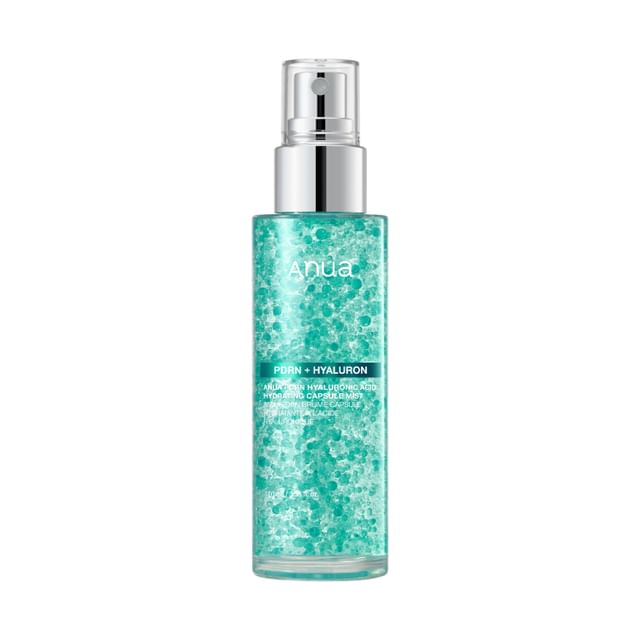
PDRN Hyaluronic Acid Hydrating Capsule Mist
Anua
Hydrating capsule mist with PDRN and hyaluronic acid for instant moisture boost throughout the day.
$19–26

5 PDRN Collagen Intense Vitalizing Serum
COSRX
Multi-PDRN formula with 5 types of PDRN from salmon, centella, rice, lactobacillus, and sea grapes plus low-molecular collagen.
$30–40

PDRN 100 Hyaluronic Acid Booster Toner
Anua
Non-sticky booster toner with PDRN and 11 types of hyaluronic acid for plumping dull, tired skin.
$25–35
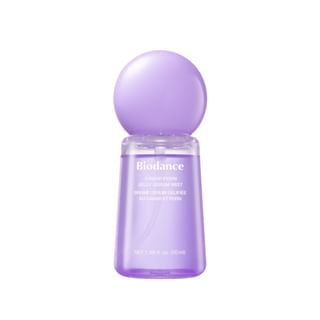
Caviar PDRN Jelly Serum Mist
Biodance
Luxurious jelly-textured serum mist combining caviar extract with PDRN for on-the-go hydration and repair.
$16–22
Related Posts
How to Build a PDRN Skincare Routine: Morning & Night Guide
A step-by-step guide to building an effective PDRN skincare routine. Learn where PDRN fits in your morning and evening regimen, how to layer it with other actives, and which products to pair it with.
PDRN and Sunscreen: Why UV Protection Is Essential for PDRN Users
PDRN repairs cellular damage and rebuilds collagen, but without sunscreen you are undermining every result. This guide explains why UV protection is non-negotiable for PDRN users, how to choose the right sunscreen, the correct application order, and which PDRN-infused sunscreens are worth considering.
PDRN Seasonal Skincare Guide: How to Adapt Your Routine Year-Round
Environmental shifts across spring, summer, fall, and winter directly affect how PDRN performs on your skin — from penetration rates to barrier stability. Learn exactly how to adjust your PDRN product formats, layering order, application frequency, and storage practices for every season.