 PDRN Care
PDRN for Humid Climates: Building a Lightweight Regenerative Routine
Dr. Sarah Chen
PhD, Molecular Biology
Why Humid Climates Change the Rules
Most mainstream skincare advice is written for temperate or dry climates, where the central problem is water leaving the skin. In a humid, tropical environment the problem is almost the opposite. High ambient humidity slows transepidermal water loss, so the skin's surface stays hydrated with far less help from you . Meanwhile heat drives sebum production up, sweat sits on the skin longer, and thick occlusive creams that feel comforting in winter now trap oil and sweat against the face — a recipe for congestion, clogged pores, and that permanent "greasy but somehow still tight" feeling.
The instinct in humid weather is to strip everything back to a cleanser and sunscreen. That solves the greasiness but abandons active repair — you stop treating your skin just because the weather made your old products uncomfortable. The better move is to change the format and weight of your actives, not to abandon them. And this is precisely where PDRN has a structural advantage: it is delivered in exactly the kind of thin, water-based vehicle a humid climate calls for.
Why PDRN Suits Humid Weather
PDRN is almost always formulated as a lightweight, water-based serum or essence rather than a heavy anhydrous cream. That format is not a marketing choice — it reflects how the ingredient works. PDRN delivers its benefits through cellular signaling and repair, not through occlusion: it activates fibroblasts via the adenosine A2A receptor to stimulate collagen synthesis , supplies nucleotide building blocks that fuel repair , and calms inflammation by dampening pro-inflammatory cytokines . None of that requires a thick, pore-clogging base to function.
That means you can get genuine regenerative and anti-inflammatory activity from a texture that sits weightlessly on the skin and does not compound the greasiness humidity already creates . In a climate where every gram of occlusion is a liability, an active that works through water rather than through grease is exactly the right tool.
The anti-inflammatory angle matters more than it first appears. Humid heat is a low-grade inflammatory environment for skin: constant sweating, heat rash, sun exposure, and the barrier disruption that comes from frequent cleansing all keep the skin mildly irritated. PDRN's documented ability to reduce inflammatory cytokines makes it a quiet stabilizer against that background noise.
A Lightweight, Humidity-Proof Routine
The organizing principle is thin layers, water-based actives, minimal occlusion.
Morning
- Gentle low-foaming cleanser to remove overnight sebum without stripping.
- PDRN serum or essence, applied to slightly damp skin. This is your active core.
- A light gel moisturizer — or, on very humid days, skip a separate moisturizer entirely, because in high humidity the PDRN serum plus ambient water may be enough.
- A lightweight, non-greasy sunscreen. This is the one step you never cut, humidity or not.
Evening
- Cleanse — double-cleanse only if you wore sunscreen and makeup that day.
- PDRN serum again as your repair step.
- A thin moisturizer if your skin still feels tight; otherwise leave the serum to work alone.
The trick is subtraction. In a dry climate you add layers to hold moisture in. In a humid one you remove layers and let a water-based active carry the routine, because the atmosphere is already handling surface hydration .
Timing Around Sweat and Heat
Humidity is not just about product texture — it changes when products work. A few field-tested rules:
- Apply to towel-dried, not dripping, skin. Damp skin aids absorption, but a film of sweat or water dilutes actives and makes everything slide.
- Give the PDRN serum two to three minutes to absorb before the next layer, so heat and sweat do not immediately lift it off.
- Do your active routine when you will be still, not right before heading into the heat. Applying serum and then immediately sweating buckets undoes the layering.
- Reapply sunscreen, not serum, through the day. PDRN is a once- or twice-daily repair step; sun protection is the thing that needs topping up when you sweat it off.
Congestion, Not Dryness, Is the Enemy
In dry climates, PDRN routines are often built to rescue a dehydrated, compromised barrier. In humid climates the failure mode flips: the risk is congestion and breakouts from trapping oil and sweat. So the supporting cast changes. Instead of pairing PDRN with rich occlusives and oils, pair it with lightweight, pore-friendly partners — a niacinamide serum, a gentle BHA a few times a week, or a simple gel hydrator. PDRN's regenerative action then does double duty: it supports the barrier and helps fade the post-inflammatory marks that humid-climate breakouts tend to leave behind .
One thing does not change: sunscreen. Humidity often coincides with intense UV, and no amount of regenerative serum offsets daily unprotected sun exposure. PDRN supports repair; sunscreen prevents the damage in the first place. In a tropical routine they are non-negotiable partners.
The Takeaway
A humid climate does not mean giving up active skincare — it means choosing actives whose format fits the weather. Heavy occlusive creams that shine in dry winters become liabilities in tropical heat, but a thin, water-based regenerative serum is exactly what high humidity rewards. PDRN delivers real collagen-stimulating, repair-supporting, anti-inflammatory activity without adding grease, which lets you keep treating your skin while everyone else is stripping back to bare survival mode. Layer thin, favor water over oil, protect from the sun, and let the humidity handle the moisturizing it is already doing for free.
Frequently Asked Questions
Do I still need a moisturizer in a humid climate if I use a PDRN serum?
Often only a very light one, or none on the most humid days. High ambient humidity dramatically slows water loss from the skin, so surface hydration is largely handled by the environment . A water-based PDRN serum may supply enough slip and hydration on its own; add a thin gel moisturizer only if your skin still feels tight after the serum absorbs. The point is to avoid heavy occlusives that trap sweat and oil.
Why is PDRN better suited to humid weather than rich creams?
Because PDRN works through cellular signaling and repair rather than occlusion. It stimulates fibroblasts, supplies repair materials, and calms inflammation — all from a thin, water-based vehicle that does not clog pores or compound greasiness. Rich creams rely on trapping moisture against the skin, which is exactly what you do not want when humidity is already keeping the surface hydrated and heat is driving oil production up.
Will PDRN help with breakouts and congestion in tropical heat?
Indirectly, yes. PDRN itself is not an acne treatment, but its anti-inflammatory action helps calm the low-grade irritation that humid, sweaty conditions create , and its regenerative action supports faster fading of post-breakout marks . Pair it with lightweight, pore-friendly actives like niacinamide or a gentle BHA rather than heavy oils, and keep occlusion to a minimum to prevent the congestion that drives humid-climate breakouts in the first place.
Can I use PDRN if I sweat a lot during the day?
Yes — just time it well. Apply PDRN to towel-dried skin when you will be relatively still, and give it a few minutes to absorb before the next layer, rather than applying it right before heading into the heat. PDRN is a once- or twice-daily repair step, so it does not need reapplying through the day; the thing you top up after sweating is sunscreen, not serum .
References
- [1]Squadrito F, Bitto A, Irrera N, Pizzino G, Pallio G, Minutoli L, Altavilla D. Pharmacological Activity and Clinical Use of PDRN. Current Pharmaceutical Design. 2017;23(27):3948-3957. doi:10.2174/1381612823666170516153716
- [2]Colangelo MT, Galli C, Gentile P. Polydeoxyribonucleotide: A Promising Biological Platform for Dermal Regeneration. Current Pharmaceutical Design. 2020;26(17):2049-2056. doi:10.2174/1381612826666200113152555
- [3]Kim TH, Kim JH, Lee SH, Park ES. Biostimulatory effects of polydeoxyribonucleotide for facial skin rejuvenation. Journal of Cosmetic Dermatology. 2019;18(6):1767-1773. doi:10.1111/jocd.12958
- [4]Rawlings AV, Harding CR. Moisturization and skin barrier function. Dermatologic Therapy. 2004;17(s1):43-48. doi:10.1111/j.1396-0296.2004.04s1005.x
- [5]Bitto A, Polito F, Irrera N, D'Ascola A, Avenoso A, Nastasi G, Campo GM, Micali A, Squadrito F, Altavilla D. Polydeoxyribonucleotide reduces cytokine production and the severity of collagen-induced arthritis by stimulation of adenosine A2A receptor. Arthritis Research & Therapy. 2011;13(1):R28. doi:10.1186/ar3258
Recommended Products

DIVE-IN Low Molecular PDRN Serum
Torriden
Lightweight hydrating PDRN serum built around Torriden's signature 5D low-molecular hyaluronic acid complex for deep, layered hydration.
$22–30
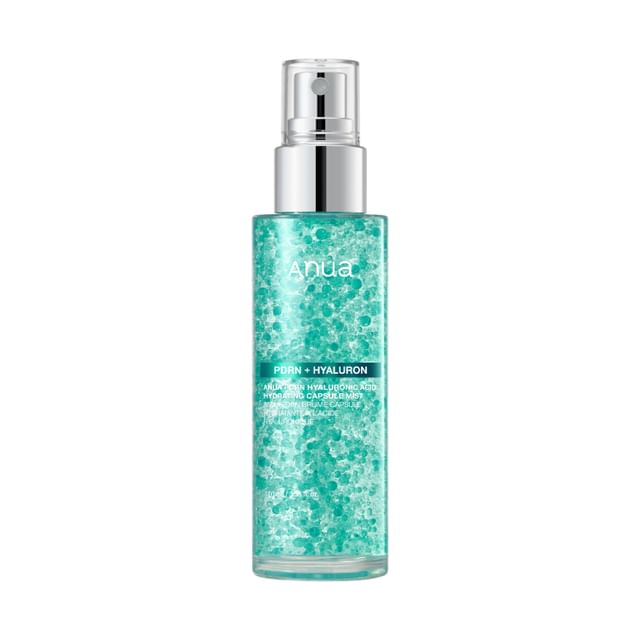
PDRN Hyaluronic Acid Hydrating Capsule Mist
Anua
Hydrating capsule mist with PDRN and hyaluronic acid for instant moisture boost throughout the day.
$19–26
PDRN Calming Serum
Isntree
Gentle, fast-absorbing PDRN serum formulated with centella and green tea to calm reactive skin while promoting cellular repair.
$25–35
PDRN Revitalizing Essence
Round Lab
Watery PDRN essence with birch sap and adenosine for lightweight hydration and anti-aging benefits.
$20–28
Related Posts
PDRN for Oily Skin: Lightweight Regeneration Without the Grease
Oily skin needs active ingredients that repair and regenerate without adding heaviness or clogging pores. PDRN's water-based, non-comedogenic profile makes it ideal for oily and combination skin types. Learn why PDRN works for oily skin, which product formats to choose, and how to build an oil-free PDRN routine.
PDRN Summer Skincare Routine: Lightweight Repair Meets UV Defense
Summer demands a different approach to PDRN skincare. Lighter textures, strategic UV protection pairing, and post-sun repair protocols let you maintain regenerative benefits without heaviness or congestion. Here's your complete warm-weather PDRN routine.
PDRN for Glass Skin: The K-Beauty Routine That Actually Works
Glass skin is the K-beauty look of poreless, dewy, lit-from-within radiance. This guide shows how PDRN fits into a glass skin routine, why it works on the cellular level, and the exact step-by-step protocol Korean skincare enthusiasts swear by.